U.S. Supreme Court refuses to review challenge to California ‘comfort women’ statue
BY ERIC JOHNSTON
Japan Times, MAR 28, 2017
OSAKA – The U.S. Supreme Court on Monday refused to hear a case calling for the removal of a “comfort women” statue in California, ending a three-year legal challenge brought by U.S. plaintiffs supported by the Japanese government. [See: Global Alliance for Historical Truth]*
The court’s decision not to review the case was applauded by U.S. politicians involved with the issue and civil rights groups.
Statues like the one in Glendale, California, are meant to represent women who were forced to work in Japanese wartime military brothels.
“By remembering the past, including the women who suffered immensely, we help ensure these atrocities are never committed again,” said U.S. Rep. Ed Royce, Republican Chairman of the House Foreign Affairs Committee. “Now that the highest court in the land has spoken, I hope those who’ve wasted years trying to rewrite history will finally move on.”
Phyllis Kim, Executive Director of the Korean American Forum of California, said U.S. cities and states have a right to remember “grave human rights violations” and include them in textbooks.
“The Japanese government, in its efforts to deny, downplay and erase the dark history of its war crimes, has publicly supported this shameful lawsuit,” she said.
The Glendale memorial is meant to represent comfort women of all nationalities, and is dedicated “in memory of more than 200,000 Asian and Dutch [and other European and American] women who were removed from their homes in Korea, China, Taiwan, Japan, the Philippines, Thailand, Vietnam, Malaysia, East Timor and Indonesia, to be coerced into sexual slavery by the Imperial armed forces of Japan between 1932 and 1945.”
The Japanese government supported Glendale area residents who went to court in a bid to have the statue removed.
On Tuesday morning, Chief Cabinet Secretary Yoshihide Suga expressed disappointment in the Supreme Court’s refusal to hear the case, calling it “an extremely regrettable decision.”
*Koichi Mera, head of the Global Alliance wrote on his organization's website on March 27 that he will "explore another way/other means" to remove the Glendale Comfort Women statue now that the U.S. Supreme Court dismissed their case. This comes a year after Ms. Mio Sugita who often speaks at his organization's events said that she wanted to blow up the statute.
One wonders what this way might be
Sunday, April 2, 2017


Sunday, March 26, 2017
Monday in Washington, March 27, 2017
 REFORMING THE H-1B VISA SYSTEM. 3/27, 9:00am. Sponsor: Atlantic Council. Speaker: Rep. Darrell Issa (R-CA-59), Chairman, Subcommittee on Courts, Intellectual Property, and the Internet; Moderator: Brarath Gopalaswamy, Director, South Asia Center, Atlantic Council.
 JAPAN CHAIR FORUM: TORU HASHIMOTO, THE FUTURE OF THE US-JAPAN ALLIANCE. 3/27, 10:00-11:00am. Sponsor: CSIS. Speaker: Toru Hashimoto, Founder, Nihon Ishin no Kai (Japan Innovation Party), Former Governor of Osaka, Former Mayor of Osaka City; Moderator: Michael J. Green, Senior Vice President for Asia, Japan Chair, CSIS.
NORTH KOREA’S HUMAN RIGHTS ABUSES: THE CRIMES OF A BELLIGERENT STATE. 3/27, 10:00am-3:40pm. Sponsors: AEI; Committee for Human Rights in North Korea (HRNK); Yonsei Center for Human Liberty. Speakers: Virginia Bennett, US Department of State, Bureau of Democracy, Human Rights, and Labor; Nicholas Eberstadt, AEI; Joanna Hosaniak, Citizens’ Alliance for North Korean Human Rights; H. E. Ahn Ho-Young, Republic of Korea Ambassador to the United States; Sung Han Kim, Former Vice Minister of Foreign Affairs, Republic of Korea; Taehyo Kim, Sungkyunkwan University; Robert King, Former US Special Envoy on North Korean Human Rights; Michael Kirby, Former Justice of High Court, Australia; Jung-Hoon Lee, Republic of Korea Ambassador for North Korean Human Rights; David Maxwell, Georgetown University, HRNK; William Newcomb, 38 North; Yeo Sang Yoon, Database Center for North Korean Human Rights; Greg Scarlatoiu, HRNK; Joshua Stanton, One Free Korea.
REEXAMINING NORTH KOREA POLICY: A BLUE-SKY APPROACH. 3/27, 12:30-2:00pm. Sponsor: Capitol Hill Asia Policy Dialogue Series, Mansfield Foundation. Speakers: Celeste Arrington, Korea Foundation Assistant Professor of Political Science and International Affairs, GWU; Daniel Aum, Director, Government and Media Relations, National Bureau of Asian Research; Keith Luse, Executive Director, National Committee on North Korea.
THE NORTH AMERICAN ARTIC: BUILDING A VISION FOR REGIONAL COLLABORATION. 3/27, 1:00-5:00pm. Sponsors: Canada Institute; Environmental Change and Security Program, Polar Initiative, Woodrow Wilson Center (WWC). Speakers: Hon. Jane Harman, President, CEO, WWC; Hon. Lisa Murkowski (R-AK), US Senator; Hon. Peter Taptuna, Premier, Government of Nunavut; Hon. Vittus Qujaukitsoq, Minister of Industry, Labour, Trade, Energy and Foreign Affairs, Government of Greenland; Hon. Byron Mallot, Lieutenant Governor of Alaska; Hon. Larry Bagnell, Member, Parliament for Yukon, Government of Canada; Laura Dawson, Director, Canada Institute, WWC; Kells Boland, Founding Principal, PROLOG Canada; Maryscott Greenwood, Principal, Dentons; Mead Treadwell, Former Lieutenant Governor of Alaska; Lillian Brewster, Vice President, Indigenous Community Relations & Development, ATCO Group; Stephen Van Dine, Assistant Deputy Minister, Northern Affairs, Indigenous and Northern Affairs Canada; Cedar Swan, CEO, Adventure Canada; Mayor Madeleine Redfern, City of Iqaluit; Moderators: Mike Sfraga, Director, Polar Initiative, WWC; John Higginbotham, Head of Arctic Program, CIGI; Jennifer Spence, Research Associate, CIGI, PhD Candidate, Carleton University.
IDENTIFYING OPPORTUNITIES FOR PROGRESS ON ENERGY AND CLIMATE POLICY. 3/27, 1:30-4:30pm. Sponsor: Brookings. Speakers: Robert E. Rubin, Co-Chair, Council on Foreign Relations, Former U.S. Treasury Secretary; Ellen D. Williams, Distinguished University Professor, Department of Physics, IPST, University of Maryland; James Connaughton, President, CEO, Nautilus Data Technologies; John Deutch, Institute Professor, Massachusetts Institute of Technology; Michael Greenstone Milton Friedman Professor in Economics, Director, Energy Policy Institute, University of Chicago; Cass R. Sunstein, Robert Walmsley University Professor, Harvard University; Trevor Houser, Partner, Rhodium Group; David Schwietert,Executive Vice President, Alliance of Automobile Manufacturers; Matthew Kahn, Professor of Economics, University of Southern California; Steven H. Strongin, Head of Global Investment Research, Goldman Sachs; Alice Hill, Research Fellow, Hoover Institution, Former White House Senior Director for Resilience Policy; Mindy S. Lubber, President, Founding Board Member, CERES; Ted Halstead, Founder, President, CEO, Climate Leadership Council; Moderators: Brad Plumer, Senior Editor, Vox; Diane Whitmore Schanzenbach, Director, Hamilton Project, Senior Fellow, Economic Studies, Brookings; Sam Ori, Executive Director, Energy Policy Institute, University of Chicago.
CHINA IN THE ERA OF XI JINPING: PRECEDENTS AND COMPARISONS. 3/27, 2:00-3:30pm. Sponsor: Stimson Center. Speakers: Jeffrey Wasserstrom, Chancellor’s Professor of History, University of California, Irvine; Aynne Kokas, Assistant Professor, Media Studies, University of Virginia; Yun Sun, Senior Associate, East Asia Program, Stimson Center.
THE CHALLENGE OF EMERGING ENCRYPTION TECHNOLOGIES. 3/27, 3:00-4:30pm. Sponsor: Homeland Security Policy Institute, Program on Extremism, GWU Law School. Speakers: Lorenzo Vidino, Director, Program on Extremism, GWU; Steven Knapp, President, GWU; Baroness Shields, Minister for Internet Safety and Security, United Kingdom; Ross La Jeunesse, Global Head of International Affairs, Google; James A. Baker, General Counsel, Federal Bureau of Investigation; Bruce Sewell, General Counsel, Apple; Luigi Soreca, Director for Internal Security, European Commission; Moderator: Shane Harris, Senior Writer, Wall Street Journal.
THE CHALLENGE OF EMERGING ENCRYPTION TECHNOLOGIES. 3/27, 3:00-4:30pm. Sponsor: Homeland Security Policy Institute, Program on Extremism, GWU Law School. Speakers: Lorenzo Vidino, Director, Program on Extremism, GWU; Steven Knapp, President, GWU; Baroness Shields, Minister for Internet Safety and Security, United Kingdom; Ross La Jeunesse, Global Head of International Affairs, Google; James A. Baker, General Counsel, Federal Bureau of Investigation; Bruce Sewell, General Counsel, Apple; Luigi Soreca, Director for Internal Security, European Commission; Moderator: Shane Harris, Senior Writer, Wall Street Journal.
Abe's ideals frighten Japanese voters

East Asia Forum, 12 March 2017
By Alexis Dudden, Professor of Japanese History at the University of Connecticut and APP member.
‘Growing scandal’ is the only way to describe the unfolding story about Moritomo Gakuen, a private education company in Osaka responsible for the controversial early education programs and schools currently under scrutiny in the Japanese parliament and press because of its close connection to Japanese Prime Minister Shinzo Abe.
Videos from Moritomo Gakuen schools of kindergarteners in sailor suits singing martial songs at a Shinto shrine under the approving gaze of its head priest and first graders finishing a running race by raising their hands in a Heil Hitler pose have shocked many observers. But more startling is the link of Japanese Prime Minister Shinzo Abe and his wife Akie to the school.
Mrs Abe had publicly expressed support for Moritomo Gakuen’s Mizuho-no-kuni Elementary School, stating that it is ‘wonderful’, ‘remarkable’ and ‘fosters children to have pride as Japanese and a strong inner self’. Until Prime Minister Abe announced on 24 February that she’d resigned, Mrs Abe was also the school’s honorary principal.
The Japanese Diet is now debating the involvement of senior ruling party members — including Abe — in the deeply discounted sale of the land to the school due to buried waste on the site, and also whether Mrs Abe acted in a public or private capacity in her support of the school. Prime Minister Abe has deflected the issue with bombast, declaring: ‘I find it very unpleasant to have [my wife] discussed as a common criminal…If wrongdoing is discovered, I will resign immediately’.
While Mizuho-no-kuni Elementary School is still under construction, Moritomo Gakuen’s related enterprises offer clues to the ‘wonderful’ and ‘remarkable’ ways that its teachers indoctrinate small children. Viral videos first surfaced some years ago of kids screaming, ‘Adults should protect the Senkaku Islands and Takeshima and the Northern Territories! Chinese and South Korean people who treat Japan as a bad [country] should amend their minds’. They feature Mrs Abe wiping away tears of appreciation during a school visit.
So what is it about the Moritomo Gakuen kindergarten that is so telling?
The images of children raising Heil Abe salutes jar a majority of Japanese and people around the world because they signify everything that was supposed to be different about Japan from 1945 to the present. Worse, these are children doing what adults tell them to do.
Whatever word best captures post-World War II Japan — constitutional pacifism or secularism — Japanese society committed to negating the cult of emperor worship that drove the nation to catastrophic war, the end of the empire and a devastated homeland. The current Emperor Akihito eschews displays of personal veneration that invoke a time when the Japanese viewed his ancestors as divine. But in 1997, the political group called Nippon Kaigi (Japan Conference) emerged with the central aim of changing all this through policy and education.
Nippon Kaigi’s grip on national matters today extends beyond its 40,000 members. Sixteen of twenty current cabinet ministers are prominent participants or directors of the group’s various divisions. Its ranks comprise former prime ministers and incumbent Prime Minister Abe, leading Diet members and key regional politicians, bureaucrats, writers, media moguls and educators — including the owner of the kindergarten at the centre of this scandal.
One member, Minister of Internal Affairs and Communications Sanae Takaichi, appeared in the US State Department’s 2016 Human Rights Report as a central figure in the strangling of press freedoms in Japan. Takaichi has been key to the Nippon Kaigi’s Parliamentarian League section concerning ‘History Issues, Education and Family Issues’ since 2007. Abe is in charge of ‘Defense, Diplomacy and Territory’ matters, while Yoshitada Konoike, the Upper House parliamentarian whom the Moritomo Gakuen kindergarten owner apparently tried to bribe, heads the subcommittee on ‘Constitution, Imperial Household and Yasukuni Issues’.
Nippon Kaigi’s primary goal is to restore the emperor as head of state and rear future citizens to worship him — no female rulers need apply — through late 19th and early 20th century Shinto practices at special schools.
Added to this mix, on 5 March, Japan’s ruling Liberal Democratic Party changed its rules to allow the head of its party a third term. If the scandal fails to break Prime Minister Abe’s stride he could run Japan until September 2021 and help to make Nippon Kaigi’s dreams come true.
Hopefully, open public debate will enable investigation of those involved in the scandal. Then, it should train its powerful — and democratic — lens on how the Moritomo Gakuen incident brings into relief the meaning of Japan moving forward.
For me, a ‘wonderful’ Japanese nursery school resides in one of Niigata’s less privileged areas — on a dilapidated shrine ground nonetheless — where my four-year-old found warmth and confidence, learned hiragana, and sang ’Totoro’ to his heart’s content regardless of what any of his teachers may have privately thought about who he was or why we were living in Japan. This, too, has every chance of being Japan’s future.
By Alexis Dudden, Professor of Japanese History at the University of Connecticut and APP member.
‘Growing scandal’ is the only way to describe the unfolding story about Moritomo Gakuen, a private education company in Osaka responsible for the controversial early education programs and schools currently under scrutiny in the Japanese parliament and press because of its close connection to Japanese Prime Minister Shinzo Abe.
Videos from Moritomo Gakuen schools of kindergarteners in sailor suits singing martial songs at a Shinto shrine under the approving gaze of its head priest and first graders finishing a running race by raising their hands in a Heil Hitler pose have shocked many observers. But more startling is the link of Japanese Prime Minister Shinzo Abe and his wife Akie to the school.
Mrs Abe had publicly expressed support for Moritomo Gakuen’s Mizuho-no-kuni Elementary School, stating that it is ‘wonderful’, ‘remarkable’ and ‘fosters children to have pride as Japanese and a strong inner self’. Until Prime Minister Abe announced on 24 February that she’d resigned, Mrs Abe was also the school’s honorary principal.
The Japanese Diet is now debating the involvement of senior ruling party members — including Abe — in the deeply discounted sale of the land to the school due to buried waste on the site, and also whether Mrs Abe acted in a public or private capacity in her support of the school. Prime Minister Abe has deflected the issue with bombast, declaring: ‘I find it very unpleasant to have [my wife] discussed as a common criminal…If wrongdoing is discovered, I will resign immediately’.
While Mizuho-no-kuni Elementary School is still under construction, Moritomo Gakuen’s related enterprises offer clues to the ‘wonderful’ and ‘remarkable’ ways that its teachers indoctrinate small children. Viral videos first surfaced some years ago of kids screaming, ‘Adults should protect the Senkaku Islands and Takeshima and the Northern Territories! Chinese and South Korean people who treat Japan as a bad [country] should amend their minds’. They feature Mrs Abe wiping away tears of appreciation during a school visit.
So what is it about the Moritomo Gakuen kindergarten that is so telling?
The images of children raising Heil Abe salutes jar a majority of Japanese and people around the world because they signify everything that was supposed to be different about Japan from 1945 to the present. Worse, these are children doing what adults tell them to do.
Whatever word best captures post-World War II Japan — constitutional pacifism or secularism — Japanese society committed to negating the cult of emperor worship that drove the nation to catastrophic war, the end of the empire and a devastated homeland. The current Emperor Akihito eschews displays of personal veneration that invoke a time when the Japanese viewed his ancestors as divine. But in 1997, the political group called Nippon Kaigi (Japan Conference) emerged with the central aim of changing all this through policy and education.
Nippon Kaigi’s grip on national matters today extends beyond its 40,000 members. Sixteen of twenty current cabinet ministers are prominent participants or directors of the group’s various divisions. Its ranks comprise former prime ministers and incumbent Prime Minister Abe, leading Diet members and key regional politicians, bureaucrats, writers, media moguls and educators — including the owner of the kindergarten at the centre of this scandal.
One member, Minister of Internal Affairs and Communications Sanae Takaichi, appeared in the US State Department’s 2016 Human Rights Report as a central figure in the strangling of press freedoms in Japan. Takaichi has been key to the Nippon Kaigi’s Parliamentarian League section concerning ‘History Issues, Education and Family Issues’ since 2007. Abe is in charge of ‘Defense, Diplomacy and Territory’ matters, while Yoshitada Konoike, the Upper House parliamentarian whom the Moritomo Gakuen kindergarten owner apparently tried to bribe, heads the subcommittee on ‘Constitution, Imperial Household and Yasukuni Issues’.
Nippon Kaigi’s primary goal is to restore the emperor as head of state and rear future citizens to worship him — no female rulers need apply — through late 19th and early 20th century Shinto practices at special schools.
Added to this mix, on 5 March, Japan’s ruling Liberal Democratic Party changed its rules to allow the head of its party a third term. If the scandal fails to break Prime Minister Abe’s stride he could run Japan until September 2021 and help to make Nippon Kaigi’s dreams come true.
Hopefully, open public debate will enable investigation of those involved in the scandal. Then, it should train its powerful — and democratic — lens on how the Moritomo Gakuen incident brings into relief the meaning of Japan moving forward.
For me, a ‘wonderful’ Japanese nursery school resides in one of Niigata’s less privileged areas — on a dilapidated shrine ground nonetheless — where my four-year-old found warmth and confidence, learned hiragana, and sang ’Totoro’ to his heart’s content regardless of what any of his teachers may have privately thought about who he was or why we were living in Japan. This, too, has every chance of being Japan’s future.
Trump is 1930s
Timothy Snyder, Housum Professor of History at Yale, has just published On Tyranny: Twenty Lessons from the Twentieth Century. If you missed any of his book lectures, one is above and the one he gave to the Wilson Center in Washington is HERE.
In his New York Times op ed before the election (9/20/16) he describes the Russian fascist philosophy of Ivan Ilyin behind Putin's desire to crush Western democracy. A desire for an ordered world is more important than geo-political power. Snyder's is must reading for our troubling era.
 |
| click to order |
By TIMOTHY SNYDER
NEW HAVEN — The president of Russia, Vladimir V. Putin, once described the collapse of the Soviet Union as a “geopolitical catastrophe.” But the political thinker who today has the most influence on Mr. Putin’s Russia is not Vladimir Lenin, the founder of the Communist system, but rather Ivan Ilyin, a prophet of Russian fascism.
The brilliant political philosopher has been dead for more than 60 years, but his ideas have found new life in post-Soviet Russia. After 1991, his books were republished with long print runs. President Putin began to cite him in his annual speech to the Federal Assembly, the Russian equivalent of the State of the Union address.
 To complete the rehabilitation, Mr. Putin saw to it that Ilyin’s corpse was repatriated from Switzerland, and that his archive was returned from Michigan. The Russian president has been seen laying flowers on Ilyin’s Moscow grave. And Mr. Putin is not the only disciple of Ilyin among the Kremlin elite.
Vladislav Y. Surkov, Moscow’s arch-propagandist, also sees Ilyin as an authority. Prime Minister Dmitri A. Medvedev, who served as president between 2008 and 2012, recommends Ilyin to Russian students. Ilyin figures in the speeches of the foreign minister, the head of the constitutional court and the patriarch of the Orthodox Church.
What are the ideas that have inspired such esteem?
Ilyin believed that individuality was evil. For him, the “variety of human beings” demonstrated the failure of God to complete the labor of creation and was therefore essentially satanic. By extension, the middle classes, political parties and civil society were also evil, because they encouraged the development of personalities beyond the single identity of the national community.
According to Ilyin, the purpose of politics is to overcome individuality, and establish a “living totality” of the nation. Writing in the 1920s and ’30s after his expulsion from the Soviet Union, when he became a leading emigré ideologue of the anti-Communist White Russians, Ilyin looked on Mussolini and Hitler as exemplary leaders who were saving Europe by dissolving democracy. His 1927 article “On Russian Fascism” was addressed to “My White brothers, the fascists.” Later, in the 1940s and ’50s, he provided the outlines for a constitution of a fascist Holy Russia governed by a “national dictator” who would be “inspired by the spirit of totality.”
This leader would be responsible for all functions of government in a completely centralized state. Elections would be held, with open voting and signed ballots, purely as a ritual of support of the leader. The reckoning of votes was irrelevant: “We must reject blind faith in the number of votes and its political significance.”
The brilliant political philosopher has been dead for more than 60 years, but his ideas have found new life in post-Soviet Russia. After 1991, his books were republished with long print runs. President Putin began to cite him in his annual speech to the Federal Assembly, the Russian equivalent of the State of the Union address.
 To complete the rehabilitation, Mr. Putin saw to it that Ilyin’s corpse was repatriated from Switzerland, and that his archive was returned from Michigan. The Russian president has been seen laying flowers on Ilyin’s Moscow grave. And Mr. Putin is not the only disciple of Ilyin among the Kremlin elite.
Vladislav Y. Surkov, Moscow’s arch-propagandist, also sees Ilyin as an authority. Prime Minister Dmitri A. Medvedev, who served as president between 2008 and 2012, recommends Ilyin to Russian students. Ilyin figures in the speeches of the foreign minister, the head of the constitutional court and the patriarch of the Orthodox Church.
What are the ideas that have inspired such esteem?
Ilyin believed that individuality was evil. For him, the “variety of human beings” demonstrated the failure of God to complete the labor of creation and was therefore essentially satanic. By extension, the middle classes, political parties and civil society were also evil, because they encouraged the development of personalities beyond the single identity of the national community.
According to Ilyin, the purpose of politics is to overcome individuality, and establish a “living totality” of the nation. Writing in the 1920s and ’30s after his expulsion from the Soviet Union, when he became a leading emigré ideologue of the anti-Communist White Russians, Ilyin looked on Mussolini and Hitler as exemplary leaders who were saving Europe by dissolving democracy. His 1927 article “On Russian Fascism” was addressed to “My White brothers, the fascists.” Later, in the 1940s and ’50s, he provided the outlines for a constitution of a fascist Holy Russia governed by a “national dictator” who would be “inspired by the spirit of totality.”
This leader would be responsible for all functions of government in a completely centralized state. Elections would be held, with open voting and signed ballots, purely as a ritual of support of the leader. The reckoning of votes was irrelevant: “We must reject blind faith in the number of votes and its political significance.”
In the light of Ilyin’s rehabilitation as Russia’s leading ideologue, Moscow’s manipulations of elections should be seen not so much as a failure to implement democracy but as a subversion of the very concept of democracy. Neither the parliamentary elections of December 2011 nor the presidential elections of March 2012 produced a majority for Mr. Putin’s party or for Mr. Putin personally. Votes were therefore added to produce a decisive result.
Russians who protested the fixed elections were branded as national enemies. Nongovernmental organizations were forced to register as “foreign agents.” Mr. Putin even claimed that Hillary Clinton, then secretary of state, “gave the signal” to the Russian opposition to go on the streets. The notion that defending democracy meant betraying Russia was perfectly consistent with Ilyin’s view.
Since then, Mr. Putin has relied on Ilyin’s authority at every turning point in Russian politics — from his return to power in 2012 to the decision to intervene in Ukraine in 2013 and the annexation of Ukrainian territory in 2014. Last spring, he claimed that the American intelligence services would intervene in the Russian parliamentary elections held this past weekend and in the Russian presidential elections of 2018. The question of whether anyone in the Kremlin actually believes this is beside the point. These claims of constant American interference are intended to show that the democratic process is nothing more than a geopolitical game.
While Russian leaders consciously work to hollow out the idea of democracy in their own country, they also seek to discredit democracy abroad — including, this year, in the United States. Russia’s interventions in our presidential elections are not only the opportunistic support of a preferred candidate, Donald J. Trump, who backs Russian foreign policy. They are also the logical projection of the new ideology: Democracy is not a means of changing leadership at home, but a means of weakening enemies abroad. If we see politics as Ilyin did, Russia’s ritualization of elections becomes a virtue rather than a vice. Degrading democracy around the world would be a service to mankind.
If democracy is merely an invitation to foreign influence, then hacking a foreign political party’s email is the most natural thing in the world. If civil society is nothing but the decadent opening of a rotting society to foreign influence, then constant trolling of media is obviously appropriate. If, as Ilyin wrote, the “arithmetical understanding of politics” is harmful, then digital meddling in foreign elections would be just the thing.
For a decade, Russia has been sponsoring right-wing extremists as “election observers” — most recently, in the farcical referendums in the Crimea and in the Donbas region of Ukraine — in order to discredit both elections and their observation. Since democracy is a sham, as Ilyin believed, then it is right and good to imitate its language and procedures in order to discredit it. It is noteworthy that the Trump campaign has now imitated this very practice, supplying both its own private “observers” and the advance conclusion about the fraud they will find.
The technique of undermining democracy abroad is to generate doubt where there had been certainty. If democratic procedures start to seem shambolic, then democratic ideas will seem questionable as well. And so America would become more like Russia, which is the general idea. If Mr. Trump wins, Russia wins. But if Mr. Trump loses and people doubt the outcome, Russia also wins.
From Moscow’s point of view, it is easier to bring down democracy everywhere than it is to hold free, fair elections at home. Russia will seem stronger if other states follow its course of development toward a cynicism about democracy that allows authoritarianism to thrive. So we might as well get used to the interference, and take sensible precautions. It no longer makes sense to carry out elections and regulate campaign finance as if such matters were of no interest to hostile foreign powers.
Americans have plenty of other reasons to reform the democratic process, but protecting their integrity should take priority. Paper ballots for every voter and public financing of campaigns, to give two examples, would make sense both for citizens and for the electoral system. A simpler democracy would be a more secure one — and a more exemplary one.
Sunday, March 19, 2017
Monday in Washington, March 20, 2017
BUILDING A FLEXIBLE PERSONNEL SYSTEM FOR A MODERN MILITARY. 3/20, 9:00-11:00am, Washington, DC. Sponsor: Bipartisan Policy Center. Speakers: Leon Panetta, Former Secretary of Defense; Jim Talent, Former Senator, Missouri; Gen. Jim Jones, Former National Security Adviser; Kathy Roth-Douquet, CEO, Blue Star Families.
 |
| click to order |
ADDRESSING THE NORTH KOREAN THREAT. 3/20, 11:30am-1:00pm. Sponsor: Hudson Institute. Speakers: Congressman Joe Wilson (R-SC-2), Committee on Foreign Affairs, Chairman, Subcommittee on Readiness, Armed Services Committee; Rebeccah Heinrichs, Fellow, Hudson Institute; Arthur Herman, Senior Fellow, Hudson Institute.
FROM SCARCITY TO SECURITY: WATER AS A RESOURCE FOR MIDDLE EAST PEACEBUILDING. 3/20, Noon-2:00pm. Sponsor: Judaic Studies Program, Elliott School, GWU. Speakers: Gidon Bromberg, Israeli Director, EcoPeace Middle East; Marina Djernaes, Director, EcoPeace Center for Water Security; Moderator: Ned Lazarus, Visiting Professor of International Affairs, Elliott School, GWU, Teaching Fellow, Israel Institute.
 |
| click to order |
 CYBER DRAGON: INSIDE CHINA’S INFORMATION WARFARE AND CYBER OPERATIONS. 3/20, Noon-1:00pm. Sponsor: Heritage. Speakers: Author Dean Cheng, Senior Research Fellow, Asian Studies Center, Heritage; Phillip C. Saunders, Director, Center for Study of Chinese Military Affairs, National Defense University; Catherine B. Lotrionte, Director, Cyber Project, School of Foreign Service, Georgetown University; Moderator: Walter Lohman, Director, Asian Studies Center.
 |
| click to order |
WOMEN’S AND FAMILY HEALTH. 3/20, 2:30-5:00pm. Sponsor: Taskforce on Women’s and Family Health, CSIS. Speakers: Sen. Susan Collins (R-ME); Rep. Daniel M. Donovan, Jr. (R-NY-11); Former Sen. Mark Kirk (R-IL); Rep. Barbara Lee (D-CA-13); Rep. Mike Quigley (D-IL-5); Sen. Jeanne Shaheen (D-NH); Lisa Carty, Director, U.S. Liaison Office, UNAIDS; Steve Davis, President, CEO, PATH; Christopher Elias, President, Global Development, Bill & Melinda Gates Foundation; Ezekiel Emanuel, Vice Provost for Global Initiatives, Chair, Department of Medical Ethics and Health Policy, University of Pennsylvania; Patrick Fine, CEO, FHI 360; Michael Gerson, Senior Adviser, ONE Campaign; Asma Lateef, Director, Bread for the World Institute; Afaf Ibrahim Meleis, Dean Emerita and Professor of Nursing and Sociology, University of Pennsylvania School of Nursing; Diane Rowland, Executive Vice President, Kaiser Family Foundation; Moderators: Helene Gayle, TaskForce Co-Chair, CEO, McKinsey Social Initiative; J. Stephen Morrison, Senior Vice President, Director, Global Health Policy Center, CSIS.
GENDER, DEVELOPMENT, AND ARMED CONFLICT. 3/20, 6:00-7:30pm. Sponsor: Clovis & Hala Maksoud Memorial Lecture Series, Center for Contemporary Arab Studies, Georgetown University. Speaker: Jennifer Olmsted, Professor of Economics, Director, Middle East Studies, Drew University, Former Gender Advisor, UN Population Fund.
Saturday, March 18, 2017
Abe’s revisionism nets own goals at home and away

What links Osaka, Seoul, Busan and Glendale, California? Prime Minister Shinzo Abe’s championing of revisionist history
BY Jeff Kingston, director of Asian Studies, Temple University Japan and APP member
Japan Times, March 11, 2017
Since becoming a member of the Diet in 1993, Abe has been pushing for a more positive spin on Japan’s 1931-45 wartime record. To that end, he ushered through a law promoting patriotic education in 2007. More recently, his education ministry has issued guidelines for textbook publishers and educators that mandate instruction about various controversies, such as the “comfort women” system of sexual servitude, that conforms to the government’s stance.
In mid-February, in the early days of the Moritomo Gakuen scandal brewing in Osaka, Abe declared that he shared the ideological views of the school’s founder. This stalwart defense of Yasunori Kagoike has since crumbled as Abe has scrambled to distance himself from what has become the biggest crisis of his premiership.
But Abe’s defiant declaration is revealing because he was responding to questions about whether the educational philosophy at the school was appropriate. Parents say students were taught to use hate speech in referring to ethnic Chinese and Koreans. Students were also tasked with memorizing the 1890 Imperial Rescript of Education, which enjoined all Japanese subjects to pledge blind devotion to the Emperor in the pre-1945 era. U.S. Occupation (1945-52) authorities banned teaching students this rescript because it was considered to be a key element in the militaristic brainwashing that helped sustain Japanese imperialism between 1895 and 1945.
Abe didn’t repudiate the jingoism, racism and Emperor worship — all redolent of wartime Japan — inculcated among the children studying at Moritomo Gakuen. In fact, the planned elementary school at the heart of the current land scandal was to be named after Abe, until he requested that his name not be used for that purpose or for fundraising.
But his wife, Akie Abe, became the honorary principal of the school and praised its educational philosophy, saying that Japan needs more of the moral education on offer. In 2014, in a videotaped exchange, she asked the students if they knew whom her husband was and, prodded by Kagoike, they chimed up that he was the man protecting Japan from China.
Defense Minister Tomomi Inada also had a posting on the school website thanking the founder for sending his students to cheer on and wave flags for Japan’s Self-Defense Forces. Students were also encouraged to congratulate Abe on the passage of his controversial security legislation in 2015.
These are kindergarten children. Shamelessly brainwashing them in support of Abe’s security agenda is reprehensible and a worrying sign that Japan’s reactionaries are so desperate they will stoop to any measure to manipulate public opinion and fabricate support.
But it gets worse. The planned elementary school is being built on contaminated land, endangering the health of the young patriots. This lack of concern about the welfare of the children should disqualify the school from operating. The government gave the school funds to clean up the site, but one of the workers involved revealed he dug up some of the contaminated soil and was then told to rebury it, covering it with just a thin layer of clean topsoil.
Hmm. So, it would appear that the school went through the motions of a cleanup and pocketed the money the government gave them for this task, a sum that happens to be about the same amount as the school ended up paying the government to acquire the land. Thus the school seems to have funded this purchase with money from state coffers while getting an exorbitant discount into the bargain. (A similar plot of land nearby sold for almost 10 times what the school paid.)
In the Diet, this dubious land deal has raised many questions about Abe and his wife’s involvement and political interference in selling the land for a song. Conveniently, the government has destroyed documents related to the sweetheart deal. Abe opposes an independent probe of Liberal Democratic Party Diet members’ possible involvement, despite the LDP’s Yoshitada Konoike alleging that the school’s founder tried to bribe him. Soon thereafter the land deal went through at a lavish markdown, raising suspicions that some other politician was more biddable. The LDP’s opposition to summoning Kagoike to testify in the Diet makes it look like it has something to hide and is worried that he might spill the beans about unsavory dealings that could prove awkward.
Abe is the Teflon prime minister, having emerged from past scandals unscathed, but this time Abe’s support rate appears to have imploded, with one Nikkei poll recording a drop in backing for his Cabinet from 63 percent to 36 percent as anger mounts. Given that Abe has promised to resign if any evidence emerges that links him or his wife to the land deal, he must be certain there is no smoking gun. Yet you have to wonder about the coincidence of his reported visit to Osaka on the day of a meeting between Moritomo representatives and finance ministry officials, just as the Diet was in the middle of contentious deliberations about his security legislation, when his presence was crucial. One assumes he is too savvy to leave any trace, but plausible deniability or not, Abe has become the Diet’s pinata, just as he was in 2007 on the way to the ignominious end of his first turn as PM.
In China and South Korea, the fact that a school linked with Abe is teaching revisionist history and racial slurs targeting their people reinforces negative perceptions about him. In terms of public diplomacy, Team Abe has scored yet another own goal. Armed with a massively increased budget, Japan’s public diplomacy should be wowing the world, but the nation keeps getting mired in fights over its shared history with its neighbors.
The withdrawal of Japan’s ambassador to South Korea over the presence of a comfort woman statue in Busan, and a failure to remove a similar statue in Seoul, is silly. This diplomatic pout over statues is overwrought and counterproductive. Critics of Japan over the comfort women are setting the agenda, running circles around diplomats who seem willing to throw fuel on the fires of acrimony.
By overreacting, the government is ceding the initiative and ensuring that the media keeps shining a light on Japan’s damning past. And now it has taken the statue wars to Glendale, California, where it has filed an official opinion in support of an appeal to the U.S. Supreme Court regarding a lawsuit protesting the installation of a comfort woman statue in that city. This seems to be a violation of the 2015 deal with Seoul in which the two governments agreed not to give each other a hard time internationally over the comfort women issue.
Both at home and overseas, Japan’s revisionists are betraying the nation they ostensibly revere
Sunday, March 12, 2017
Monday in Washington March 13, 2017
Motion is not Movement...
 CROSS-STRAIT RELATIONS AT A JUNCTURE: JAPANESE AND AMERICAN PERSPECTIVE. 3/13, 9:00-11:00am. Sponsor: Brookings. Speakers: Richard C. Bush, Michael H. Armacost Chair, Chen-Fu and Cecilia Yen Koo Chair in Taiwan Studies, Director, Center for East Asia Policy Studies, Senior Fellow, Foreign policy, John L. Thornton China Center; Chisako T. Masuo, Associate Professor, Graduate School of Social and Cultural Studies, Kyushu University; Russell Hsiao, Executive Director, Global Taiwan Institute; Yasuhiro Matsuda, Professor of International Politics, University of Tokyo.
CUTTING FOREIGN AID? 3/13, 9:30-11:00am. Sponsor: Center for Global Development. Speakers: Scott Morris, Senior Fellow, Director, US Development Policy Initiative, Center for Global Development; John Norris, Executive Director, Sustainable Security and Peacebuilding Initiative, Center for American Progress; Danielle Pletka, Senior Vice President, Foreign and Defense Policy Studies, AEI; James M. Roberts, Research Fellow, Economic Freedom and Growth, Heritage; Moderator: Rajesh Mirchandani, Vice President, Communications and Policy Outreach, Center for Global Development.
NORTHERN IRELAND’S LESSONS FOR ISRAELI-PALESTINIAN PEACE. 3/13, 1:00-5:00pm. Sponsor: Center for Middle East and Africa, US Institute of Peace (USIP). Speakers: Nancy Lindborg, President, USIP; Hon. George Mitchell, Former Senator (D-Maine); Carol Cunningham, Unheard Voices; Melanie Greenberg, Alliance for Peacebuilding; Brandon Hamber, Professor, International Conflict Research Institute, Ulster University; Adrian Johnston, International Fund for Ireland; Joel Braunold, Alliance for Middle East Peace; Lucy Kurtzer-Ellenbogen, Father Josh Thomas, Kids4Peace; Sarah Yerkes, Brookings; Moderators: Amb. Anne Anderson, Embassy of Ireland; Rami Dajani, USIP.
REGIONAL PERSPECTIVES ON US POLICY IN THE MIDDLE EAST. 3/13, 3:00pm. Sponsor: Atlantic Council. Speakers: Kristin Diwan, Senior Fellow, Arab Gulf States Institute; H.A. Hellyer, Nonresident Senior Fellow, Rafik Hariri Center for Middle East, Atlantic Council; Haykel Ben Mahfoud, Nonresident Fellow, Rafik Hariri center for Middle East, Atlantic Council; Karim Mezran, Senior Fellow, Rafik Hariri Center for Middle East, Atlantic Council; Nicola Pedde, Director, Institute for Global Studies, Rome; Moderator: Mirette F. Mabrouk, Deputy Director, Director, Research and Programs, Rafik Hariri Center for Middle East, Atlantic Council.
SEVENTY YEARS OF THE TRUMAN DOCTRINE: STILL GOING STRONG? 3/13, 4:00pm. Sponsor: Institute of World Politics. Speaker: Elizabeth Spalding, Associate Professor of Government, Director, Washington Program, Claremont McKenna College.
NEGOTIATING TRADE AUTHORITY: REMARKS FROM SEN. MIKE LEE (R-UT) ON THE DIVISION OF CONGRESSIONAL AND EXECUTIVE POWERS. 3/13, Reception, 5:15-6:30pm. Sponsor: AEI. Speakers: Mike Lee, Senator (R-UT); Claude Barfield, Resident Scholar, AEI; Gary Hufbauer, Reginald Jones Senior Fellow, PIIE; Scott Lincicome, Adjunct Scholar, CATO Institute.
AFTER WAR, GENDER EQUALITY NEEDS INVESTMENT TOO. 3/13, 10:00-11:30am. SPonsor: US Institute of Peace. Speakers: Carol Cohn, Director, Consortium on Gender, Security and Human Rights, University of Massachusetts, Boston; Thomas Scherer, Program Officer, Economics and Peacebuilding, US Institute of Peace; Janet Stotsky, Economist, Visiting Scholar, International Monetary Fund; Moderator: Carla Koppell, Vice President, Applied Conflict Transformation, US Institute of Peace.
TRUMP, GORSUCH, AND THE CONCENTRATION OF ECONOMIC POWER. 3/13, Noon-1:30pm. Sponsor: Center for American Progress. Speakers: Winnie Stachelberg, Executive Vice President for External Affairs, Center for American Progress; Sen. Amy Klobuchar (D-MN); Todd A. Cox, Director of Policy, NAACP Legal Defense and Educational Fund, Inc.; Deepak Gupta, Founding Partner, Gupta Wessler; Jonathan Kanter, Partner, Antitrust Group, Paul, Weiss, Rifkind, Wharton & Garrison, LLP; Lillian Salerno, Former USDA Deputy Undersecretary for Rural Development; Elizabeth Wydra, President, Constitutional Accountability Center; Moderator: Assistant Professor of Law, Brooklyn Law School.
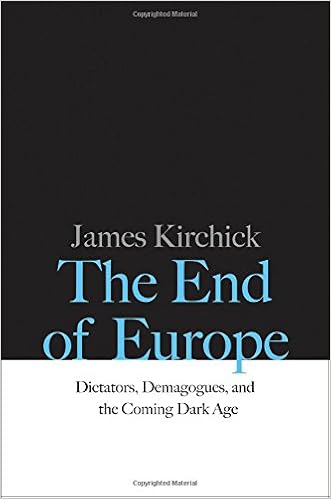 THE END OF EUROPE: DICTATORS, DEMAGOGUES, AND THE COMING DARK AGE. 3/13, 2:00-3:05pm. Sponsor: Brookings. Speakers: Author James Kirchick, Fellow, Foreign Policy Initiative; Thomas Wright, Director, Project on International Order and Strategy, Fellow, Foreign Policy, Center on US and Europe; Constanze Stelzenmuller, Robert Bosch Senior Fellow, Foreign Policy, Center on US and Europe; Leon Wieseltier, Isaiah Berline Senior Fellow in Culture and Policy, Foreign Policy, Governance Studies; Moderator: Robert Kagan, Senior Fellow, Foreign Policy, Project on International Order and Strategy.
COAL PEAK OR PLATEAU? DIGGING INTO THE CLIMATE AND WATER IMPACTS OF CHINA’S DECARBONIZATION. 3/13, 2:00-4:00pm. Sponsor: China Environment Forum, Woodrow Wilson Center (WWC). Speakers: Barbara Finamore, Senior Attorney, Asia Director, National Resources Defense Council (NRDC); Zhou Xi Zhou, Senior Director, IHS Markit’s Power, Gas, Renewables, and Coal Group; Jennifer L. Turner, Director, China Environment Forum, Manager, Global Choke Point Initiative.
INDIA’S STATE ELECTION RESULTS. 3/13, 3:30-5:00pm. Sponsor: Brookings. Speakers: Sadanand Dhume, Resident Fellow, AEI; Irfan Nooruddin, Professor, Walsh School of Foreign Service, Georgetown University; Adam Ziegfeld, Assistant Professor, Political Science and International Affairs, GWU; Alyssa Ayres, Senior Fellow, India, Pakistan, and South Asia, Council on Foreign Relations; Moderator: Tanvi Madan, Director, India Project, Fellow, Foreign Policy, Project on International Order and Strategy.
 CROSS-STRAIT RELATIONS AT A JUNCTURE: JAPANESE AND AMERICAN PERSPECTIVE. 3/13, 9:00-11:00am. Sponsor: Brookings. Speakers: Richard C. Bush, Michael H. Armacost Chair, Chen-Fu and Cecilia Yen Koo Chair in Taiwan Studies, Director, Center for East Asia Policy Studies, Senior Fellow, Foreign policy, John L. Thornton China Center; Chisako T. Masuo, Associate Professor, Graduate School of Social and Cultural Studies, Kyushu University; Russell Hsiao, Executive Director, Global Taiwan Institute; Yasuhiro Matsuda, Professor of International Politics, University of Tokyo.
CUTTING FOREIGN AID? 3/13, 9:30-11:00am. Sponsor: Center for Global Development. Speakers: Scott Morris, Senior Fellow, Director, US Development Policy Initiative, Center for Global Development; John Norris, Executive Director, Sustainable Security and Peacebuilding Initiative, Center for American Progress; Danielle Pletka, Senior Vice President, Foreign and Defense Policy Studies, AEI; James M. Roberts, Research Fellow, Economic Freedom and Growth, Heritage; Moderator: Rajesh Mirchandani, Vice President, Communications and Policy Outreach, Center for Global Development.
NORTHERN IRELAND’S LESSONS FOR ISRAELI-PALESTINIAN PEACE. 3/13, 1:00-5:00pm. Sponsor: Center for Middle East and Africa, US Institute of Peace (USIP). Speakers: Nancy Lindborg, President, USIP; Hon. George Mitchell, Former Senator (D-Maine); Carol Cunningham, Unheard Voices; Melanie Greenberg, Alliance for Peacebuilding; Brandon Hamber, Professor, International Conflict Research Institute, Ulster University; Adrian Johnston, International Fund for Ireland; Joel Braunold, Alliance for Middle East Peace; Lucy Kurtzer-Ellenbogen, Father Josh Thomas, Kids4Peace; Sarah Yerkes, Brookings; Moderators: Amb. Anne Anderson, Embassy of Ireland; Rami Dajani, USIP.
REGIONAL PERSPECTIVES ON US POLICY IN THE MIDDLE EAST. 3/13, 3:00pm. Sponsor: Atlantic Council. Speakers: Kristin Diwan, Senior Fellow, Arab Gulf States Institute; H.A. Hellyer, Nonresident Senior Fellow, Rafik Hariri Center for Middle East, Atlantic Council; Haykel Ben Mahfoud, Nonresident Fellow, Rafik Hariri center for Middle East, Atlantic Council; Karim Mezran, Senior Fellow, Rafik Hariri Center for Middle East, Atlantic Council; Nicola Pedde, Director, Institute for Global Studies, Rome; Moderator: Mirette F. Mabrouk, Deputy Director, Director, Research and Programs, Rafik Hariri Center for Middle East, Atlantic Council.
SEVENTY YEARS OF THE TRUMAN DOCTRINE: STILL GOING STRONG? 3/13, 4:00pm. Sponsor: Institute of World Politics. Speaker: Elizabeth Spalding, Associate Professor of Government, Director, Washington Program, Claremont McKenna College.
NEGOTIATING TRADE AUTHORITY: REMARKS FROM SEN. MIKE LEE (R-UT) ON THE DIVISION OF CONGRESSIONAL AND EXECUTIVE POWERS. 3/13, Reception, 5:15-6:30pm. Sponsor: AEI. Speakers: Mike Lee, Senator (R-UT); Claude Barfield, Resident Scholar, AEI; Gary Hufbauer, Reginald Jones Senior Fellow, PIIE; Scott Lincicome, Adjunct Scholar, CATO Institute.
AFTER WAR, GENDER EQUALITY NEEDS INVESTMENT TOO. 3/13, 10:00-11:30am. SPonsor: US Institute of Peace. Speakers: Carol Cohn, Director, Consortium on Gender, Security and Human Rights, University of Massachusetts, Boston; Thomas Scherer, Program Officer, Economics and Peacebuilding, US Institute of Peace; Janet Stotsky, Economist, Visiting Scholar, International Monetary Fund; Moderator: Carla Koppell, Vice President, Applied Conflict Transformation, US Institute of Peace.
TRUMP, GORSUCH, AND THE CONCENTRATION OF ECONOMIC POWER. 3/13, Noon-1:30pm. Sponsor: Center for American Progress. Speakers: Winnie Stachelberg, Executive Vice President for External Affairs, Center for American Progress; Sen. Amy Klobuchar (D-MN); Todd A. Cox, Director of Policy, NAACP Legal Defense and Educational Fund, Inc.; Deepak Gupta, Founding Partner, Gupta Wessler; Jonathan Kanter, Partner, Antitrust Group, Paul, Weiss, Rifkind, Wharton & Garrison, LLP; Lillian Salerno, Former USDA Deputy Undersecretary for Rural Development; Elizabeth Wydra, President, Constitutional Accountability Center; Moderator: Assistant Professor of Law, Brooklyn Law School.
THE END OF EUROPE: DICTATORS, DEMAGOGUES, AND THE COMING DARK AGE. 3/13, 2:00-3:05pm. Sponsor: Brookings. Speakers: Author James Kirchick, Fellow, Foreign Policy Initiative; Thomas Wright, Director, Project on International Order and Strategy, Fellow, Foreign Policy, Center on US and Europe; Constanze Stelzenmuller, Robert Bosch Senior Fellow, Foreign Policy, Center on US and Europe; Leon Wieseltier, Isaiah Berline Senior Fellow in Culture and Policy, Foreign Policy, Governance Studies; Moderator: Robert Kagan, Senior Fellow, Foreign Policy, Project on International Order and Strategy.COAL PEAK OR PLATEAU? DIGGING INTO THE CLIMATE AND WATER IMPACTS OF CHINA’S DECARBONIZATION. 3/13, 2:00-4:00pm. Sponsor: China Environment Forum, Woodrow Wilson Center (WWC). Speakers: Barbara Finamore, Senior Attorney, Asia Director, National Resources Defense Council (NRDC); Zhou Xi Zhou, Senior Director, IHS Markit’s Power, Gas, Renewables, and Coal Group; Jennifer L. Turner, Director, China Environment Forum, Manager, Global Choke Point Initiative.
INDIA’S STATE ELECTION RESULTS. 3/13, 3:30-5:00pm. Sponsor: Brookings. Speakers: Sadanand Dhume, Resident Fellow, AEI; Irfan Nooruddin, Professor, Walsh School of Foreign Service, Georgetown University; Adam Ziegfeld, Assistant Professor, Political Science and International Affairs, GWU; Alyssa Ayres, Senior Fellow, India, Pakistan, and South Asia, Council on Foreign Relations; Moderator: Tanvi Madan, Director, India Project, Fellow, Foreign Policy, Project on International Order and Strategy.
Monday, March 6, 2017
Information access is essential to a democracy

Why is federal government data disappearing?
By Joshua New, policy analyst at the Center for Data Innovation, a nonprofit, nonpartisan research institute affiliated with the Information Technology and Innovation Foundation.
Op Ed Published 2/21/17 in The Hill
Op Ed Published 2/21/17 in The Hill
The White House recently deleted all of the data on its open data portal, which served as a public clearinghouse for data on everything from federal budgets to climate change initiatives.
This is a red flag, since for eight years, the Obama White House championed the practice of making government data freely available to the public in order to promote transparency and accountability, to serve as a resource for researchers, and to allow innovators to create new tools and services that spur economic activity and solve social problems.
While the Trump administration has not yet signaled that it will oppose open data across the federal government, its silence on the issue suggests that open data may not receive the same level of priority it has in the past. In sharp contrast, President Obama declared a "new era of openness" on his first full day in office and directed federal agencies to be more transparent.
Rather than wait for the Trump administration to change course, Congress should move quickly to adopt the bipartisan OPEN Data Act and permanently codify an open data policy for the U.S. government.
Unlike Data.gov, the federal government's primary open data portal, the White House open data portal was by no means the most crucial repository of data, primarily consisting of machine-readable versions of White House reports, policy initiatives and budgets. Moreover, most of this data should still be available through an archived version of the portal, though a handful of datasets do seem to still be missing, particularly budgeting data for fiscal year 2012.
It is possible that this is merely a case of poor communication: The new administration may be in the process of updating its website and forgot to alert users of the scheduled downtime.
Unfortunately, this latest action comes on the heels of an earlier decision in February by the Department of Agriculture (USDA) to shield government data from public scrutiny by removing data collected by the agency's Animal and Plant Health Inspection Service (APHIS).
The data consisted of inspection reports, enforcement actions, regulatory correspondence and other information related to APHIS' investigations of animal welfare issues, ranging from puppy mills to abuse of animals in research labs, and the USDA decided it should not be publicly available due to ill-conceived concerns about the privacy of animal abusers.
Not only does this action prevent the public from accessing valuable data about animal abuse, but it prevents pet stores in seven states from complying with state laws requiring them to only deal with breeders with clean inspection reports. Stores in these states could previously use APHIS's database to easily identify breeders without histories of violations, but now that database is no longer available to the public.
Instead of simply censoring personally identifiable information when privacy concerns arise, the USDA decided that members of the public should have to file a Freedom of Information Act request to access any of this data — a process that can take months.
The private sector will be unable to rely on government data if federal agencies can make arbitrary and capricious decisions about when to publish datasets. As Obama recognized in one of his executive orders, "The Government should not keep information confidential merely because public officials might be embarrassed by disclosure, because errors and failures might be revealed, or because of speculative or abstract fears. Nondisclosure should never be based on an effort to protect the personal interests of Government officials at the expense of those they are supposed to serve."
For example, some sources are reporting that the administration plans to wipe data from the Environmental Protection Agency (EPA) related to climate change. Reacting to Trump's long history of dismissing climate science and reported plans to reduce the EPA's ability to study climate issues, a large number of civil society groups, civic hackers and concerned scientists have taken to archiving federal climate and environmental data to make it available through a non-government website, fearing that the administration will delete or alter it.
There is no definitive evidence that the Trump administration intends to roll back the valuable commitments to open data that Obama made during his administration, which require federal agencies to treat their data as open and machine-readable by default. However, the Trump administration has also failed to make any indication that it intends to honor or expand upon these commitments.
In fact, the White House has archived the guidance on open data from the Office of Management and Budget along with the Open Government National Action Plans, which detail the U.S. government's commitments to meet the goals of the multinational Open Government Partnership, which include publishing open data, further indicating that it does not consider these policies as its own.
Open data has always been a bipartisan issue. Regardless of how the Trump administration decides to approach open data (https://open.whitehouse.gov as of this writing displays a vague disclaimer simply stating "check back soon for new data"), Congress should act swiftly to ensure that publishing open data remains a permanent responsibility of the federal government so it is not subject to changing political winds.
In the last days of the 114th Congress, the Senate unanimously passed the OPEN Government Data Act to do exactly that, and given the bill's bipartisan support, Congress should view the reintroduction and passage of the bill as a quick win that would benefit the public and private sectors alike.
This is a red flag, since for eight years, the Obama White House championed the practice of making government data freely available to the public in order to promote transparency and accountability, to serve as a resource for researchers, and to allow innovators to create new tools and services that spur economic activity and solve social problems.
While the Trump administration has not yet signaled that it will oppose open data across the federal government, its silence on the issue suggests that open data may not receive the same level of priority it has in the past. In sharp contrast, President Obama declared a "new era of openness" on his first full day in office and directed federal agencies to be more transparent.
Rather than wait for the Trump administration to change course, Congress should move quickly to adopt the bipartisan OPEN Data Act and permanently codify an open data policy for the U.S. government.
Unlike Data.gov, the federal government's primary open data portal, the White House open data portal was by no means the most crucial repository of data, primarily consisting of machine-readable versions of White House reports, policy initiatives and budgets. Moreover, most of this data should still be available through an archived version of the portal, though a handful of datasets do seem to still be missing, particularly budgeting data for fiscal year 2012.
It is possible that this is merely a case of poor communication: The new administration may be in the process of updating its website and forgot to alert users of the scheduled downtime.
Unfortunately, this latest action comes on the heels of an earlier decision in February by the Department of Agriculture (USDA) to shield government data from public scrutiny by removing data collected by the agency's Animal and Plant Health Inspection Service (APHIS).
The data consisted of inspection reports, enforcement actions, regulatory correspondence and other information related to APHIS' investigations of animal welfare issues, ranging from puppy mills to abuse of animals in research labs, and the USDA decided it should not be publicly available due to ill-conceived concerns about the privacy of animal abusers.
Not only does this action prevent the public from accessing valuable data about animal abuse, but it prevents pet stores in seven states from complying with state laws requiring them to only deal with breeders with clean inspection reports. Stores in these states could previously use APHIS's database to easily identify breeders without histories of violations, but now that database is no longer available to the public.
Instead of simply censoring personally identifiable information when privacy concerns arise, the USDA decided that members of the public should have to file a Freedom of Information Act request to access any of this data — a process that can take months.
The private sector will be unable to rely on government data if federal agencies can make arbitrary and capricious decisions about when to publish datasets. As Obama recognized in one of his executive orders, "The Government should not keep information confidential merely because public officials might be embarrassed by disclosure, because errors and failures might be revealed, or because of speculative or abstract fears. Nondisclosure should never be based on an effort to protect the personal interests of Government officials at the expense of those they are supposed to serve."
For example, some sources are reporting that the administration plans to wipe data from the Environmental Protection Agency (EPA) related to climate change. Reacting to Trump's long history of dismissing climate science and reported plans to reduce the EPA's ability to study climate issues, a large number of civil society groups, civic hackers and concerned scientists have taken to archiving federal climate and environmental data to make it available through a non-government website, fearing that the administration will delete or alter it.
There is no definitive evidence that the Trump administration intends to roll back the valuable commitments to open data that Obama made during his administration, which require federal agencies to treat their data as open and machine-readable by default. However, the Trump administration has also failed to make any indication that it intends to honor or expand upon these commitments.
In fact, the White House has archived the guidance on open data from the Office of Management and Budget along with the Open Government National Action Plans, which detail the U.S. government's commitments to meet the goals of the multinational Open Government Partnership, which include publishing open data, further indicating that it does not consider these policies as its own.
Open data has always been a bipartisan issue. Regardless of how the Trump administration decides to approach open data (https://open.whitehouse.gov as of this writing displays a vague disclaimer simply stating "check back soon for new data"), Congress should act swiftly to ensure that publishing open data remains a permanent responsibility of the federal government so it is not subject to changing political winds.
In the last days of the 114th Congress, the Senate unanimously passed the OPEN Government Data Act to do exactly that, and given the bill's bipartisan support, Congress should view the reintroduction and passage of the bill as a quick win that would benefit the public and private sectors alike.
Sunday, March 5, 2017
Monday in Washington, March 6, 2017
ADVANCING U.S. LEADERSHIP IN THE DIGITAL AGE. 3/6, 10:00-11:30am. Sponsor: CSIS. Speakers: Thomas E. Donilon, Partner, O'Melveny & Myers; Samuel J. Palmisano, Chairman, Center of the Global Enterprise; Steven R. Chabinsky, Partner, White & Case; Karen Evans, National Director, U.S. Cyber Challenge; Kiersten Todt, Executive Director, Presidential Commission on Enhancing National Cybersecurity; John J. Hamre, President, CEO, CSIS.
PEACEBUILDING AND JAPAN: VIEWS FROM THE NEXT GENERATION. 3/6, Noon-1:30pm. Sponsor: Stimson Center. Speakers: Kei Koga, Assistant professor, Public Policy and Global Affairs Program, School of Humanities and Social Sciences, Nanyang Technological University (NTU); Hiromi Nagata Fujushige, Associate Professor, Department of Global and Interdisciplinary Studies, Hosei University; Nobuhiro Aizawa, Associate Professor, Kyushu University; Rie Takezawa, Researcher, Institute for International Policy Studies, Adjunct Lecturer, African Politics, Musashino University; Yuki Tatsumi, Senior Associate, East Asia Program, Stimson Center.
THE 1930S AS AN INSPIRATION FOR TODAY’S NEW AUTHORITARIANISM. 3/6, 3:00-4:00pm. Sponsor: Kennan Institute, Wilson Center (WWC). Speaker: Timothy Snyder, Professor of History, Yale University.
PEACEBUILDING AND JAPAN: VIEWS FROM THE NEXT GENERATION. 3/6, Noon-1:30pm. Sponsor: Stimson Center. Speakers: Kei Koga, Assistant professor, Public Policy and Global Affairs Program, School of Humanities and Social Sciences, Nanyang Technological University (NTU); Hiromi Nagata Fujushige, Associate Professor, Department of Global and Interdisciplinary Studies, Hosei University; Nobuhiro Aizawa, Associate Professor, Kyushu University; Rie Takezawa, Researcher, Institute for International Policy Studies, Adjunct Lecturer, African Politics, Musashino University; Yuki Tatsumi, Senior Associate, East Asia Program, Stimson Center.
THE 1930S AS AN INSPIRATION FOR TODAY’S NEW AUTHORITARIANISM. 3/6, 3:00-4:00pm. Sponsor: Kennan Institute, Wilson Center (WWC). Speaker: Timothy Snyder, Professor of History, Yale University.
 THE UK’S DEFENSE APPROACH: KEY THEMES FOR THE YEAR AHEAD. 3/6, 3:30-4:30pm. Sponsor: Brent Scowcroft Center on International Security, Atlantic Council. Speaker: Stephen Lovegrove, Permanent Secretary, Ministry of Defense, UK.
UNDERSTANDING THE TRUMP PHENOMENON. 3/6, 4:00pm. Sponsor: Institute of World Politics, Graduate School of National Security and International Affairs. Speaker: Author Michael A. Walsh, Former Associate Editor, TIME Magazine, Visiting Fellow, Institute of World Politics.
 THE TRAGEDY OF U.S. FOREIGN POLICY: HOW AMERICA'S CIVIL RELIGION BETRAYED THE NATIONAL INTEREST. 3/6, 4:00-5:50pm. Sponsor: Washington History Seminar, Wilson Center (WWC). Speakers: Walter A. McDougall holds a chaired professorship in International Relations and History at the University of Pennsylvania; Eric Arnesen, Fellow, Professor of History, The George Washington University; Christian F. Ostermann, Director, History and Public Policy Program; Cold War International History Project; North Korea Documentation Project; Nuclear Proliferation International History Project, Woodrow Wilson Center.
  THE COMPLACENT CLASS: THE SELF-DEFEATING QUEST FOR THE AMERICAN DREAM. 3/6, 6:00–7:00pm, Arlington, VA. Sponsor: Mercatus Center at George Mason University. Speakers: author, Tyler Cowen, Holbert L. Harris Chair of Economics at George Mason University; Katherine Mangu-Ward, Editor in Chief at Reason.
 Sunday, February 26, 2017
Are Fears of Trump giving China free rein in East Asia misplaced?

He outlines his views in a recent interview in the Asia Times with DOUG TSURUOKA, published February 24, 2017.
Q: On a long strategic view, can China and Japan ever get on the same page? For that to happen, does the US have to get out of the middle?
While I think rivalry fundamentally remains the driver of relations between China and Japan, framing that story only in terms of rivalry is inconormplete. The Chinese are trying to assert that they are the dominant power in the region. There’s almost a psychological element to this — to remind the Japanese that they are the inferior party and to drive wedges between Japan and the US. A Japan that’s isolated from the US is exactly what China seeks. It’s a Japan that’s more likely to bandwagon with China and it weakens the American strategic posture in the region.
The Japanese are desperate to preserve their alliance with the US. It’s the only guarantee of Japanese security. Unless the Japanese are willing to go nuclear — they can’t ever afford to give [that alliance] up, and I don’t think the Japanese are ever going to go nuclear — though they retain that latent capability.
But does that mean the China-Japan relationship means only rivalry? Of course not. These are two countries that are intertwined with each other in countless ways, not just the economic one. It’s not wholly a hostile relationship. They have a lot of overlap. So can they ever get on the same page? No. But they could be reading the same book now and again.
Q: Is it possible that China will be given the run of the region under Trump?
In Japan there is this worry, and I’ve heard it repeatedly in Tokyo, about a G2 redux — the idea that Trump will make a deal with the Chinese and that this is why he fleetingly put the One-China policy on the table. The Japanese think this because Trump is a guy who believes that he’s a great dealmaker. The fear is that he would be willing to sit down with the Chinese and that part of that deal would be a kind of let’s talk about [dividing] East Asia between us. The Japanese have this fear of abandonment. It’s deep-seated in Japanese strategic thinking.
But do I believe that the Chinese will be handed the keys to the palace? I think that if Donald Trump ever tried to do that it would probably trigger a coup d’etat in the United States, I just don’t see that.
Q: What are Trump’s options on North Korea following Pyongyang’s February 12 missile test and what is he likely to do?
I think the options regarding North Korea today are no different than they were under the Obama administration, or for that matter, the Bush administration. It’s an unpalatable set of limited options. It’s the same options that are on the table and being considered by the Trump administration.
The first is the broad engagement option — let’s go back and resume negotiations with the North Koreans with the aim of gaining some form of freeze on the missile and nuclear programs. Then there’s the let’s get the Chinese to do it option; let’s persuade the Chinese or pressure the Chinese to pressure the North Koreans to whatever end, whether it’s a freeze or something more ambitious than that. Secretary of State Rex Tillerson raise the same argument to his Chinese counterpart recently, saying, ‘we would like the Chinese to put more pressure on the North Koreans.’
The other two options are the ones that make most people uncomfortable. But they are the ones to which we’re heading for lack of anything else. One is the military option. That is, responding to the possible test of a North Korean ICBM missile by either attempting to take it out on the launch pad or shoot it down through anti-missile defense systems which hopefully might work, though we don’t know that they will. Or some form of fostering regime change. I prefer the word regime “transformation.” Some way of trying to bring about internal change in North Korea that makes it more likely they’ll give up their nuclear option.
Q: What are the other options?
The last option is the one that I wish we were thinking about more, and more creatively. It could include elements of engagement, but also pressure. Sanctions, for example, have encouraged the forces of change from within North Korea by forcing them to pursue economic reforms that they’d have to do if they were really cut off from sources of capital and trade on the outside.
Q: Did Trump discuss North Korea with Abe during their summit and how aware is Trump of the North Korean nuclear issue?
I don’t know what [Abe and Trump] talked about. But I do know this — the president and people around him — if they weren’t aware that the North Korean nuclear missile program was a serious security issue when they were campaigning, they became aware of it very quickly after the election was over. I think from [Trump’s] first meeting with president Obama it was conveyed that this was going to be a problem that it would be pretty much at the top of his agenda. I believe that Trump made some reference to North Korea after that meeting — almost with surprise.
I don’t think [Trump] had thought much about the issue until then. I have the sense from conversations I’ve had that [the administration] was mainly worried that North Korea was going to force them to respond to some kind of provocation and disrupt their planning for other things regarding their foreign security policy.
Q: Is Trump mulling a policy change toward North Korea?
There was a report that [the administration] has ordered a review of North Korea policy, but I see no evidence of a review going on. When you do a review, you have a sense that it’s going on because experts on the outside are being drawn in. But to my knowledge, it hasn’t taken place.
This should be a very important element. Most importantly, it should be part of our review of our overall force posture in the Western Pacific. It relates to the problem of base issues in Japan — the still determined effort by the US with the support of the Abe government to relocate the Marine air station at Futenma to another part of Okinawa.
Q: What are the military steps, in concert with Japan and South Korea, that Trump should take to strengthen deterrence against North Korea and a Chinese military buildup in the region?
I think it’s high time that we looked at the foreign base issue in Japan in a broader context. The problem is we have an inertia about an investment we’ve made in fixed facilities that is hard to change. If you look at the base structure in Japan and South Korea, it’s pretty much unchanged since the Cold War.
The people I talk to who think about these issues have brought up whether we want to augment our naval and air forces based in Japan and Korea, [as opposed to] preserving our ground presence, even a Marine infantry presence in Okinawa. The purpose would be to make more credible our extended deterrence commitments to both Japan and South Korea.
For instance, there is the idea of adding a second carrier battle group to be home ported in the Western Pacific — that’s a big shift and we’re probably talking about Japan. We’re already increasing somewhat our nuclear-powered submarine basing in Japan, and that is an area from a deterrence point of view where we should be thinking of adding capability. [That would include] attack submarines and ballistic missile submarines.
We should think about adding an entire strike fighter wing to the air base in Misawa, Japan, which has a capacity to take an added presence. That would give us added capability against both China, North Korea and also to deal with increased activity by the Russian Air Force in that area.
This would, in some ways, compensate for a decision I would like to see to finally take most of the 3rd Marines out of Okinawa and move them to Guam. That’s a long-delayed move that needs to be accelerated. The obstacle to that reflects an inability of our services to cooperate with each other rather than any technical or even political problem on the island. We need to re-think more broadly where our force structure ought to be.
Q: Will anything of substance replace TPP?I don’t know what Trump is likely to do. Is [THAAD] something he would trade off for something else?
Q: On a long strategic view, can China and Japan ever get on the same page? For that to happen, does the US have to get out of the middle?
While I think rivalry fundamentally remains the driver of relations between China and Japan, framing that story only in terms of rivalry is inconormplete. The Chinese are trying to assert that they are the dominant power in the region. There’s almost a psychological element to this — to remind the Japanese that they are the inferior party and to drive wedges between Japan and the US. A Japan that’s isolated from the US is exactly what China seeks. It’s a Japan that’s more likely to bandwagon with China and it weakens the American strategic posture in the region.
The Japanese are desperate to preserve their alliance with the US. It’s the only guarantee of Japanese security. Unless the Japanese are willing to go nuclear — they can’t ever afford to give [that alliance] up, and I don’t think the Japanese are ever going to go nuclear — though they retain that latent capability.
But does that mean the China-Japan relationship means only rivalry? Of course not. These are two countries that are intertwined with each other in countless ways, not just the economic one. It’s not wholly a hostile relationship. They have a lot of overlap. So can they ever get on the same page? No. But they could be reading the same book now and again.
Q: Is it possible that China will be given the run of the region under Trump?
In Japan there is this worry, and I’ve heard it repeatedly in Tokyo, about a G2 redux — the idea that Trump will make a deal with the Chinese and that this is why he fleetingly put the One-China policy on the table. The Japanese think this because Trump is a guy who believes that he’s a great dealmaker. The fear is that he would be willing to sit down with the Chinese and that part of that deal would be a kind of let’s talk about [dividing] East Asia between us. The Japanese have this fear of abandonment. It’s deep-seated in Japanese strategic thinking.
But do I believe that the Chinese will be handed the keys to the palace? I think that if Donald Trump ever tried to do that it would probably trigger a coup d’etat in the United States, I just don’t see that.
Q: What are Trump’s options on North Korea following Pyongyang’s February 12 missile test and what is he likely to do?
I think the options regarding North Korea today are no different than they were under the Obama administration, or for that matter, the Bush administration. It’s an unpalatable set of limited options. It’s the same options that are on the table and being considered by the Trump administration.
The first is the broad engagement option — let’s go back and resume negotiations with the North Koreans with the aim of gaining some form of freeze on the missile and nuclear programs. Then there’s the let’s get the Chinese to do it option; let’s persuade the Chinese or pressure the Chinese to pressure the North Koreans to whatever end, whether it’s a freeze or something more ambitious than that. Secretary of State Rex Tillerson raise the same argument to his Chinese counterpart recently, saying, ‘we would like the Chinese to put more pressure on the North Koreans.’
The other two options are the ones that make most people uncomfortable. But they are the ones to which we’re heading for lack of anything else. One is the military option. That is, responding to the possible test of a North Korean ICBM missile by either attempting to take it out on the launch pad or shoot it down through anti-missile defense systems which hopefully might work, though we don’t know that they will. Or some form of fostering regime change. I prefer the word regime “transformation.” Some way of trying to bring about internal change in North Korea that makes it more likely they’ll give up their nuclear option.
Q: What are the other options?
The last option is the one that I wish we were thinking about more, and more creatively. It could include elements of engagement, but also pressure. Sanctions, for example, have encouraged the forces of change from within North Korea by forcing them to pursue economic reforms that they’d have to do if they were really cut off from sources of capital and trade on the outside.
Q: Did Trump discuss North Korea with Abe during their summit and how aware is Trump of the North Korean nuclear issue?
I don’t know what [Abe and Trump] talked about. But I do know this — the president and people around him — if they weren’t aware that the North Korean nuclear missile program was a serious security issue when they were campaigning, they became aware of it very quickly after the election was over. I think from [Trump’s] first meeting with president Obama it was conveyed that this was going to be a problem that it would be pretty much at the top of his agenda. I believe that Trump made some reference to North Korea after that meeting — almost with surprise.
I don’t think [Trump] had thought much about the issue until then. I have the sense from conversations I’ve had that [the administration] was mainly worried that North Korea was going to force them to respond to some kind of provocation and disrupt their planning for other things regarding their foreign security policy.
Q: Is Trump mulling a policy change toward North Korea?
There was a report that [the administration] has ordered a review of North Korea policy, but I see no evidence of a review going on. When you do a review, you have a sense that it’s going on because experts on the outside are being drawn in. But to my knowledge, it hasn’t taken place.
This should be a very important element. Most importantly, it should be part of our review of our overall force posture in the Western Pacific. It relates to the problem of base issues in Japan — the still determined effort by the US with the support of the Abe government to relocate the Marine air station at Futenma to another part of Okinawa.
Q: What are the military steps, in concert with Japan and South Korea, that Trump should take to strengthen deterrence against North Korea and a Chinese military buildup in the region?
I think it’s high time that we looked at the foreign base issue in Japan in a broader context. The problem is we have an inertia about an investment we’ve made in fixed facilities that is hard to change. If you look at the base structure in Japan and South Korea, it’s pretty much unchanged since the Cold War.
The people I talk to who think about these issues have brought up whether we want to augment our naval and air forces based in Japan and Korea, [as opposed to] preserving our ground presence, even a Marine infantry presence in Okinawa. The purpose would be to make more credible our extended deterrence commitments to both Japan and South Korea.
For instance, there is the idea of adding a second carrier battle group to be home ported in the Western Pacific — that’s a big shift and we’re probably talking about Japan. We’re already increasing somewhat our nuclear-powered submarine basing in Japan, and that is an area from a deterrence point of view where we should be thinking of adding capability. [That would include] attack submarines and ballistic missile submarines.
We should think about adding an entire strike fighter wing to the air base in Misawa, Japan, which has a capacity to take an added presence. That would give us added capability against both China, North Korea and also to deal with increased activity by the Russian Air Force in that area.
This would, in some ways, compensate for a decision I would like to see to finally take most of the 3rd Marines out of Okinawa and move them to Guam. That’s a long-delayed move that needs to be accelerated. The obstacle to that reflects an inability of our services to cooperate with each other rather than any technical or even political problem on the island. We need to re-think more broadly where our force structure ought to be.
Q: Will anything of substance replace TPP?I don’t know what Trump is likely to do. Is [THAAD] something he would trade off for something else?
I have no idea. [Secretary of Defense James] Mattis during his brief visit to Seoul reiterated the US desire to and commitment to go ahead with the THAAD deployment. The latest missile tests show the North Koreans want to demonstrate a survivable capability to deliver nuclear weapons. The logic of deploying THAAD is even stronger than it was before.
I noticed in an Abe-Trump joint statement [after the summit] that they referred to discussions, both on a bilateral basis as well as some regional framework. I gather from friends that that was language the Japanese wanted in there. This was to give the Japanese the freedom to continue to pursue a TPP without the US or a revival of the TPP with the US , or [in the context of] other regional trade structures.
The Japanese feel very strongly that TPP without the US is useless, so the big question is can you find other kinds of formulations that would be politically acceptable to Trump? The door is open for some kind of bilateral discussion. [But] I don’t see much enthusiasm in Tokyo for a full-scale, bilateral Free Trade Agreement.
Q: Can you give an example of something that might replace the TPP?
There could be a mini-lateral structure, for example, one that could include Vietnam and Japan. I hope somebody is thinking creatively about this.
Q: What stands out about the recent Trump-Abe summit?
I was frankly stunned that Abe comes to Washington and you have these people [on the US side] who had said, ‘We want to raise currency manipulation and market-access issues.’ They signaled this, including the president, and they did nothing. From what I’m told, the Japanese came prepared and were ready to talk about currency issues, for example and they were surprised that nobody [on the US side] raised it. Even on something where the Trump administration seemed to have a cogent policy view — there was no implementation.
I noticed in an Abe-Trump joint statement [after the summit] that they referred to discussions, both on a bilateral basis as well as some regional framework. I gather from friends that that was language the Japanese wanted in there. This was to give the Japanese the freedom to continue to pursue a TPP without the US or a revival of the TPP with the US , or [in the context of] other regional trade structures.
The Japanese feel very strongly that TPP without the US is useless, so the big question is can you find other kinds of formulations that would be politically acceptable to Trump? The door is open for some kind of bilateral discussion. [But] I don’t see much enthusiasm in Tokyo for a full-scale, bilateral Free Trade Agreement.
Q: Can you give an example of something that might replace the TPP?
There could be a mini-lateral structure, for example, one that could include Vietnam and Japan. I hope somebody is thinking creatively about this.
Q: What stands out about the recent Trump-Abe summit?
I was frankly stunned that Abe comes to Washington and you have these people [on the US side] who had said, ‘We want to raise currency manipulation and market-access issues.’ They signaled this, including the president, and they did nothing. From what I’m told, the Japanese came prepared and were ready to talk about currency issues, for example and they were surprised that nobody [on the US side] raised it. Even on something where the Trump administration seemed to have a cogent policy view — there was no implementation.
Monday in Washington February 27, 2017
 |
| click to order |
 REMAPPING IR: "GENDER, WAR, AND CONFLICT". 2/27, 12:30-1:30pm. Sponsor: Mortara Center for International Studies, Walsh School of Foreign Service, Georgetown University. Speaker: Laura Sjoberg, Associate Professor of Political Science, University of Florida.
HOW TO TAKE RELIGION SERIOUSLY IN WORLD POLITICS: CAN RELIGIOUS STUDIES HELP? 2/27, Noon-1:30pm. Sponsor: Berkeley Center for Religion, Peace, and World Affairs, Georgetown University. Speakers: Katherine Brown, Lecturer, Islamic Studies, Department of Religion and Theology, University of Birmingham; Jocelyn, Senior Fellow, Berkeley Center, Associate Professor, Department of Government, Georgetown University; Andrew Davies, Reader, Public Understanding of Religion; Director, Edward Cadbury Center; Francis Davis, Professor of Religion, Communities, and Public Policy, Department of Theology and Religion, Director, Edward Cadbury Center for Public Understanding of Religion, University of Birmingham.
ALIGNING PARTNERSHIPS FOR SECURITY: A HUMAN RIGHTS BASED APPROACH TO SECURITY AND ECONOMIC COOPERATION. 2/27, 2:00-3:30pm. Sponsor: Human Rights Initiative, CSIS. Speakers: JJ Messner, Executive Director, Fund For Peace; Leana D. Bresnahan, Chief, Human Rights Office, U.S. Southern Command; Albert Yelyang, National Network Coordinator, West Africa Network for Peacebuilding; Campbell Corrigan, Senior Global Director of Security, Newmont Mining Corporation; Shannon N. Green, Director, Senior Fellow, Human Rights Initiative, CSIS.
TRUMP FOREIGN POLICY: CHANGING AND DISRUPTING GLOBAL NORMS. 2/27, 6:00pm, Reception. Sponsors: Women’s Foreign Policy Group; New York University. Speakers: Anne Gearan, Diplomatic Correspondent, Washington Post; Julie Hirscheld, White House Correspondent, New York Times; Jay Solomon, Chief Foreign Affairs Correspondent, Wall Street Journal; Moderator: Elisabeth Bumiller, Washington Bureau Chief, New York Times.
TRUMP FOREIGN POLICY: CHANGING AND DISRUPTING GLOBAL NORMS. 2/27, 6:00pm, Reception. Sponsors: Women’s Foreign Policy Group; New York University. Speakers: Anne Gearan, Diplomatic Correspondent, Washington Post; Julie Hirscheld, White House Correspondent, New York Times; Jay Solomon, Chief Foreign Affairs Correspondent, Wall Street Journal; Moderator: Elisabeth Bumiller, Washington Bureau Chief, New York Times.
NEWSMAKER WITH DEMOCRATIC CONGRESSIONAL LEADERS NANCY PELOSI AND CHUCK SCHUMER. 2/27, 2:00pm. Sponsor: National Press Club. Speakers: Nancy Pelosi, House Democratic Leader; Senator Chuck Schumer (D-NY).
JAPAN’S TRADE POLICY IN AN ERA OF GROWING ANTI-GLOBALISM. 2/27, 2:00-3:30pm. Sponsor: Brookings Institution. Speakers: Vinod K. Aggarwal, Professor, Travers Family Senior Faculty Fellow, Department of Political Science, Director, APEC Study Center, University of California, Berkeley; Yukiko Fukagawa, Professor, Faculty of Political Science and Economics, Waseda University; Takashi Terada, Professor, Department of Political Science, Doshisha University, Operating Advisor, U.S.-Japan Research Institute; Shujiro Urata, Dean, Professor, Graduate School of Asia-Pacific Studies, Waseda University; Moderator: Mireya Solís, Senior Fellow, Foreign Policy, Center for East Asia Policy Studies, Philip Knight Chair in Japan Studies.
PLANT SCIENCE RESEARCH FOR GLOBAL FOOD SECURITY. 2/27, 2:00-3:30pm. Sponsor: U.S-Japan Research Institute (USJI). Speakers: Hiroshi Ezura, Professor, Faculty of Life and Environmental Sciences, University of Tsukuba; Jocelyn Kenneth Campbell Rose, Professor, Plant Biology Section, School of Integrative Plant Sciences, Cornell University; James J. Giovannoni, Professor, ARS/BTI, Ithaca NY, Boyce Thompson Institute for Plant Research, Plant Biology, Cornell University; Tohru Ariizumi, Associate Professor, Faculty of Life and Environmental Sciences, University of Tsukuba.
JAPAN’S TRADE POLICY IN AN ERA OF GROWING ANTI-GLOBALISM. 2/27, 2:00-3:30pm. Sponsor: Brookings Institution. Speakers: Vinod K. Aggarwal, Professor, Travers Family Senior Faculty Fellow, Department of Political Science, Director, APEC Study Center, University of California, Berkeley; Yukiko Fukagawa, Professor, Faculty of Political Science and Economics, Waseda University; Takashi Terada, Professor, Department of Political Science, Doshisha University, Operating Advisor, U.S.-Japan Research Institute; Shujiro Urata, Dean, Professor, Graduate School of Asia-Pacific Studies, Waseda University; Moderator: Mireya Solís, Senior Fellow, Foreign Policy, Center for East Asia Policy Studies, Philip Knight Chair in Japan Studies.
PLANT SCIENCE RESEARCH FOR GLOBAL FOOD SECURITY. 2/27, 2:00-3:30pm. Sponsor: U.S-Japan Research Institute (USJI). Speakers: Hiroshi Ezura, Professor, Faculty of Life and Environmental Sciences, University of Tsukuba; Jocelyn Kenneth Campbell Rose, Professor, Plant Biology Section, School of Integrative Plant Sciences, Cornell University; James J. Giovannoni, Professor, ARS/BTI, Ithaca NY, Boyce Thompson Institute for Plant Research, Plant Biology, Cornell University; Tohru Ariizumi, Associate Professor, Faculty of Life and Environmental Sciences, University of Tsukuba.
COMBATING GENDER BASED VIOLENCE. 2/27, 6:00-8:00pm, Reception. Sponsor: World Affairs Council. Speakers: Salman Sufi, Director General, Chief Minister’s Strategic Reforms Unit (SRU), Punjab, Pakistan; Lyric Thompson, Director, Policy and Advocacy, International Center for Research on Women; Moderator: Barbara Wien, Professor, Masters Program in International Peace and Conflict Resolution, School for International Service, American University.
Subscribe to:
Posts (Atom)