Showing posts with label Editorial. Show all posts

Friday, April 3, 2015

#FreeTheFive

China’s Fear of Women With Pamphlets

EDITORIAL, The New York Times, MARCH 27, 2015

China’s growing crackdown on political dissent is stirring global protests and demands for the release of five women’s rights advocates arrested this month as they sought to hand out leaflets as part of a campaign against sexual harassment on China’s public transportation.

The women were taken into custody ahead of International Women’s Day, March 8. They have been held on suspicion of “picking quarrels and provoking troubles” — a classic authoritarian premise for crushing free speech.

In truth, the five activists are affiliated with the Beijing Yirenping Center, a dedicated nongovernmental organization that focuses on discrimination suffered by various groups, including women, the disabled and people with H.I.V., hepatitis and other illnesses. As the government faced mounting international protests, the situation grew worse this week with a raid on the offices of Yirenping by Chinese security agents, who confiscated files and computers and locked workers out of the center.

The arrests have prompted global rallies and petitions as well as diplomatic complaints. Samantha Power, the United States ambassador to the United Nations, has called for the women’s release and a commitment from China to face up to their grievances, not muzzle them.

Since President Xi Jinping took power two years ago, scores of human rights defenders have been jailed in a crackdown across the spectrum of legitimate protest, from academia to the Internet to organizations like Yirenping. Rights groups say the attempt to throttle government criticism and other speech has been the worst since the deadly Tiananmen Square protests of 1989.

President Xi should see that there is no place for such government thuggery in his campaign to modernize China. He has the chance to build a legacy embracing the advancement of human rights. Instead, he appears to be succumbing to the history of Communist Party leaders who fear citizens’ protests as a prelude to subversion. The Yirenping women stand as a noble opportunity for China, not a threat.

RELATED COVERAGE

Sunday, February 22, 2015

Just what is Japan's postwar?


EDITORIAL: Opposition must push Diet debate in postwar landmark year

The Asahi Shimbun, February 18, 2015


The ongoing debate in the Diet inevitably turns our attention to the significance of Japan’s 70 post-World War II years.

In his policy speech on Feb. 12, Prime Minister Shinzo Abe called for efforts to revitalize the economy, fix the social security system and rebuild education. He told the nation, “Let us together embark on the most drastic reforms since the end of World War II.”

What does the prime minister’s use of the qualifier “since the end of World War II” here signify? Given Abe’s track record of repeatedly calling for a “departure from the postwar regime” and his unmistakable interest in rewriting the Constitution, we believe his reforms are not so much about reviving the economy and fixing other urgent problems. Rather, it is only natural to assume that the ultimate goal of Abe’s reforms is to transform the very nature of our country that has been shaped over the last 70 years.

But is such a transformation right for Japan? At budget committee meetings and other sessions in the coming days, opposition parties must keep questioning the prime minister to find out what he really wants to do, and engage him in further debate.

Abe is already trying to fundamentally change Japan’s diplomatic and security policies in the name of “proactive pacifism.” His Cabinet has approved Japan’s right to participate in collective self-defense, adopted a new development cooperation charter to extend economic assistance to foreign militaries and eased the nation’s traditional arms exports ban. These are the “three arrows” with which the Abe administration has armed itself to pursue its new policies.

During a recent Diet debate, Katsuya Okada, president of the main opposition Democratic Party of Japan, objected to expanding the overseas activities of the Self-Defense Forces. He told Abe, “The danger of proactive pacifism lies in the fact that it pursues two separate goals simultaneously--Japan’s self-defense and world peace--as if they were one and the same.”

But Abe dismissed Okada’s argument out of hand. “You are mistaken,” he shot back. “Proactive peace diplomacy is what proactive pacifism is all about.”

As one example of a situation where Japan’s exercise of its right to collective self-defense may be anticipated, Abe cited SDF minesweeping operations in the Strait of Hormuz in the Middle East. This is an issue on which Abe’s Liberal Democratic Party does not see eye to eye with its junior coalition partner, Komeito.

Minesweeping constitutes an exercise of armed force if conducted before a truce accord is in place. Is the legislature going to allow this? Komeito has been in discussions with the LDP, but Komeito must make its position clear in the Diet.

Where domestic issues are concerned, the rapidly growing income disparity is starting to change the fabric of society.

Kazuo Shii, chairman of the Japanese Communist Party, blamed Abe’s economic policy for “only causing the growing income disparity, nothing more.”

Abe retorted, “You cannot tell whether the disparity is really growing.” But who can truly believe and say that there is no inequality under Japan’s current taxation and employment systems?

Under Japan’s parliamentary Cabinet system, the Cabinet is formed by the majority camp in the Diet, which renders it difficult for opposition parties to make the government change its bills and policies.

Still, it is an important role of opposition parties to expose problems and flaws in government bills through debate to enable the public to form informed opinions. And it is definitely not what the prime minister disdainfully refers to as “argumentative nitpicking.”

In this landmark year when “postwar” as a concept could start changing, both the ruling and opposition camps bear a heavy responsibility in the Diet.

Saturday, January 10, 2015

The Wall Street Journal, of all publications, reprimands Abe

Abe at Ise Shrine January 5, 2015
Abe’s New Year Resolution
Honesty about World War II will bolster Japan’s standing in Asia.

The Wall Street Journal, Editorial
January 8, 2015

East Asia would benefit from improved relations between Japan and South Korea, the region’s U.S.-allied liberal democracies. So it’s good to hear Japanese leader Shinzo Abe resolve that, in marking the 70th anniversary of Tokyo’s World War II surrender later this year, he won’t again whitewash the history of Imperial Japanese aggression.

Debates over World War II still influence Asian politics to a degree that Americans and Europeans find hard to understand. Though Japan has been a pacifist democracy for more than six decades, many of its neighbors condemn it for failing to admit its sins from the first half of the 20th century.

The charge is largely cynical coming from Chinese officials who downplay their own atrocities during the Great Leap Forward or Cultural Revolution. But the dynamic with South Korea is more complex.

South Koreans know that in recent decades Japanese leaders have repeatedly apologized for the past. In 1993 Chief Cabinet Secretary Yohei Kono expressed Tokyo’s “sincere apologies and remorse” for the Imperial Army’s conscription of Korean women as sex slaves, or “comfort women.” In 1995 Prime Minister Tomiichi Murayama expressed “deep remorse” and “sincere apology” that “through its colonial rule and aggression [Japan] caused tremendous damage and suffering to the people of many countries.” In 2005 Prime Minister Junichiro Koizumi repeated these words.

Several Japanese Prime Ministers have also apologized directly to South Korean Presidents for the colonization of Korea and abuse of comfort women. One apology, in 2010, came with the return of 1,200 volumes of Korean royal records looted during colonization.

The problem is that some Japanese politicians and groups promote textbooks that omit wartime atrocities, or insist that the Rape of Nanjing never happened. Mr. Abe, whose grandfather sat in Tojo’s wartime cabinet before serving as a pro-American postwar Prime Minister, sometimes joins this revisionist chorus. He has criticized “masochistic” textbooks, quibbled over the definition of “aggression” and flirted with withdrawing the Kono Statement, which he once said “put dishonor on the back of Japan.” In 2013 he visited Tokyo’s Yasakuni Shrine, which includes 14 class-A war criminals among its honored dead.

All this causes fury in South Korea, where President Park Geun-hye has refused to meet Mr. Abe unless he can “break away from denial of the past.” Chinese officials have been all too happy to embrace Ms. Park and play up Mr. Abe’s diplomatic isolation.

Hence the significance of Mr. Abe’s promise this week to prepare a statement for the Aug. 15 surrender anniversary that will illustrate “Japan’s remorse over the war, its postwar history as a pacifist nation and how it will contribute to the Asia-Pacific region and the world.” He added that his government “has and will uphold statements issued by past Administrations.”

Perhaps nothing Mr. Abe could say would soothe relations with Beijing, where leaders appear committed to stoking anti-Japan nationalism to boost their own legitimacy. As of last year, China’s official calendar includes three new holidays commemorating the Sino-Japanese war.

But with Seoul, Mr. Abe could make real progress. Last month Japan and South Korea agreed for the first time to share intelligence on North Korea through a trilateral arrangement including the United States. A similar deal that didn’t include the U.S. fell apart in 2012 amid popular uproar in South Korea.

Most South Koreans still view Japan negatively, but advances at the official level should be possible given the high stakes in nuclear proliferation, missile defense and cyberwarfare. U.S. involvement will be crucial, but the onus is on Mr. Abe to make good on his pledge to mute Tokyo’s revisionism. Doing so would bolster Japan’s standing in East Asia.

Sunday, May 12, 2013

China’s Evolving ‘Core Interests’

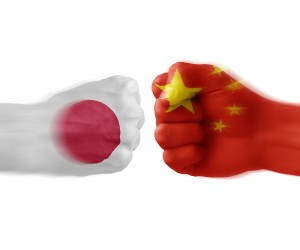
An editorial in The New York Times on May 11, 2013 (in print on May 12, 2013, on page SR10) chastises the Chinese for defining the Senkaku/Diaoyu Islands as "core interests" that will be defended and the Japanese for casting doubt on their willingness to stick to their past war apologies. Neither was necessary and both undermined regional peace and stability.

On the same day, Ian Buruma in The Wall Street Journal had an extensive essay A Dangerous Rift Between China and Japan on how Asia's two great powers play politics with the past and court a crisis.

As he notes: On the surface, the dispute is about history, about which country has the best historical claim to sovereignty over the Senkaku/Diaoyu. In fact, it is more about politics, domestic and international, revealing the tangled relations in a region where history is frequently manipulated for political ends.

Buruma proposes no solution, but laments that
Things, in short, are back to square one: Pax Americana containing China, with Japan as Washington's loyal vassal. This might seem a stable, even comfortable, position from the U.S. point of view. In fact, it isn't. For a long time, the Chinese put up with the U.S. being the policeman of East Asia, because the prospect of a more independent, fully rearmed, even nuclear Japan would be worse. But Japan's role as a kind of cat's paw of American dominance, with Japanese nationalists compensating for their subservience by indulging in bellicose talk, will be the source of ever greater tensions, which are bad for everyone, including the U.S.
In December 2012, Hugh White, a professor of strategic studies at the Australian National University, wrote in an op ed for the The Sydney Morning Herald that the protracted dispute between China and Japan over ownership of the Diaoyu/Senkaku Islands could serve as a flashpoint for military conflict between the two "nuclear" powers this year.

According to Professor White the dispute over the islands is a symptom of tensions engendered by China's rise in the Asia-Pacific, and the challenge it poses to American influence in the region. White believes that China's recent efforts to shore up its claim upon the Diaoyu/Senkaku Islands is a means of "pushing back" against US power in the Asia-Pacific.

Here is the text of The New York Times editorial:

Whenever China wants to identify the issues considered important enough to go to war over, it uses the term “core interests.” The phrase was once restricted to Taiwan, the island nation that China has threatened to forcibly unify with the mainland. About five years ago, Chinese leaders expanded the term to include Tibet and Xinjiang, two provinces with indigenous autonomy movements that Beijing has worked feverishly to control.

Since then, Chinese officials have spoken more broadly about economic growth, territorial integrity and preserving the Communist system. But recently they narrowed their sights again, extending the term explicitly to the East China Sea, where Beijing and Tokyo are dangerously squabbling over some uninhabited islands. Top Chinese military officials first delivered the message to Gen. Martin Dempsey, chairman of the Joint Chiefs of Staff, when he visited Beijing last month. The next day, the Foreign Ministry spokeswoman, Hua Chunying, told reporters that “the Diaoyu Islands are about sovereignty and territorial integrity. Of course it’s China’s core interest.”

This wording, with its threatening implications, is raising new tensions in a region already on edge over North Korea and several other maritime disputes, and it will make it harder to peacefully resolve the dispute over the islands, called Diaoyu in China, and Senkaku in Japan.

While Japan has held the islands for more than a century, China also claims title and has sent armed ships and planes from civilian maritime agencies to assert a presence around them. The waters adjacent to the islands are believed to hold oil and gas deposits.

To some extent, China is simply throwing its weight around, challenging the United States and its regional allies. On Wednesday and Thursday, Chinese state-run newspapers carried commentaries questioning Japan’s sovereignty over the island of Okinawa, where about 25,000 American troops are based. Japan, whose wartime aggression against China and other countries still engenders animosity, has not helped. Last September, the government of Prime Minister Yoshihiko Noda provocatively bought three of the islands from their private owner.

The right-wing nationalists who took power in December may be equally unwilling to put Japan’s past behind it, although the government of the new prime minister, Shinzo Abe, took a positive step on Tuesday when it said it would abide by official apologies that the country made two decades ago to victims of World War II. China and Japan have strong economic ties and are critical to regional stability. Both will lose if they stumble into war or otherwise cannot resolve this escalating dispute. Though efforts are under way to find a mutually face-saving solution, using loaded phrases like “core interests” to describe the islands only adds to the political and emotional sensitivities and will not advance that goal.

Saturday, April 27, 2013

Finally the Washington Post Speaks Out

Prime Minister Abe
Reflecting the increasing dismay and exasperation of the Obama Administration with Japanese Prime Minister Shinzo Abe, the Editorial Board of the Washington Post on Saturday, April 26th hectored Abe about his retrogressive views of the Pacific War, Imperial Japan, and patriotism. 

Most important, this editorial signals a significant public shift of governmental attitudes toward Japan. American officials are now willing to  point out Japan's historical revisionism as destabilizing to the region and insulting to Americans and Chinese alike. Expect more messages this coming Golden Week to Japan that these values and behaviors are unacceptable for an American ally. For example, appointments and pubic meetings with Japanese Cabinet members will be downgraded or canceled.

Confucius' lesson of the day: Men of totally different principles can never act together.

Shinzo Abe’s inability to face history
By Editorial Board, Published: April 26, 2013

FROM THE MOMENT last fall when Shinzo Abe reclaimed the office of Japanese prime minister that he had bungled away five years earlier, one question has stood out: Would he restrain his nationalist impulses — and especially his historical revisionism — to make progress for Japan?

Until this week, the answer to that question was looking positive. Mr. Abe has taken brave steps toward reforming Japan’s moribund economy. He defied powerful interest groups within his party, such as rice farmers, to join free-trade talks with the United States and other Pacific nations that have the potential to spur growth in Japan. He spoke in measured terms of his justifiable desire to increase defense spending.

This week he seemed willing to put all the progress at risk. Asked in parliament whether he would reconsider an official apology that Japan issued in 1995 for its colonization of Korea in the past century, Mr. Abe replied: “The definition of what constitutes aggression has yet to be established in academia or in the international community. Things that happened between nations will look differently depending on which side you view them from.”

Officials in South Korea and China responded with fury, and understandably so. Yes, history is always being reinterpreted. But there are such things as facts. Japan occupied Korea. It occupied Manchuria and then the rest of China. It invaded Malaya. It committed aggression. Why, decades after Germany solidified its place in Europe by facing history honestly, are facts so difficult for some in Japan to acknowledge?

We understand that South Korea and, to an even greater extent, China at times stoke anti-Japan sentiment for domestic political purposes. China distorts its own history and, unlike Japan, in many cases does not allow conflicting interpretations to be debated or studied. But none of that excuses the kind of self-destructive revisionism into which Mr. Abe lapsed this week.

An inability to face history will prejudice the more reasonable goals to which South Korea and China also object. Mr. Abe has valid reasons, given the defense spending and assertive behavior of China and North Korea, to favor modernization of Japan’s defense forces. He has good reason to question whether Japan’s “self-defense” constitution, imposed by U.S. occupiers after World War II, allows the nation to come to the aid of its allies in sufficient strength. But his ability to promote reform at home, where many voters remain skeptical, and to reassure suspicious neighbors plummets when he appears to entertain nostalgia for prewar empire.

Thursday, April 25, 2013

Times echoes American frustration with Japan

Masakaki Offering
The New York Times
April 23, 2013

Japan’s Unnecessary Nationalism
By THE EDITORIAL BOARD

Since taking over as Japan’s prime minister in December, Shinzo Abe and his conservative Liberal Democratic Party have been juggling a packed agenda of complicated issues, including reviving the country’s economy, coping with the aftermath of the 2011 earthquake and tsunami and managing prickly relations with neighbors like North Korea. Stirring up extraneous controversy is counterproductive, but that’s exactly what he and his nationalist allies in Parliament have done.

On Tuesday, a group of 168 mostly low-ranking conservative lawmakers visited the Yasukuni Shrine in central Tokyo, which honors Japan’s war dead, including several who were executed as war criminals after World War II. It was the largest mass visit by Parliament in recent memory. The Japanese news media said that Mr. Abe didn’t visit the shrine, instead sending a ritual offering, but his deputy prime minister and two other ministers made a pilgrimage there over the weekend. He has a record of defending Japan’s conduct during World War II.

Mr. Abe and his allies know well what a deeply sensitive issue this is for China and South Korea, which suffered under Japan’s 20th-century empire-building and militarism, and the reaction was predictable. On Monday, South Korea canceled a visit to Japan by its foreign minister and China publicly chastised Japan. On Tuesday, tensions were further fueled when Chinese and Japanese boats converged on disputed islands in the East China Sea.

Japan and China both need to work on a peaceful solution to their territorial issues. But it seems especially foolhardy for Japan to inflame hostilities with China and South Korea when all countries need to be working cooperatively to resolve the problems with North Korea and its nuclear program.

Instead of exacerbating historical wounds, Mr. Abe should focus on writing Japan’s future, with an emphasis on improving its long-stagnant economy and enhancing its role as a leading democracy in Asia and beyond.