Showing posts with label ANU. Show all posts

Thursday, June 6, 2013

Abe's Nationalist Japan


Australian National University Professor and APP member Rikki Kersten was interviewed on June 2nd byABC News about the consequences of Abe's retrogressive views of Japanese history and society. His interpretations of the past affect not only relations with Japan's Asia neighbors, but also with Western allied nations. As Dr. Kersten points out,
If Japan continues to provoke mistrust in its agenda, if it's nationalism continues to offend ,Japan cannot hope to act effectively economically diplomatically, or even in security terms. It is that simple.
Although there has been a steady stream of articles and speeches trying to refute impressions of new Japanese rightwing revisionism by Abe government supporters, there is evidence to the contrary. He is either founder or a prominent member of many conservative nationalist parliamentary leagues and study groups such as Nippon Kaigi and Sosei Nippon.

Abe is, as noted by Sophia University Koichi Nakano on the video above, a "nationalist by conviction."

Professor Kersten will visit Washington, DC in July to exchange views with American colleagues.

Thursday, May 30, 2013

Introducing the Indo-Pacific

Over the past few months, the phrase "Indo-Pacific" has begun to overtake "Asia-Pacific" in referring to Asia. As the article from APP's Australia National University's members show, the origin of the phrase is Australian.

Australia’s New Region: the Indo-Pacific

By Melissa Conley-Tyler and Samantha Shearman, Australian Institute of International Affairs
Article reprinted from ANU's East Asia Forum: 21 May 2013

With the release of the Defence White Paper 2013 on 3 May, Australia officially has a new region, the ‘Indo-Pacific’: a strategic arc ‘connecting the Indian and Pacific Oceans through Southeast Asia’.

Given the long history of linking Australian foreign policy to the ‘Asia-Pacific’, this is a significant change in terminology. How did we get to this point and what are the implications?

The ‘Indo-Pacific’ is not a new term in Australian debates. According to the Lowy Institute’s Rory Medcalf, the ‘Indo-Pacific’ was used in the 1950s to discuss decolonisation in the 1960s at two seminars held by the Australian Institute of International Affairs and the ANU, and again in the 1970s [1]. Yet for around 30 years the term was not prominent until its re-emergence in 2005 in a paper by the Institute of Southeast Asian Studies’ Michael Richardson who saw the inclusion of India, Australia and New Zealand in the East Asia Summit (EAS) as symbolising a more unified ‘Indo-Pacific’ region.

The term ‘Indo-Pacific’ subsequently started to appear in Australian foreign policy discourse, including speeches by Minister for Defence Stephen Smith [2] and Department of Foreign Affairs and Trade Secretary Peter Varghese [3]. But it remains contested, and there was significant debate around the wisdom of adopting the concept.

Proponents of the term have argued that it realistically describes the region in which Australia is situated. Rory Medcalf views the Indo-Pacific as ‘a valid and objective description of the greater regional system in which Australia now finds itself’. In his book There Goes the Neighbourhood: Australia and the rise of Asia, Michael Wesley writes that the concept emerged due to the reality of growing economic and strategic links through Asia: what he terms the ‘Indo-Pacific power highway’.

At the same time, there has been criticism of adopting the Indo-Pacific concept too readily. For example, Nick Bisley and Andrew Phillips have expressed concerns about what the term means and whose interests it serves; it should not be code for ‘dialling up Australia’s alliance commitments to 11’ [4].

The debate between these two camps was fairly even until May 2013 as the Indo-Pacific was not yet embedded into foreign policy. The 2012 White Paper on Australia in the Asian Century mentioned the concept only twice. This was a long way from giving the concept official endorsement.

This situation changed with the Defence White Paper 2013 [5]. Presenting the Indo-Pacific as a ‘logical extension’ of what the 2009 Defence White Paper called the ‘wider Asia-Pacific region’, the 2013 White Paper adopts the concept and ‘adjusts Australia’s priority strategic focus to the arc extending from India though Southeast Asia to Northeast Asia, including the sea lines of communication on which the region depends’. The White Paper sets ‘a Stable Indo-Pacific’ as one of Australia’s four key strategic interests, making the capacity to ‘contribute to military contingencies in the Indo-Pacific’ one of the Australian Defence Force’s four principal tasks. It is hard to imagine a fuller incorporation of the concept into a government policy document.

There are a number of implications of adopting an Indo-Pacific worldview.

First, Australia will need to assess the implications of the Indo-Pacific concept for its key relationships with the United States and China; in particular, whether adopting the Indo-Pacific concept may be perceived to tie Australia closer to the United States and alienate China. Early indications of China’s response to the 2013 White Paper were positive — it seems the term ‘Indo-Pacific’ is less of a concern to China than the characterisation of China as a potential threat [6].

Second, Australia must consider how to build relationships with Indo-Pacific powers as it adopts the Indo-Pacific concept into its foreign policy. Australia will need to engage strongly with many other regional players, for example India, Indonesia, Japan, South Korea, Vietnam, Thailand and key African countries, as well as China and the United States. This could include security dialogues and operational cooperation.

Third, Australia will need to invest time and effort in building Indo-Pacific institutions. These institutions include the Indian Ocean Rim Association for Regional Cooperation (IOR-ARC) and the EAS. Given that Australia is set to take over the chair of IOR-ARC in late 2013, it is well-positioned to promote greater facilitation of regional cooperation. The EAS also includes the major Indo-Pacific powers, providing a space for cooperation and discussion of regional issues. The EAS has been reported to be a key part of Australia’s foreign policy as part of a ‘six + two + N’ formula for setting priorities [7]. This suggests that Australia’s multilateral focus is increasingly turning towards Indo-Pacific institutions.

The adoption of the Indo-Pacific concept in the Defence White Paper 2013 may have surprised some observers. Many other Indo-Pacific powers are in a similar position to Australia; this means that Australian debates receive attention for indications of how others will respond to similar forces. As something of a bellwether state, Australia’s new conception of its region as the Indo-Pacific will not go unnoticed.

Wednesday, May 29, 2013

Mike Mochizuki in Australia

with

George Washington University


31 May 2013

4:30-5:30pm

Australian National University
Lecture theatre 2, Hedley Bull Centre (Bldg #130)
corner of Liversidge Street and Garran Road, ANU

Why are Japan and China now locked in an intractable conflict regarding the Senkaku/Diaoyu islands? Professor Mike Mochizuki will examine the historical, economic, military, territorial and international legal dimensions of this dispute. After considering power transition and nationalism as possible explanations, he will explain the recent deterioration of Japan-China relations by analysing the interactive dynamics between the two countries and the role of domestic politics. Finally, he will consider possible ways to mitigate the conflict.

Professor Mochizuki holds the Japan-U.S. Relations Chair in Memory of Gaston Sigur at the Elliott School of International Affairs at The George Washington University. Dr. Mochizuki was director of the Sigur Center for Asian Studies from 2001 to 2005. He co-directs the "Memory and Reconciliation in the Asia-Pacific" research and policy project of the Sigur Center. Previously, he was a Senior Fellow at the Brookings Institution. He was also Co-Director of the Center for Asia-Pacific Policy at RAND and has taught at the University of Southern California and Yale University. He is a board member of Asia Policy Point.

You can preview this talk by listening to an interview Professor Mochizuki gave to  Radio Australia on May 27, 2013.

Sunday, May 12, 2013

China’s Evolving ‘Core Interests’

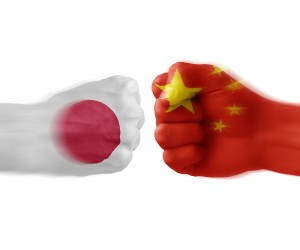
An editorial in The New York Times on May 11, 2013 (in print on May 12, 2013, on page SR10) chastises the Chinese for defining the Senkaku/Diaoyu Islands as "core interests" that will be defended and the Japanese for casting doubt on their willingness to stick to their past war apologies. Neither was necessary and both undermined regional peace and stability.

On the same day, Ian Buruma in The Wall Street Journal had an extensive essay A Dangerous Rift Between China and Japan on how Asia's two great powers play politics with the past and court a crisis.

As he notes: On the surface, the dispute is about history, about which country has the best historical claim to sovereignty over the Senkaku/Diaoyu. In fact, it is more about politics, domestic and international, revealing the tangled relations in a region where history is frequently manipulated for political ends.

Buruma proposes no solution, but laments that
Things, in short, are back to square one: Pax Americana containing China, with Japan as Washington's loyal vassal. This might seem a stable, even comfortable, position from the U.S. point of view. In fact, it isn't. For a long time, the Chinese put up with the U.S. being the policeman of East Asia, because the prospect of a more independent, fully rearmed, even nuclear Japan would be worse. But Japan's role as a kind of cat's paw of American dominance, with Japanese nationalists compensating for their subservience by indulging in bellicose talk, will be the source of ever greater tensions, which are bad for everyone, including the U.S.
In December 2012, Hugh White, a professor of strategic studies at the Australian National University, wrote in an op ed for the The Sydney Morning Herald that the protracted dispute between China and Japan over ownership of the Diaoyu/Senkaku Islands could serve as a flashpoint for military conflict between the two "nuclear" powers this year.

According to Professor White the dispute over the islands is a symptom of tensions engendered by China's rise in the Asia-Pacific, and the challenge it poses to American influence in the region. White believes that China's recent efforts to shore up its claim upon the Diaoyu/Senkaku Islands is a means of "pushing back" against US power in the Asia-Pacific.

Here is the text of The New York Times editorial:

Whenever China wants to identify the issues considered important enough to go to war over, it uses the term “core interests.” The phrase was once restricted to Taiwan, the island nation that China has threatened to forcibly unify with the mainland. About five years ago, Chinese leaders expanded the term to include Tibet and Xinjiang, two provinces with indigenous autonomy movements that Beijing has worked feverishly to control.

Since then, Chinese officials have spoken more broadly about economic growth, territorial integrity and preserving the Communist system. But recently they narrowed their sights again, extending the term explicitly to the East China Sea, where Beijing and Tokyo are dangerously squabbling over some uninhabited islands. Top Chinese military officials first delivered the message to Gen. Martin Dempsey, chairman of the Joint Chiefs of Staff, when he visited Beijing last month. The next day, the Foreign Ministry spokeswoman, Hua Chunying, told reporters that “the Diaoyu Islands are about sovereignty and territorial integrity. Of course it’s China’s core interest.”

This wording, with its threatening implications, is raising new tensions in a region already on edge over North Korea and several other maritime disputes, and it will make it harder to peacefully resolve the dispute over the islands, called Diaoyu in China, and Senkaku in Japan.

While Japan has held the islands for more than a century, China also claims title and has sent armed ships and planes from civilian maritime agencies to assert a presence around them. The waters adjacent to the islands are believed to hold oil and gas deposits.

To some extent, China is simply throwing its weight around, challenging the United States and its regional allies. On Wednesday and Thursday, Chinese state-run newspapers carried commentaries questioning Japan’s sovereignty over the island of Okinawa, where about 25,000 American troops are based. Japan, whose wartime aggression against China and other countries still engenders animosity, has not helped. Last September, the government of Prime Minister Yoshihiko Noda provocatively bought three of the islands from their private owner.

The right-wing nationalists who took power in December may be equally unwilling to put Japan’s past behind it, although the government of the new prime minister, Shinzo Abe, took a positive step on Tuesday when it said it would abide by official apologies that the country made two decades ago to victims of World War II. China and Japan have strong economic ties and are critical to regional stability. Both will lose if they stumble into war or otherwise cannot resolve this escalating dispute. Though efforts are under way to find a mutually face-saving solution, using loaded phrases like “core interests” to describe the islands only adds to the political and emotional sensitivities and will not advance that goal.

Wednesday, April 10, 2013

Using belligerence to forget


On April 8th,  U.S. Deputy Secretary of Defense Ashton Carter gave a speech to CSIS outlining American military capabilities and plans in the Indo-Pacific region. [TRANSCRIPT] He emphasized that "U.S. interests in the region are enduring, and so also will be our political and economic presence." Five times "enduring" was mentioned in the speech.

He justified American presence in the region as a responsibility accompanied by values worth defending:
I'm more accustomed to listening to people question why the U.S. spends more on defense than the next 16 largest militaries in the world combined. This statistic is true and won't change much in coming years. It's also worth noting that most of the rest of the money that the world spends on defense is spent by countries that are allies and friends of the United States. These levels of defense spending are a reflection of the amount of responsibility that the U.S. and its friends and allies share for providing peace and security.
It was not, however, until nearly the last question in the Qs&As that he said something substantive about Japan. Australian National University Professor Rikki Kersten asked "how important is it for Japan to embrace collective self-defense for the American rebalancing to work effectively" [53.09 in the video above].

He responded that it would be very constructive for Japan to open the way to exercising its right to collective self-defense. "Japan's increasing awareness of their own abilities, their own capabilities and their increasing freeing of themselves from the strictures they imposed upon themselves some decades ago...is a constructive thing. They're doing that with respect to arms exports, with respect to the kinds of activities that they are willing to engage in internationally," he said, adding that "I think that's a good thing."

But then he added something unexpected. He implied that the militarily stronger Japan would supersede regional hesitations about trusting Japan. And this is the strategy that the U.S. is encouraging Japan to pursue.
It's part of the U.S.-assisted, if I may be so bold, process of healing and putting history behind in that part of the world. It gives Japan the opportunity to play a role that it can, which is a very constructive one around the world in security affairs. They are already involved in counter-piracy activities,  maritime domain awareness, and so forth. These are areas where the world has a need, and if Japan can be a part of fulfilling that need,  that is good for everyone.
This answer startled many. What exactly is the Defense Department doing to help Japan address its history of aggression and unhealed wounds? And how is this expected to encourage Japan's neighbors to welcome the country's more overt military presence? And does this mean that the United States will be signing on to Prime Minister Abe's constitutional change campaign?

Later: As reported by Kyodo in the Japan Times, April 9th.