by Hugh White, Professor of Strategic Studies at the Strategic and Defence Studies Centre, The Australian National University, East Asia Forum, 8 May 2017
This month, what is likely to be this year’s biggest international summit will convene in Beijing to discuss the world’s most ambitious project. China’s Belt and Road Initiative aims to redefine the global economy of the 21st century by integrating the economies of Europe, Asia and Africa through an unprecedented and powerful network of transport and communications infrastructure.
Some estimates put the price tag at US$1 trillion, which would make it one of the biggest — if not the biggest — economic development programme in history, far outspending the United States’ Marshall Plan which rebuilt Europe after World War II.
So it’s no wonder that so many world leaders will be turning up in Beijing to claim a piece of it. China’s foreign minister recently announced that 110 countries would be represented, including no fewer than 28 national leaders. They include the leaders of Russia, Turkey, Kazakhstan, Indonesia, Vietnam, Malaysia, Pakistan and the Philippines from Asia, and many others from Europe and Africa. It is going to be a very notable gathering.
Among countries not sending their national leaders are the United States, Japan, India, Australia, Singapore and most western European countries. They will all be represented at more junior levels. It is no coincidence that these countries are aligned with the United States and are uneasy about China’s rise — or perceived to be so.
To many people, China’s Belt and Road Initiative is not really about economics at all. Instead it is all about expanding China’s strategic and political influence at the United States’ expense. That’s probably half right, but we should not overlook the powerful economic logic that underpins the geopolitical calculations.
There are several economic imperatives driving China’s Belt and Road Initiative. They include the need to foster development in China’s remote and underdeveloped regions and the hope of finding outlets for China’s massive overcapacity in key industries like steel-making.
But the key motive is much bigger and more ambitious. China wants to consolidate its position at the centre of global supply and manufacturing networks. This is crucial for the outlook of the global economy over the coming decades. China understands that as its economy matures and income levels rise, the lower-wage industries that have fuelled the country’s growth so far will migrate to less-developed nations where labour costs are lower.
China’s economic planners do not want to fight that trend. Rather, they want to use it to China’s advantage by centring the nation in the expanding supply-chain web that will result from it. That way China can capture the lion’s share of more sophisticated higher-wage economic opportunities.
The Belt and Road Initiative is central to this vision and therefore to realising China’s ambition to become a middle-income country. It also mutually reinforces China’s parallel ambition to take the lead in the coming decades in developing key technologies and setting global standards — including for critical elements of infrastructure like high-speed rail and data networks.
So far all of this is just a bold vision. Making it a reality will require an extraordinary alignment of financial resources, technical skills, political commitment and international cooperation. None of these can be taken for granted, so a degree of healthy scepticism is in order.
And yet it would be unwise to dismiss the Belt and Road Initiative as a mere pipe dream. It has the power and prestige of President Xi Jinping behind it. It is at the centre of his vision for China, and of his ambition to transform China’s place in the world during his time as its leader. He is determined to make it work, and in China today that counts for a great deal.
We can see its geo-economic implications by comparing what the Belt and Road Initiative tells us about China’s vision of its economic future with what the policies of the Trump administration tell us about the United States’ economic vision.
While President Xi is welcoming the world to Beijing to promote a plan to export low-income jobs in industries like steel-making to other countries and shift Chinese workers into higher-income ones, President Trump plans to lock out imports of steel so as to revive the United States’ steel industry. He wants to put US workers back into the jobs that Beijing wants to move Chinese workers out of.
The contrast could not be starker. The United States wants to shrink its role in the global economy and cling to old industries, while China wants to expand its global role and move its economy into new industries. No prizes for guessing which of these visions is more likely to succeed.
So that brings us back to the geopolitical and strategic equation. Clearly the leaders who are choosing to stay away from Beijing next month are right in their fear that the Belt and Road Initiative has immense geopolitical significance.
But those leaders are wrong in imagining that they can stop that from happening by simply staying away. They have to offer an alternative. If the United States and its allies are really determined to resist China’s challenge to the old US-led liberal global order, they have to counter Beijing’s powerful vision of a future global economy centred on China. And to do that they need an equally powerful and ambitious global economic vision of their own.
Showing posts with label White Hugh. Show all posts
Showing posts with label White Hugh. Show all posts
Tuesday, May 16, 2017


Sunday, May 12, 2013
China’s Evolving ‘Core Interests’
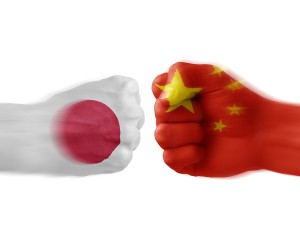
On the same day, Ian Buruma in The Wall Street Journal had an extensive essay A Dangerous Rift Between China and Japan on how Asia's two great powers play politics with the past and court a crisis.
As he notes: On the surface, the dispute is about history, about which country has the best historical claim to sovereignty over the Senkaku/Diaoyu. In fact, it is more about politics, domestic and international, revealing the tangled relations in a region where history is frequently manipulated for political ends.
Buruma proposes no solution, but laments that
Things, in short, are back to square one: Pax Americana containing China, with Japan as Washington's loyal vassal. This might seem a stable, even comfortable, position from the U.S. point of view. In fact, it isn't. For a long time, the Chinese put up with the U.S. being the policeman of East Asia, because the prospect of a more independent, fully rearmed, even nuclear Japan would be worse. But Japan's role as a kind of cat's paw of American dominance, with Japanese nationalists compensating for their subservience by indulging in bellicose talk, will be the source of ever greater tensions, which are bad for everyone, including the U.S.In December 2012, Hugh White, a professor of strategic studies at the Australian National University, wrote in an op ed for the The Sydney Morning Herald that the protracted dispute between China and Japan over ownership of the Diaoyu/Senkaku Islands could serve as a flashpoint for military conflict between the two "nuclear" powers this year.
According to Professor White the dispute over the islands is a symptom of tensions engendered by China's rise in the Asia-Pacific, and the challenge it poses to American influence in the region. White believes that China's recent efforts to shore up its claim upon the Diaoyu/Senkaku Islands is a means of "pushing back" against US power in the Asia-Pacific.
Here is the text of The New York Times editorial:
Whenever China wants to identify the issues considered important enough to go to war over, it uses the term “core interests.” The phrase was once restricted to Taiwan, the island nation that China has threatened to forcibly unify with the mainland. About five years ago, Chinese leaders expanded the term to include Tibet and Xinjiang, two provinces with indigenous autonomy movements that Beijing has worked feverishly to control.
Since then, Chinese officials have spoken more broadly about economic growth, territorial integrity and preserving the Communist system. But recently they narrowed their sights again, extending the term explicitly to the East China Sea, where Beijing and Tokyo are dangerously squabbling over some uninhabited islands. Top Chinese military officials first delivered the message to Gen. Martin Dempsey, chairman of the Joint Chiefs of Staff, when he visited Beijing last month. The next day, the Foreign Ministry spokeswoman, Hua Chunying, told reporters that “the Diaoyu Islands are about sovereignty and territorial integrity. Of course it’s China’s core interest.”
This wording, with its threatening implications, is raising new tensions in a region already on edge over North Korea and several other maritime disputes, and it will make it harder to peacefully resolve the dispute over the islands, called Diaoyu in China, and Senkaku in Japan.
While Japan has held the islands for more than a century, China also claims title and has sent armed ships and planes from civilian maritime agencies to assert a presence around them. The waters adjacent to the islands are believed to hold oil and gas deposits.
To some extent, China is simply throwing its weight around, challenging the United States and its regional allies. On Wednesday and Thursday, Chinese state-run newspapers carried commentaries questioning Japan’s sovereignty over the island of Okinawa, where about 25,000 American troops are based. Japan, whose wartime aggression against China and other countries still engenders animosity, has not helped. Last September, the government of Prime Minister Yoshihiko Noda provocatively bought three of the islands from their private owner.
The right-wing nationalists who took power in December may be equally unwilling to put Japan’s past behind it, although the government of the new prime minister, Shinzo Abe, took a positive step on Tuesday when it said it would abide by official apologies that the country made two decades ago to victims of World War II. China and Japan have strong economic ties and are critical to regional stability. Both will lose if they stumble into war or otherwise cannot resolve this escalating dispute. Though efforts are under way to find a mutually face-saving solution, using loaded phrases like “core interests” to describe the islands only adds to the political and emotional sensitivities and will not advance that goal.
Whenever China wants to identify the issues considered important enough to go to war over, it uses the term “core interests.” The phrase was once restricted to Taiwan, the island nation that China has threatened to forcibly unify with the mainland. About five years ago, Chinese leaders expanded the term to include Tibet and Xinjiang, two provinces with indigenous autonomy movements that Beijing has worked feverishly to control.
Since then, Chinese officials have spoken more broadly about economic growth, territorial integrity and preserving the Communist system. But recently they narrowed their sights again, extending the term explicitly to the East China Sea, where Beijing and Tokyo are dangerously squabbling over some uninhabited islands. Top Chinese military officials first delivered the message to Gen. Martin Dempsey, chairman of the Joint Chiefs of Staff, when he visited Beijing last month. The next day, the Foreign Ministry spokeswoman, Hua Chunying, told reporters that “the Diaoyu Islands are about sovereignty and territorial integrity. Of course it’s China’s core interest.”
This wording, with its threatening implications, is raising new tensions in a region already on edge over North Korea and several other maritime disputes, and it will make it harder to peacefully resolve the dispute over the islands, called Diaoyu in China, and Senkaku in Japan.
While Japan has held the islands for more than a century, China also claims title and has sent armed ships and planes from civilian maritime agencies to assert a presence around them. The waters adjacent to the islands are believed to hold oil and gas deposits.
To some extent, China is simply throwing its weight around, challenging the United States and its regional allies. On Wednesday and Thursday, Chinese state-run newspapers carried commentaries questioning Japan’s sovereignty over the island of Okinawa, where about 25,000 American troops are based. Japan, whose wartime aggression against China and other countries still engenders animosity, has not helped. Last September, the government of Prime Minister Yoshihiko Noda provocatively bought three of the islands from their private owner.
The right-wing nationalists who took power in December may be equally unwilling to put Japan’s past behind it, although the government of the new prime minister, Shinzo Abe, took a positive step on Tuesday when it said it would abide by official apologies that the country made two decades ago to victims of World War II. China and Japan have strong economic ties and are critical to regional stability. Both will lose if they stumble into war or otherwise cannot resolve this escalating dispute. Though efforts are under way to find a mutually face-saving solution, using loaded phrases like “core interests” to describe the islands only adds to the political and emotional sensitivities and will not advance that goal.
Subscribe to:
Posts (Atom)