Saturday, May 2, 2026
APP'S BOOKS OF THE WEEK of April 27, 2026
Monday, December 8, 2025
Asia Policy Events, Monday December 8, 2025
Sunday, September 28, 2025
Asia Policy Events, Monday September 29, 2025
WORLD WAR II AT 80: THE UNENDING QUEST FOR REDRESS. 9/29, 6:30pm (JST), 5:30am (EDT), IN PERSON ONLY. Sponsor: Yokosuka Council on Asia Pacific Studies. Speaker: Timothy Webster, Lawyer, Professor, Translator. 5
BOOK TALK: THE NATIONAL INTEREST: POLITICS AFTER GLOBALIZATION. 9/29, 11:00am-Noon (EDT), VIRTUAL. Sponsor: Quincy Institute. Speakers: author Philip Cunliffe, Associate Professor of International Relations, Department of Risk and Disaster Reduction, University College London; Dr. Zachary Paikin, Deputy Director, Better Order Project, Research Fellow, Grand Strategy Program, Quincy Institute. PURCHASE BOOK
WHAT ROBERT F. KENNEDY’S LIBERAL PATRIOTISM COULD TEACH POLITICAL LEADERS TODAY. 9/29, 11:00am-12:30pm (EDT), HYBRID. Sponsor: American Enterprise Institute (AEI), Progressive Policy Institute (PPI). Speakers: Robert Doar, President, AEI; Richard D. Kahlenberg, Director, American Identity Project, PPI; Will Marshall, President, PPI; Ritchie Torres, US House of Representatives (D-NY).
BREAKING TRADITION: PRESIDENT TRUMP’S APPROACH TO POLICY DECISIONS AND IMPLEMENTATION. 9/29, 12:30pm (EDT), IN PERSON ONLY. Sponsor: Japan Society. Speaker: Wilbur L. Ross, Jr., Former U.S. Secretary of Commerce; Former Board Chair, Japan Society. Members only.
SHIFTING DYNAMICS IN THE MIDDLE EAST: PYONGYANG'S OBSERVATIONS AND OPPORTUNITIES. 9/29, 2:00pm (EDT), VIRTUAL. Sponsor: National Committee on North Korea. Speakers: Yaakov Katz, Israeli-American author and journalist, co-founder of MEAD; Siegfried Hecker, former director, Los Alamos National Laboratory, Professor Emeritus, Stanford University.
INTERNATIONAL LAW FOR WHOM? 9/29, 3:00-4:00pm (EDT), HYBRID. Sponsor: U.S.–Asia Law Institute. Speaker: Jean-Marc Coicaud, Distinguished Professor of Law and Global Affairs, Rutgers University, author The Law and Politics of International Legitimacy. PURCHASE BOOK
THE IDEAS THAT BUILT AMERICA—AND WHERE THEY STAND TODAY. 9/29, 5:00-6:30pm (EDT), IN PERSON ONLY. Sponsor: R Street Institute. Speakers: Sabrina Schaeffer, Vice President, R Street Institute; Lindsay M. Chervinsky, PhD, Presidential Historian/Executive Director, George Washington Presidential Library at Mount Vernon.
BEYOND TARIFFS: WHAT NEXT FOR THE GLOBAL TRADE REALIGNMENT? 9/29, 5:00-7:30pm (EDT), IN PERSON ONLY. Sponsor: Association of Women in International Trade (WIIT); George Washington University (GWU). Speakers: Christine McDaniel, Senior Economist, Macroeconomics, Trade & Investment Global Practice, World Bank Group; Daniel Ciarcia, Account Manager/Carbon Consultant, EcoEngineers; Bennett Caplan, President, Abridge; Jenny A. Kai, Senior Manager, Government and Public Affairs, Japan Automobile Manufacturers Association (JAMA).
Monday, July 7, 2025
Monday Asia Policy Events, July 7, 2025
IS THE DOLLAR IN DANGER? 7/7, Noon (EDT), VIRTUAL. Sponsor: Foreign Policy. Speakers: Kenneth Rogoff, Author, Our Dollar, Your Problem; Ravi Agrawal, Editor in Chief, Foreign Policy.
STATISTICAL REVIEW OF WORLD ENERGY 2025. 7/7, 1:00-2:00pm (EDT), VIRTUAL. Sponsor: Energy Security & Climate Change Program, CSIS. Speakers: Nick Wayth, CEO, Energy Institute; Daniel Yergin, Vice Chairman, S&P Global; Angie Gildea, ENR Regional Co-Leader for Americas, KPMG in the U.S.; Joseph Majkut, Director, Energy Security and Climate Change Program.
RULE OF LAW IN CHINA, 10 YEARS AFTER THE 709 CRACKDOWN. 7/7, 2:00–3:00 pm (EDT), ONLINE. Sponsor: Freeman Chair in China Studies, CSIS. Speakers: Henrietta Levin, Senior Fellow and Freeman Chair in China Studies, CSIS; Nicholas Bequelin, Research Scholar in Law and Senior Fellow, Yale Law School; Jonathan Czin, Michael H. Armacost Chair in Foreign Policy Studies, Brookings; Donald C. Clarke, David Weaver Research Professor Emeritus of Law, GW Law School; Yaqiu (Rachel) Wang, Chinese Human Rights Researcher and Advocate.
ADM DENNIS BLAIR - US NATIONAL SECURITY AND WORLD AFFAIRS. 7/7, 7:00-8:15pm (EDT), VIRTUAL. Sponsor: Institute for Corean-American Studies (ICAS). Speaker: ADM Dennis Blair, former Commander in Chief, US Pacific Command.
Sunday, April 27, 2025
Monday Asia Policy Events, April 28, 2025
Wednesday, January 8, 2020
The dark corners of Japanese justice
The Carlos Ghosn case shines a light into the dark corners of Japanese justice
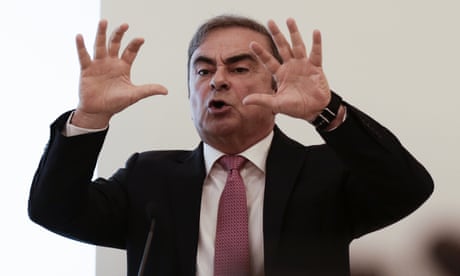
In a long and detailed press conference on Wednesday, Carlos Ghosn – former head of the Renault-Nissan-Mitsubishi alliance, who made a dramatic escape from his house arrest in Japan last month – came out with guns blazing.
Speaking in Beirut, he alleged that former Nissan colleagues and prosecutors were co-conspirators in a plot to oust him in order to prevent a closer merger with Renault. Ghosn denied the allegations against him, which include under-reporting his income and misusing company funds, and said that he was mistreated while in solitary confinement. This included interrogations that lasted for up to eight hours a day without a lawyer present. The presumption of guilt, and the pressure placed on him by Japanese prosecutors to confess, convinced him that there was no chance of a fair trial. And so he fled.
Given his brash demeanour and immense wealth, Ghosn is not a sympathetic character. Indeed, he may well be guilty of financial misconduct. But he is right to shine a light into the dark corners of Japan’s justice system. Anyone familiar with the Japanese justice system would know that Ghosn’s allegations are not far-fetched.
In Japan, laws are used as weapons against targeted people and not applied equally. One example of this is the “hostage justice” (hitojichi-shiho) system. Hostage justice boils down to the accused remaining in custody until they incriminate themselves by signing a confession. Often this is drawn up by prosecutors who browbeat the accused without defence counsel. Knowing that the playing field is tilted in favour of the prosecutors and that they could spend a very long time in jail even before going to court, many innocent defendants confess. Ghosn spent more than 120 days in detention.
In Japan, the accused can be held for 23 days without charge – this is almost indefinitely renewable as judges normally give prosecutors the benefit of the doubt. In April 2019, more than 1,000 lawyers and scholars submitted a petition to the justice ministry demanding an end to this antediluvian system. The Japan Federation of Bar Associations has also long lobbied against it.
The 2019 petition doesn’t mince its words, asserting that the “long-term detention in the Carlos Ghosn case has triggered surprise and criticism overseas, leading to doubts about Japan’s integrity as a democratic nation that guarantees human rights”.
Japan’s hostage justice, interrogation procedures barring lawyers and arbitrary denial of family contact are out of step with many other democracies and international law. The UN Human Rights committee has called on Japan to reform its criminal justice system to allow for the presence of defence counsel, while a UN committee against torture called Japan’s criminal justice system “medieval”.
In recent years, the media has exposed many cases of prosecutors’ abuse of power, inventing, misinterpreting or ignoring exonerating evidence in an attempt to maintain the dubious distinction of a 99% conviction rate. Recognising the problem, the justice ministry has since the 2000s introduced piecemeal reforms to reduce dependence on confessions and allowing some videotaping of interrogations. Even so, the system remains stacked against defendants.
While Ghosn managed a dramatic escape, ordinary Japanese citizens remain vulnerable to a judicial system that draws sharp criticism from domestic civil society organisations, lawyers’ federations and the media. The vested interests are scrambling to defend this system, but it’s high time to end the era of Japanese prosecutors running amok and trampling on civil liberties.
Sunday, June 23, 2019
Monday in Washington, June 24, 2019
A CONVERSATION WITH PAKISTAN’S AMBASSADOR ASAD MAJEED KHAN. 6/24, 10:00-11:30am. Sponsor: Carnegie. Speaker: Asad Majeed Khan, Ambassador to the United States, Islamic Republic of Pakistan, Moderator: George Perkovich, Ken Olivier and Angela Nomellini Chair, Vice President for Studies, Technology and International Affairs Program, Nuclear Policy Program, Carnegie.
JAM V. IFC: THE END OF ABSOLUTE IMMUNITY FOR INTERNATIONAL ORGANIZATIONS? 6/24, Reception, 5:30-7:00pm. Sponsors: Washington Foreign Law Society; American Society of International Law (ASIL). Speakers: John B. Bellinger, III, Head of Arnold & Porter’s Global Law and Public Policy practice, Former Legal Adviser, Department of State; Michael Matheson, Professor of Foreign Relations Law, GWU Law School, Former member, U.N. International Law Commission (invited); Ethiopis Tafara, Vice President and General Counsel, International Finance Corporation; Moderator: Antonia Tzinova, President, Washington Foreign Law Society, Partner, Holland & Knight. Fee
ROK-U.S. STRATEGIC FORUM 2019. 6/24, 11:30am-6:30pm. Sponsor: Korea Foundation, Korea Chair, CSIS. Speakers: Ambassador Richard Armitage, President, Armitage International; Ambassador Lee Sihyung, President, The Korea Foundation; Congressman Ami Bera (D-CA), Chairman, Subcommittee on Oversight and Investigations, House Foreign Affairs Committee, Co-Chair of Congressional Study Group on Korea; Ms. Joy Yamamoto, Director, Office of Korean Affairs, U.S. Department of State; Dr. Joon Hyung Kim, Professor, Handong Global University; Dr. Sang Hyun Lee, Senior Research Fellow, Sejong Institute; Ambassador Joseph Yun, Senior Advisor to the Asia Center, United States Institute of Peace; Former Special Representative for North Korea Policy and Deputy Assistant Secretary for Korea and Japan, U.S. Department of State; Dr. Haksoon Paik, President, Sejong Institute; Dr. Ramon Pacheco Pardo, KF-VUB Korea Chair, Institute for European Studies (IES-VUB); Reader (Associate Professor) in International Relations, King's College London; Dr. Jiyoung Park, Director and Senior Fellow, Center fgor Science and Technology Policy, Asan Institute for Policy Studies; Dr. Kurt Campbell, Chairman and CEO, The Asia Group; Former Assistant Secretary of State for East Asian and Pacific Affairs, U.S. Department of State; Dr. Thomas Christensen, Professor of International and Public Affairs and Director of the China and the World Program, Columbia University: Dr. Jae-ho Chung, Professor of International Relations, Director of the Program on US-China Relations, Seoul National University; Dr. Sangjoon Kim, Professor of Political Science, Yonsei University; Victor Cha, Senior Adviser and Korea Chair; Mark Lippert, Senior Advisor (Non-resident), Korea Chair; Sue Mi Terry, Senior Fellow, Korea Chair.
CLOSING THE GENDER GAP IN ARMS CONTROL, NONPROLIFERATION, AND DISARMAMENT. 6/24, 2:00-3:30pm. Sponsor: Nuclear Policy Program, Carnegie Endowment. Speakers: Author, Renata Dwan, Still Behind the Curve, Director, Institute for Disarmament Research, United Nations; Laura Holgate, Vice President for materials risk management, NTI, Director, Gender Champions in Nuclear Policy; Moderator: James M. Acton, Jessica T. Mathews Chair, Co-director, Nuclear Policy Program, Carnegie.
Wednesday, June 5, 2019
Japan's Hostage Justice
![]() |
By Jeff Kingston, Director of Asian studies at Temple University Japan, APP member and author of Japan (Polity History) and Contemporary Japan: History, Politics, and Social Change since the 1980s.
As G20 world leaders gather in Japan, they might spare a moment contemplating the fate of former Nissan Chairman Carlos Ghosn. His arrest has sent a chill through the international business community because his ongoing ‘prosecution’ by a steady drip of orchestrated media leaks smacks of bias. The prosecutors with the connivance of Nissan executives are trying the case in the court of public opinion, vilifying Ghosn and sending a strong message that he is guilty and stands little chance of being exonerated.
Too much face has been invested in taking him down to let some lawyer get him off. But how much face has been lost in the charade of his perp walk in handcuffs with the media fortuitously on hand as he was led off his private jet when he arrived in Japan? And then the farce of granting bail, re-arrest and now more severe bail conditions that prevent Ghosn from any contact with his wife?
This case illustrates how the Japan, Inc. of cozy insider networks is circling the wagons to prevent a merger with Renault, Nissan’s partner and majority stakeholder. Destroying Ghosn is the collateral damage of protectionism Japanese style.
Many foreign executives are heading for the exits, and now a summons from Tokyo to overseas managers gives them a sense of what life must have been like for KGB operatives during the Cold War when Moscow called them back for consultations. Just ask Ghosn’s close advisor Greg Kelly who was lured back to Tokyo under false pretenses and then arrested.
Ghosn may indeed be guilty but surely its time the prosecution proves its case in court because the longer this spectacle drags on the more damage is done to Japan’s reputation. It’s very hard to generate public sympathy for white collar suspects, but the Japanese prosecutors have managed to do so.
Some argue that Japan is showing its peers how to go after the big shots who almost always seem to skate free, but why this particular man at this particular time? It’s not as if there hasn’t been a cascade of Japanese corporate scandals in recent years, but none of these Japanese executives have been subject to hostage justice. We are told that they didn’t enrich themselves like Ghosn is alleged to have done, but clearly they were fudging data and covering up misconduct not because they were selfless corporate samurai, but were keen to protect their jobs, promotions and perks.
Japan’s system of hostage justice looks more like the rule by law than the rule of law, meaning laws are used as weapons against targeted people and not applied equally to everyone. Hostage justice boils down to the accused remaining in custody without defense counsel during questioning until they incriminate themselves by signing a confession. Many defendants buckle to the pressure and confess knowing their rights and freedom are hostage to the whim of prosecutors.
The Japan Federation of Bar Associations has long lobbied against hostage justice (hitojichi-shiho) because it is a hotbed of prosecutorial abuses. The JFBA criticizes the reliance on confessions and points out that many of them are coerced, leading to numerous miscarriages of justice. In April over one thousand lawyers and scholars submitted a petition to the Justice Ministry demanding an end to this antediluvian system. The petition doesn’t mince words, asserting, “The long-term detention in the Carlos Ghosn case has triggered surprise and criticism overseas, leading to doubts about Japan’s integrity as a democratic nation that guarantees human rights.”
The murky bribery case of Hiromasa Ezoe, the former chairman of Recruit, is instructive. Ezoe kept a diary while in detention in 1989 that became the basis for his 2010 book “Where is the Justice?” It is a nightmarish tale about life inside the maws of Japan’s judicial system. Badgered repeatedly during 113 days of detention, he claims prosecutors threatened they would arrest his friends and colleagues if he did not confess and so he did.
In 2003, Ezoe was given a suspended three-year prison term, a light sentence he regarded as vindication. In his view, he was punished for breaching society’s moral code rather than illegal actions. Back in 1989, the NYT reported that he might spend an incredible 15 years in court. As it turned out, that was only slightly off the mark.
In Japan the accused can be held for 23 days, renewable almost indefinitely as judges normally give prosecutors the benefit of the doubt. As Ghosn knows very well, judicial authorities resort to piecemeal charges so they can re-arrest suspects and thereby prolong detention without a lawyer sitting in on questioning. Ghosn spent 108 days in detention before being granted bail the first time.
According to the lawyers’ petition, “The ‘hostage justice’ system uses detention beyond its original purpose of securing suspects’ appearance in court and violates the human rights guaranteed by the Constitution of Japan, including physical freedom, the right to remain silent, and the right to a fair trial. The practice to refuse the release of those who deny their crimes can violate the prohibition of torture, as it uses sufferings caused by prolonged detention and interrogation to force confession.”
In recent years several convictions have been overturned because the prosecution invented, misinterpreted or ignored exonerating evidence, rendering the much-touted 99 percent conviction rate more of an embarrassment than bragging point.
The video that was released after Ghosn was rearrested makes clear that he attributes his legal problems to a palace coup orchestrated by executives who opposed the merger plan he backed. Some of those executives have cut deals with prosecutors in exchange for dishing the dirt on Ghosn.
Maybe it’s not a one-sided stitch up job, but until Ghosn gets to present his side of the case in court the judiciary will remain indicted by many Japanese advocates of the rule of law, human rights and fair trials alongside the international business community.
Monday, February 25, 2019
Monday in Washington, February 25, 2019
COMPETING WITH RUSSIA "SHORT OF WAR": HOW THE US AND NATO HAVE COUNTERED RUSSIAN COERCION PANEL DISCUSSION. 2/25, 9:30-11:00am, Washington, DC. Sponsor: Stimson Center. Speakers: Thomas Wright, Director, Center on United States and Europe, and Senior Fellow, Project on International Order and Strategy, Brookings; Michael Kofman, Research Scientist, CNA Corporation, and Fellow, Kennan Institute, Wilson Center; Barry Blechman, Co-founder, Stimson Center, and Distinguished Fellow, Defense Strategy and Planning program, Stimson Center; James Siebens, Research Associate, Defense Strategy and Planning program, Stimson Center.
POLITICS, TALIBAN NEGOTIATIONS & NUCLEAR SECURITY IN PAKISTAN. 2/25, Noon-1:30pm, Washington, DC. Sponsor: Elliott School of International Affairs, GWU. Speaker: Hassan Abbas, Professor of International Security Studies, Chair of the Department of Regional and Analytical Studies, National Defense University's College of International Security Affairs.
DEFENDING RULE OF LAW NORMS: A CONVERSATION WITH ROD ROSENSTEIN. 2/25, Noon-1:30pm, Washington, DC. Sponsor: CSIS; Defending Democratic Institutions. Speakers: Rod Rosenstein, Deputy Attorney General; Suzanne Spaulding, Senior Adviser, Homeland Security, International Security Program, CSIS.
THE SECOND TRUMP-KIM SUMMIT: PERSPECTIVES FROM THE UNITED STATES, JAPAN, AND SOUTH KOREA. 2/25, 12:30-2:00pm, Lunch, Washington, DC. Sponsor: Center for American Progress (CAP). Speakers: Neera Tanden, President and CEO, CAP; Rep. Eliot Engel (D-NY), Chairman, Committee on Foreign Affairs, U.S. House of Representatives; Taisuke Mibae, Visiting Senior Fellow, Scowcroft Center for Strategy and Security, Atlantic Council; Jung H. Pak, Senior Fellow and SK-Korea Foundation Chair in Korea Studies, Brookings; Soojin Park, Public Policy Fellow, Wilson Center; Moderator: Michael Fuchs, Senior Fellow, CAP.
*EU STRATEGY IN AN AGE OF GREAT POWER COMPETITION. 2/25, 3:00-4:15pm, Washington, DC. Sponsor: Carnegie Endowment. Speakers: Sven Biscop, Professor, Ghent University, and Director, Europe in the World Program, Egmont-Royal Institute for International Relations; Andrea Kendall-Taylor, Senior Fellow and Director, Transatlantic Security Program, Center for a New American Security; Benjamin Haddad, Director, Future Europe Initiative, Atlantic Council; Moderator: Erik Brattberg, Director, Europe Program, and Fellow, Carnegie Endowment.
*MAKING THE DIGITAL ECONOMY WORK FOR EVERYONE. 2/25, 5:00–7:00pm, Washington, DC. Sponsor: Economic Policy Institute (EPI). Speakers: Hubertus Heil, German Federal Minister of Labour and Social Affairs; Liz Shuler, Secretary-Treasurer, AFL-CIO; Moderator: Thea M. Lee, President, EPI.
Thursday, December 20, 2018
Resolution of the Association of German Historians on Current Threats to Democracy
For historically sensitive speech, against discriminatory terms
Political discussion in a democracy involves pointed language that clearly expresses one’s own position but does not deny other people fundamental respect. Today’s derogatory descriptions of politicians as “enemies of the people” or the media as producers of “fake news” employ the same kind of anti-democratic language that was used in the interwar period. We also have many historical examples of the dangerous effects of using disparaging terms to exclude perceived “others” on the basis of their religion, their ethnic background, their gender or their sexual orientation.
For parliamentary democracy and a pluralistic culture of debate, against populism
In pluralistic democracies, public policy is the result of open debates in which a variety of political opinions and social interests are expressed. A unified will of the people that can be discerned by those regarding themselves as “called” is, in contrast, a fiction, used by people in political debates primarily for the purpose of making themselves invulnerable. In the Weimar Republic, the idea of “the people’s will” smoothed the way to power for a movement whose “Führer” saw himself as the incarnation of that will.
Given the many violently waged intra-European conflicts of the past, European unification based on a commitment to pluralistic democracy and inalienable human rights is one of the most significant accomplishments of the 20th century. While the legitimacy of individual national interests is undisputed, unilateral nationalist actions threaten this historical achievement. Exclusively national problem-solving strategies cannot meet the political, humanitarian, ecological and economic challenges of the globalized present. Also, in light of colonial violence committed by Europeans in other parts of the world, it is crucial to acknowledge our shared responsibility for the consequences of our policies in regions outside of Europe.
For humanity and the rule of law, against the slander of migrants
Migration is a historical constant. Despite all the problems it entails, on the whole it has benefited societies – including Germany’s. It is therefore important to work toward proactive, pragmatic policies concerning migration and integration that respect both human and international rights. It is essential that the constitutionally guaranteed right to political asylum and the duty to provide help in humanitarian crisis situations be applied in a way that falls to Germany not only because of its economic power but also for historical reasons.
For critical engagement with the past, against the political misuse of history
The Federal Republic of Germany today is a stable democracy. One of the reasons why is that the German people, after considerable resistance at first, now for the most part deal with the history of National Socialism in a self-critical and reflective way. Our own discipline, too, was slow to embrace this process. In any case, a responsible approach to the past has as its prerequisite the findings of historiography, a field that must also be willing to be self-critical and that in principle is independent of political influence. Its information is based on research into historical sources and is open to critical discussion. Only in this way will it be possible to remain mindful of the historical bases of our democracy and defend them against “alternative facts.”
Sunday, December 9, 2018
Monday in Washington, December 10, 2018
BRIDGING THE DATA-POLICY GAP ON COUNTERTERRORISM. 10:30am-12:30pm. Sponsors: US Institute of Peace (USIP); Institute for Economics & Peace (IEP). Speakers: Richmond Blake, Director of Policy and Advocacy, Mercy Corps; Michelle Breslauer, Director, Americas Program, IEP; Leanne Erdberg, Director Countering Violent Extremism, USIP; Elizabeth (Liz) Hume, Vice President, Acting CEO, Alliance for Peacebuilding; Erin Miller, Global Terrorism Database Manager, National Consortium for the Study of Terrorism and Responses to Terrorism.
MORAL CASE FOR A FREE ECONOMY. 11:00am-Noon. Sponsor: Heritage. Speakers: Robert Sirico, Reverend, President, Acton Institute; David R. Burton, Senior Fellow, Economic Policy, Heritage.
NEEDED NOW MORE THAN EVER: THE INTERNATIONAL RELIGIOUS FREEDOM ACT OF 1998. 11:45am-1:30pm. Sponsor: Hudson. Speakers: Samuel Brownback, U.S. Ambassador-at-Large for International Religious Freedom; Frank R. Wolf, Former U.S. Representative (R-VA) and primary sponsor of the International Religious Freedom Act of 1998; Thomas L. Gallagher, President and CEO, Religion News Foundation; Nina Shea, Senior Fellow and Director, Center for Religious Freedom; Hudson Institute and Co-Chair, Working Group on Christians and Religious Pluralism in the Middle East; Kristina Arriaga, Vice Chair, U.S. Commission on International Religious Freedom; Paul Marshall, Senior Fellow, Center for Religious Freedom, Hudson Institute and Distinguished Senior Fellow, Institute for the Study of Religion, Baylor University; Hillel Fradkin, Senior Fellow and Director, Center on Islam, Democracy and the Future of the Muslim World, Hudson Institute and founder and co-editor of Current Trends in Islamist Ideology; Elizabeth Prodromou; Co-chair, Working Group on Christians & Religious Pluralism in the Middle East, Center for Religious Freedom, Hudson Institute and Associate Professor, Fletcher School of Law & Diplomacy, Tufts University; Erin Rodewald, Co-author, 20th Anniversary of the International Religious Freedom Act: A Retrospective; Lou Ann Sabatier, Co-Author, 20th Anniversary of the International Religious Freedom Act: A Retrospective.
FUTURE DIRECTIONS FOR THE PEACE CORPS. 1:00-2:30pm. Sponsor: CSIS. Speakers: Dr. Jody K. Olsen, Director, Peace Corps; Mark L. Schneider, Former Director, Peace Corps, Senior Adviser, Americas Program, Human Rights Initiative, CSIS.
DIVERSE BOOTS ON THE GROUND: EU AND NATO EFFECTIVENESS. 3:30-5:30pm, Washington, DC. Sponsors: German Marshall Fund (GMF); Women International Security (WIIS); Women in Public Service Project (WPSP), Wilson Center. Speakers: Laura Groenendaal, Europe Program, GMF Brussels; Ellen Haring, Senior Fellow, WIIS, Director Combat Integration Initiative Project; Kathleen Hicks, Senior Vice President, Henry A. Kissinger Chair, and Director of the International Security Program, CSIS; Dr. Gale A. Mattox, Global Fellow, Professor of Political Science, U.S. Naval Academy; Moderator: Gwen K. Young, Director, Women in Public Service Project, Wilson Center.
LANTOS RULE OF LAW LECTURE WITH HAROLD HONGJU KOH. 4:30-6:00pm. Sponsor: SAIS, Johns Hopkins. Speakers: Harold Hongju Koh, Professor of International Law, Yale Law School; Eliot Cohen, Vice Dean for Education and Academic Affairs, Professor of Strategic Studies, SAIS, Johns Hopkins; moderator, Katrina Lantos Swett, President, Lantos Foundation for Human Rights and Justice.
HOW A MISGUIDED FEDERAL RESERVE EXPERIMENT DEEPENED AND PROLONGED THE GREAT RECESSION. 5:00-6:15pm. Sponsor: AEI. Speakers: Paul H. Kupiec, Former Associate Director, Division of Insurance and Research, FDIC, Resident Scholar, AEI; George Selgin, Senior Fellow, Director, Center for Monetary and Financial Alternatives, Cato, Professor of Economics, University of Georgia; David Beckworth, Senior Research Fellow, Mercatus Center, George Mason University; Bill Nelson, Executive Vice President, Chief Economist, Bank Policy Institute.