Showing posts with label Museum. Show all posts

Saturday, July 18, 2020

Things Japanese in Washington


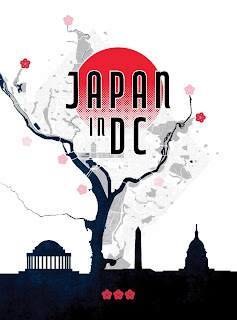
Japan in DC


JAPAN IN DC is a 128-page full color, high-quality paperback, based on the writing, photography, and creative expressions of Washington, DC students who spent their summer 2017 investigating the presence of Japan in their own hometown. The adventure was coordinated by Globilize DC. It is a quirky, curious albeit heart-felt addition to Washington's travel literature. The students encounter not just the obvious, but discover Japan's complex involvement in the nation's capital.

They visit memorials, museums, theaters, gardens, nonprofits, exchange programs, Japanese markets, Japanese restaurants, veterans groups, foundations, think tanks, companies, and the Embassy of Japan. 

One stop they make is to the Navy Yard where in 1860 the first Japanese delegation to the U.S. arrived to visit Washington. At the Yard's National Museum of the U.S. Navy the students marvel at the WWII guns. Yet, missed was the 14 foot model of the USS Houston (CA-30). The sinking of this heavy cruiser in the Sunda Strait on March 1, 1942 marked the end of the U.S. Asiatic Fleet. Only 368 of the total complement of 1011 men of the Houston managed survive the sinking and machine gun attacks.The survivors became POWs of Japan and most were sent to the Thai-Burma Death Railway as slave laborers. Of this group, 79 died of maltreatment and starvation.

The book is destined to be a significant artifact of Abe Administration public diplomacy. Tourists and historians are encouraged to purchase a copy. A bargain at only $16, your purchase is also a good deed. All proceeds from the sale of the book support Globalize DC's Japanese language and culture programs offered at no cost to DC public high school students.   

Friday, December 30, 2016

Taiwan's Comfort Women

President Ma at opening of Ama Museum
Comfort Women” Museum Opens in Taipei, Reunites Korean Victim with Former Taiwan President

By Dennis Halpin
, visiting scholar at the US-Korea Institute at SAIS (Johns Hopkins University). He previously served as an analyst in the INR Bureau at the State Department and on the Foreign Affairs Committee of the House of Representatives as an adviser on Asian issues, from 2000 to 2013. he is an APP member.

A version of this essay first appeared in the Global Taiwan Brief, Vol. 1, #13, December 14, 2016 and The Hankyoreh, December 19, 2016.
The highlight of the December 10th opening day of the Ama (阿嬤) (ama is a Taiwanese term of endearment for grandmother; halmuni is used in Korean) Museum was the reuniting of Korean “Comfort Woman” survivor Lee Yong-soo with former President of Taiwan Ma Ying-jeou. Halmuni Lee, 89, who was kidnapped at the age of sixteen and brought to Taiwan to service kamikaze pilots at the Hsinchu air base, had last met with Mr. Ma during his tenure as Taiwan’s President. 

The two embraced each other as old friends. Lee stated that, despite the horrific experience of being repeatedly raped on a daily basis as a young girl, she considers Hsinchu, located in Taiwan, her “second hometown after Daegu, Korea.” Halmuni Lee spoke of the bittersweet irony of the fact that many of the Japanese pilots she was forced to service spent their last night with her before flying off to their suicidal deaths.

Former President Ma stated that the words “Comfort Women” (慰安婦) were a misnomer and should only be used with quotation marks. Ma said that the correct words for what Halmuni Lee and other victims endured would be “military sex slaves” (軍事性奴隸). He said that the “Comfort Women” issue represents an international human rights and women’s rights issue and should be recognized as such, not only by the international community, but by the government of Japan as well. 

President Ma noted the especially harsh taboo in conservative Asian societies for women to discuss anything of a sexual nature, especially when it involves abuse. He pointed out that that was the reason that victims in Taiwan and other countries failed to come forward for almost half a century after the conclusion of the Second World War. He specifically praised the Korean “Comfort Women” victims who had the courage to come forward and publicly discuss their victimization in 1992.

Taipei Women’s Rescue Foundation (TWRF, 婦女救援基金會) Executive Director Kang Shu-hua (康淑華) noted that the December 10th date for the museum opening, the first such museum in Taiwan, was deliberately chosen as it is UN Human Rights Day. Ms. Kang described the years of effort expended by TWRF in order to locate both an appropriate site for the museum, a 90-year-old building near downtown Taipei, and to raise the necessary funds for its construction. TWRF Chairperson Shu-Ling Hwang emphasized the universality of the issue raised by the opening of the museum: violence against women in armed conflict. She noted that this is an issue that continues to be relevant in today’s world.

The “Comfort Women” victims from Taiwan, estimated by TWRF to include “about 2,000, possibly more, Taiwanese women aged 14 to 30,” included both indigenous aboriginal women from the island as well as ethnic Han Chinese. TWRF established a hotline in 1992 for survivors to call and identified 58 victims in Taiwan. Only three victims survive today. One of them, Ama Chen Lien-hua (陳蓮花), 92, attended the museum’s official opening ceremony. The other two Taiwanese victims reportedly choose to maintain their anonymity. Taiwan’s Culture Minister, Cheng Li-chun (鄭麗君), who also attended the official ribbon-cutting ceremony, noted that, “as a woman, I admire the courage of the Amas.” The museum includes both biographical information on a number of the Taiwanese victims, as well as artwork prepared by them. TWRF conducted wellness workshops on a regular basis for the identified victims between 1996 and 2012. The workshop participants made use of artistic expression as a form of therapy in dealing with the post-traumatic stress disorder from which they suffered as a result of extensive physical and emotional abuse.

Despite repeated denials by both official and unofficial circles in Japan, TWRF has chronicled extensive documentation verifying the “Comfort Women” military-established brothel system. A copy of a declassified official US government document titled, “Amenities in the Japanese Armed Forces,” published on November 15, 1945, “by command of General MacArthur,” was presented to TWRF as a part of the opening ceremonies. This report, widely referred to as the “MacArthur Report,” lists its sources as “‘captured documents and statements of Prisoners of War.’” It contains specific information about the organized trafficking of both Taiwanese and Korean women to Southeast Asia:

[They] embarked at FUSAN on 10 July 1942 in a group of 703 girls, all Korean, and some 90 Japanese men and women … They sailed on a 4000 ton passenger ship in a convoy of seven ships. Free passage tickets were provided by Army headquarters … They called at Formosa, where 22 girls bound for Singapore were taken on board, and at Singapore they transferred to another ship, arriving at Rangoon on 20 August 1942.

Members of the Korean delegation noted the continuing efforts of Taiwan to achieve a formal settlement with Japan regarding its “Comfort Women” victims. These efforts have so far been rebuffed by Tokyo. The Korean delegates cautioned their Taiwanese counterparts, however, that the agreement reached between Seoul and Tokyo last year regarding the Korean “Comfort Women” was highly flawed and should not be used as a model for any future Taiwan-Japan “Comfort Women” agreement. Phyllis Kim of the Korean American Forum of California also criticized the Seoul-Tokyo agreement reached last year, noting that it did not include any pre-consultations with the “halmuni” victims like Lee Yong-soo who was present in Taipei for the museum opening. Ms. Kim noted that any agreement which does not include the input of the views of those who were directly victimized is obviously not acceptable.

International delegations attended the museum’s opening ceremony, the largest being from Japan. This delegation included Mina Watanabe, General Secretary of the Women’s Active Museum on War and Peace (WAM) in Tokyo and Eriko Ikeda, WAM’s Chair of the Board. The delegation from South Korea included Professor Heisoo Shin, Director of the “Voice of the Comfort Women project for UNESCO’s Memory of the World Register;” Shin-Kwon Ahn, Chairman of the House of Sharing (residency for “Comfort Women” victims), Jeung Seun Anyi, Representative from the Daegu Citizen Forum for Halmuni; and Kuk-Yom Han, Co-Representative of the Korean Council for the Women Drafted for Military Sexual Slavery by Japan. The American delegation consisted of Phyllis Kim, Executive Director, Korean American Forum of California and her husband, Roy Hong; Tomomi Kinukawa, Professor of Gender and Women’s Studies, University of California, Berkeley; and Dennis Halpin [the author], Visiting Scholar, U.S.-Korea Institute, School of Advanced International Studies, Johns Hopkins University. The American delegation brought a congratulatory letter on the museum opening from US Representative Mike Honda of California, the chief sponsor in 2007 of House Resolution 121 calling upon the government of Japan to “formally acknowledge, apologize and accept historical responsibility in a clear and unequivocal manner for its Imperial Armed Forces’ coercion of young women into sexual slavery, known to the world as ‘comfort women.’”

There was also a delegation present from the People’s Republic of China, demonstrating that despite political tensions there can still be cross-Strait solidarity on the “Comfort Women” issue and other issues related to WWII history.

----
APP's director sent a statement for the record to read at 
the Museum's opening.

December 10, 2016 

Congratulations and greetings from the United States. On behalf of Asia Policy Point’s Board and members, I welcome the opening of the Ama Museum by the Taipei Women’s Rescue Foundation. The museum is dedicated to telling and preserving the history of the Taiwanese Comfort Women, those who were forced into sexual slavery by Imperial Japan’s military and government during the 1930s through 1945.

The Ama Museum is a critical addition to world knowledge about this sordid chapter of Japanese imperialism and colonialization. The Ama Museum confirms that rape during warfare is no longer viewed as inevitable or excusable. Rape is no longer believed to be an aggressive manifestation of male sexuality; but it is a sexual manifestation of male aggression. The Ama Musuem is recognition that violence against women is a global health concern and a violation of human rights. The Ama Museum demonstrates that the story of the Comfort Women is not just a grievance between Korea and Japan or a historical war crime.

Most important, The Ama Museum confirms that the Comfort Women are no longer treated as outcasts. And we embrace them.

Wednesday, October 12, 2016

Complicating Taiwan’s love affair with Japan

By Jeff Kingston, Temple University, Japan and APP member

The Japan Times, Sep 3, 2016

This month, the Ama (grandma) Museum will open in Taipei. It will be a venue dedicated to Taiwan’s wartime “comfort women” who provided sexual services under duress at Japanese military brothels.

The opening of such a museum is surprising because Taiwanese tend to have a more favorable view of their experience under Japanese colonial rule than South Koreans, and a recent poll conducted by Japan’s Interchange Association in Taipei — the de facto Japanese Embassy — found that Japan is Taiwan’s favorite country. These positive perceptions will probably persist regardless of the Ama Museum, a teaching and reconciliation center, but it is another sign that Japan’s history of sexual slavery can not be erased.

Why now? The museum’s opening comes on the heels of the December 2015 deal between Tokyo and Seoul, which requires Japan to provide ¥1 billion to assist Korea’s few remaining victims.

During a March ceremony dedicating the Ama Museum, Taiwan’s outgoing Kuomintang (KMT) president Ma Ying-jeou invoked the South Korea-Japan agreement, stating, “Taiwanese comfort women were Japanese citizens during the war. And they deserve equal treatment.”

Is Taiwan also seeking a payout? Kang Shu-hwa, executive director of the Taipei Women’s Rescue Foundation (TWRF), which opened the new museum, demurs. Since 1992, the TWRF has been actively addressing the issue of wartime forced prostitution by helping the women involved obtain financial support from the Taiwanese government and seeking justice in the Japanese judicial system by arranging pro-bono legal services.

Planning for the Ama Museum began a decade ago after TWRF had exhausted all legal avenues. To avoid accusations of political manipulation, Kang says she has not taken any donations from the KMT or affiliated organizations. Overall, the KMT has a pro-Beijing bias, and taking donations from it would suggest the museum is being used to fight bilateral history wars. Kang says she has no such intention.

In 1992, TWRF opened a hotline to help identify former comfort women and certified 58 survivors out of an estimated total of 1,000 Taiwanese involved; today, only three remain. They all came from poor families and were often recruited through deception, intimidation and coercion, but in some cases desperate families sold their daughters to brokers. Kang told me that these families were required to cooperate with a directive from the Japanese colonial government aimed at mobilizing young unmarried women for the war effort.

A powerful documentary produced with TWRF in 1998, “A Secret Buried for Fifty Years,” presents the stories of 14 of these women — some as young as 15 at the time. They were told their job would involve cleaning and cooking, but they were also required to provide sex. The stigma of forced prostitution left them traumatized and unable to reach out for moral support or consolation.

Many Taiwanese women were sent to Japanese military brothels (called “comfort stations”) around Southeast Asia. They were virtual prisoners and thus enslaved as sex workers. Survival was a grim ordeal, but their nightmare continued after returning home as they coped with lingering physical and mental wounds. In the documentary, we meet a woman who shared her past with her husband, only to find that he could not handle his jealousy and promptly divorced her. Others just hid their secrets while raising a family and some just avoided marriage.

Kang says that many Taiwanese wrongly assume these women were prostitutes. Japanese, she believes, have also been misled by manga artist Yoshinori Kobayashi’s baseless portrayal of Taiwanese comfort women volunteering to console Japanese soldiers in his manga series “Shin Gomanism Sengen Supesharu — Taiwan-ron” (“Neo Gomanism Manifesto Special – On Taiwan”). Kang says there is too much attention on how women were recruited when the main educational focus should be on how they were systematically mistreated, denied freedom and basic human rights.

Taiwan’s President Tsai Ing-wen, the country’s first female leader, has taken steps to address historical grievances, but not the system of wartime forced prostitution. Kang hopes Tsai will, but was disheartened when Taiwan’s Premier Lin Chuan remarked in July that Taiwanese women volunteered to become “comfort women.” He later apologized for his remarks, suggesting that his view does not pass public muster. Tsai’s Democratic Progressive Party seeks close ties with Japan to counterbalance China, however, so it’s unclear how far she will go on an issue that remains marginal in public discourse.

Kang wants to focus attention on the human rights violations of the “comfort women” system that persist with contemporary human trafficking. Back in 1995, the TWRF successfully lobbied the Taiwanese government to provide funds for survivors, all of whom rejected the compensation the Japanese government was offering through the Asian Women’s Fund (AWF). This support came under President Lee Teng-hui, often considered to be one of Taiwan’s most pro-Japanese leaders.

Beginning in 1998, TWRF backed lawsuits filed in Japan demanding compensation for Taiwan’s surviving victims, but in 2005 the Supreme Court upheld rulings that rejected the case due to the statute of limitations. It was then that Kang decided to establish a museum — its recent opening has nothing to do with Japan’s 2015 settlement with South Korea.

Raising money for the museum has taken time because many firms don’t want to antagonize Japanese business partners, but Kang finally reached her goal, thanks in part to donations from Japan.

The spacious 500 square-meter museum occupies a restored two-story brick building located in one of the downtown areas frequented by Japanese tourists. The first-floor coffee shop and education center opens on Sept. 20 while the permanent exhibition on comfort women opens on Dec. 10, International Human Right’s Day. Currently, TWRF has no plans to sponsor a comfort women statue, which is welcome news for Prime Minister Shinzo Abe given that his tenure as Japan’s leader has coincided with an international boom in such memorials.
Thursday, June 23, 2016

Khmer Legacy Museum Opens June 25 in Minnesota


The Khmer Legacy® Museum will hold a series of opening events June 23-25 at its new space in St Paul, Minnesota. The Museum hopes to express 2500 years of Cambodian history and culture through video, art, and text.

The idea for the museum originated in April 2012 after the Khmer people and Khmer veterans received recognition via resolutions MN Senate File 2314 and MN House File 2629 “memorializing Congress and the President of the United States, and legislatures from others states to formally recognize the Khmer Freedom Fighters of Cambodia for supporting and defending the United States military forces during the conflict in Southeast Asian and their continued support and defense of the United States of America and all other free nations of the world.” The Resolution urged all state legislatures to also recognize the Khmer Freedom Fighters and Cambodians “for their support and defense of the United States military forces, freedom, and democracy in Southeast Asia.” The passage of these bills inspired the same group to advocate in 2014 for S. Res 462 in the U.S. Senate, which included the Hmong, Lao, and Mongtaignard people. Florida Senator Marco Rubio was the resolution's sponsor.

The International Khmer Assembly ( IKARE ) felt that the unique journey of heroes of the Khmer peoples needed to be told and preserved. It is important for the younger generation to know that there is more to Cambodia than the genocide of the killing fields so that they will understand their true cultural roots.

"Up 'til now the world only knows Cambodia as home of the Killing Fields. We want the world to know that while Cambodia had lost 41 years of leaping development, the Khmer people had 2500 years of greatness," said Kosol Sek, Chairman of the International Khmer Assembly. "We created the Khmer Legacy Museum to tell stories of the Khmer people's greatness."

The museum is a first step to enhance public understanding of the full story of the Cambodian people.

The International Khmer Assembly (IKARE) is a 501(c)(3) non-profit organization with a mission to protect, preserve, and promote stories and contributions of the Khmer people to the world. Khmer Legacy® is a registered mark of the International Khmer Assembly.