Thursday, September 17, 2015

Prime Minister of Japan’s Schedule February 23-March 1, 2015

Monday, February 23, 2015


AM

12:00 At private residence (no visitors)
08:00 At private residence in Tomigaya, Tokyo (no morning visitors)
08:12 Depart from private residence
08:26 Arrive at office
08:52 Depart from office
08:54 Arrive at Diet
08:55 Enter Lower House 1st Committee Members’ Room
08:58 Speak with Deputy Prime Minister and Minister of Finance Aso Taro
08:59 Finish speaking with Mr. Aso
09:01 Lower House Budget Committee opens

PM
12:04 Lower House Budget Committee recess. Leave room
12:06 Depart from Diet
12:08 Arrive at office
12:52 Depart from office
12:54 Arrive at Diet
12:56 Enter Lower House 1st Committee Members’ Room
12:57 Speak with Deputy Prime Minister and Minister of Finance Mr. Aso
12:59 Finish speaking with Mr. Aso
01:00 Lower House Budget Committee reopens
05:00 Lower House Budget Committee adjourns
05:01 Leave room
05:03 Depart from Diet
05:04 Arrive at office
05:10 Meet with Minister of Agriculture, Forestry and Fisheries Nishikawa Koya, and Chief Cabinet Secretary Suga Yoshihide
05:25 End meeting with Mr. Nishikawa and Mr. Suga
05:35 Meet with former Minister of Agriculture, Forestry and Fisheries Hayashi Yoshimasa
05:50 End meeting with Mr. Hayashi
05:51 Interview open to all media: When asked “What is your reaction to State Minister Nishikawa’s resignation?” Mr. Abe answers “Since the responsibility of appointing the post is my own, I wish to humbly apologize to the people of Japan. Under the leadership of the new Minister Mr. Hayashi, the aim is to double the income of rural areas and we’ll work hard to achieve this goal.”
05:54 Interview ends
06:00 Depart from office
06:08 Arrive at Imperial Palace. Secret report to the Emperor. State Minister attestation ceremony for Mr. Hayashi
06:46 Depart from Imperial Palace
06:52 Arrive at office
07:02 Give Mr. Hayashi a letter of assignment as the new Minister of Agriculture, Forestry and Fisheries. Commemorative photo session
07:04 Photo session ends
07:10 Depart from office
07:12 Arrive at official residence. Dinner meeting with LDP Vice-President Komura Masahiko, LDP Secretary-General Tanigaki Sadakazu, Chairman of LDP General Council Nikai Toshihiro, and Chairperson of LDP Policy Research Council Inada Tomomi
08:51 Everyone leaves

Tuesday, February 24, 2015

AM

12:00 At official residence (no visitors)
08:00 At official residence (no morning visitors)
08:22 Depart from official residence
08:23 Arrive at office
08:28 Cabinet Meeting begins
08:38 Cabinet Meeting ends
09:47 Depart from office
09:56 Arrive at hotel Grand Hyatt Tokyo in Roppongi, Tokyo. Attend CLSA Japan Forum 2015 in banquet hall Coriander. Deliver speech [Credit Lyonnais Securities Asia]
10:10 Depart from hotel
10:19 Arrive at office
11:19 Speak with LDP Upper House member Yamamoto Ichita
11:29 Finish speaking with Mr. Yamamoto
11:30 Meet with Minister of Defense Nakatani Gen, Ministry of Defense (MOD)’s Director-General of Bureau of Operational Policy Miyama Nobuaki, Chief of Staff for Joint Staff Council Kawano Katsutoshi, and Chief of Staff of Ground Self-Defense Force Iwata Kiyofumi
11:59 End meeting with Mr. Nakatani, Mr. Miyama, Mr. Kawano, and Mr. Iwata

PM
12:16 Depart from office
12:17 Arrive at Diet
12:19 Enter LDP Secretary-General’s Conference Room. Endorse candidates for Shizuoka City and Hiroshima City mayoral elections. Commemorative photo session
12:22 Leave room
12:24 Depart from Diet
12:25 Arrive at office
03:31 Meet with incoming Justice of Supreme Court Otani Naoto and outgoing Justice Shiraki Yu
03:50 End meeting with Mr. Otani and Mr. Shiraki
03:52 Depart from office
03:54 Arrive at Diet
03:55 Enter Lower House Plenary Meeting Hall
03:56 Speak with LDP Executive Acting Secretary-General Hosoda Hiroyuki
03:58 Finish speaking with Mr. Hosoda
03:59 Speak with Minister of Education, Culture, Sports, Science and Technology Shimomura Hakubun
04:00 Finish speaking with Mr. Shimomura
04:02 Lower House Plenary Session opens
04:11 Lower House Plenary Session adjourns
04:13 Depart from Diet
04:15 Arrive at office
04:20 Director of Cabinet Intelligence Kitamura Shigeru and National Police Agency (NPA)’s Director-General of Security Bureau Takahashi Kiyotaka enter
04:30 Mr. Takahashi leaves. Director of Cabinet Satellite Intelligence Center Shimohira Koji joins
04:36 Mr. Shimohira leaves
04:50 Mr. Kitamura leaves
05:00 Receive courtesy call from Board Chairman of the Shimonoseki Fuku Federation Matsumura Hisashi and Mayor of Shimonoseki City (Yamaguchi Prefecture) Nakao Tomiaki, and colleagues
05:11 Finish speaking with Mr. Matsumura and Mr. Nakao
05:12 Speak with Minister of Internal Affairs and Communications Takaichi Sanae
05:24 Finish speaking with Ms. Takaichi
06:18 Receive courtesy call from Chairman of the State Great Hural of the Mongolian Parliament Zandaakhuu Enkhbold
06:36 Courtesy call ends
06:37 Depart from office
06:38 Arrive at official residence

Wednesday, February 25, 2015

AM

12:00 At official residence (no visitors)
07:48 Depart from official residence
07:49 Arrive at office
07:50 Meet with Deputy Chief Cabinet Secretary Kato Katsunobu
08:13 End meeting with Mr. Kato
08:52 Depart from office
08:53 Arrive at Diet
08:55 Enter Lower House 1st Committee Members’ Room
09:00 Lower House Budget Committee opens

PM
12:02 Lower House Budget Committee recess
12:03 Leave room
12:05 Depart from Diet
12:06 Arrive at office
12:54 Depart from office
12:55 Arrive at Diet
12:57 Enter Lower House 1st Committee Members’ Room
01:00 Lower House Budget Committee reopens
02:00 Leave seat during Lower House Budget Committee proceedings
02:03 Depart from Diet
02:05 Arrive at office
02:33 Meet with President of American think tank Council on Foreign Relations (CFR) Richard Haas
02:52 End meeting with Mr. Haas
03:00 Interview with Mainichi Shimbun
03:33 Interview ends
04:09 Meet with LDP Secretary-General Tanigaki Sadakazu
04:43 End meeting with Mr. Tanigaki
05:30 Attend the first meeting of the Advisory Panel on the History of the 20th Century and on Japan’s Role and the World Order in the 21st Century
06:24 Meeting ends
06:27 Depart from office
06:28 Arrive at official residence. Dinner meeting with relevant State Ministers. Chief Cabinet Secretary Suga Yoshihide and others also attend
08:01 Depart from official residence
08:18 Arrive at private residence in Tomigaya, Tokyo

Thursday, February 26, 2015

AM

12:00 At private residence in Tomigaya, Tokyo (no visitors)
08:00 At private residence (no morning visitors)
09:32 Depart from private residence
09:48 Arrive at office
10:22 Meet with Deputy Chief Cabinet Secretary Kato Katsunobu
10:42 End meeting with Mr. Kato
10:43 Meet with Vice-Minister for Foreign Affairs Saiki Akitaka
11:18 End meeting with Mr. Saiki
11:47 Receive courtesy call from Miura Peninsula Dairy Farmers Cooperative Union
11:57 Courtesy call ends

PM
12:54 Depart from office
12:55 Arrive at Diet
12:57 Enter Lower House Plenary Meeting Hall
01:00 Speak with Minister of Education, Culture, Sports, Science and Technology Shimomura Hakubun
01:01 Finish speaking with Mr. Shimomura
01:02 Lower House Plenary Session opens
02:41 Leave seat during Lower House Plenary Session proceedings
02:42 Depart from Diet
02:44 Arrive at office
04:43 Film video message regarding the Great East Japan Earthquake
05:04 Finish filming
05:05 Meet with Vice-Minister for Foreign Affairs Saiki Akitaka and Director-General of Economic Affairs Bureau Saiki Naoko
05:29 End meeting with Mr. Saiki and Ms. Saiki
05:31 Attend National Security Council (NSC) Meeting. Chairperson of National Public Safety Commission Yamatani Eriko also attends
06:15 NSC Meeting ends
06:22 Meet with Japanese ambassador in Brazil Umeda Kunio and other attendees to Meeting of Ambassadors to South and Central America
06:42 End meeting with Mr. Umeda and others
06:44 Arrive at official residence. Dinner meeting with Chairman of Upper House Budget Committee Kishi Koichi and other ruling party Directors of Upper House Budget Committee. Chief Cabinet Secretary Suga Yoshihide and Deputy Chief Cabinet Secretary Seko Hiroshige also attend
07:54 Everyone leaves

Wednesday, September 16, 2015

Japan's education plan to meet societal needs

On June 8th, Japan’s Ministry of Education, Culture, Sports, Science and Technology (MEXT) sent a notice to all 86 public universities in Japan (23pages), ordering departments focused on the humanities and social sciences to be re-purposed or abolished. The universities must review their “departments of teacher training and human & social science” to see if they meet "societal needs." The objective is to ensure that Japan's students are prepared for the modern, hi-tech work force and corporation.

These orders, are the result of a June 14, 2013 decision by the Abe cabinet to focus universities’ curricula on science, math, and other skills deemed to be in demand, in Japan and around the world. They also address declining enrollments in Japan’s universities as the result of the country's low birth rate. The hope is that this emphasis on STEM will create efficient and productive workers.

Many Japanese organizations have voiced their alarm at this notice. The Science Council of Japan (SCJ), a policy and outreach organization for the sciences, issued a statement, defending the targeted academic departments, which include foreign languages, law, and economics. The SCJ stated that such studies are necessary to prepare students for their careers, especially in an increasingly globalized world. The SCJ expressed its disapproval of the “short-sighted” MEXT notice and the “quick-fix answers” it demanded to complicated societal challenges that the natural sciences face as well as the social sciences.

Japan’s Keidanren, a large and powerful association of major businesses, similarly affirmed the importance of a broad, interdisciplinary education, as reported in the Asahi Shimbun. Keidanren said that, while some believe that studying hard science and receiving technical training is the best way to find work, in reality businesses need employees trained in the humanities and social sciences. It also defended the right of university leaders to set the directions of their respective institutions, without government interference.

Takamitsu Sawa, the president of Shiga University, received MEXT’s notice and responded with an opinion piece in The Japan Times. His unusually combative article likens the new directive to Japan’s policy during World War II of drafting only students of the humanities and social sciences, exempting those studying natural sciences and engineering. Sawa calls the policy "anti-intellectual" and imagines most, if not all of Japan’s public universities will become trade and vocational schools if they follow the MEXT mandate. This, he observes, was a similar objective of the 1960 Nobusuke Kishi Cabinet.

A survey by Japan's national TV network, NHK, indicated that about 80 percent of public universities intend to follow MEXT’s instructions. A similar survey by the conservative Yomiuri Shimbun found that 26 of the 60 public universities offering humanities programs will scale back or close these departments. The universities of Tokyo and Kyoto, Japan’s most prestigious institutions of higher learning, have refused to comply with the MEXT notice.

The debate over this decree will continue for some months, as schools plan to begin effecting change no sooner than April 2016, the start of the next Japanese fiscal year. Of the country’s 744 universities, about one-quarter are public and directly subject to these MEXT orders. Prime Minister Shinzo Abe believes this change will promote what he has called “more practical vocational education that better anticipates the needs of society.”

At present, the only Western press that has reported on this development has been the British Times Higher Education; Wall Street Journal, and the US National Science Foundation Here and Here.

Update, September 22, 2015
Minister Shimomura countered criticism of his Ministry's education plan on September 11 by stating that the notice serves not to categorically abolish humanities and social sciences from public university curricula, but to encourage institutions to audit their academic programs and reallocate resources based on societal demand. He cited notorious programs in education that do not require or prepare students to obtain teaching licenses before graduation as an example of ineffective programs that should be restructured or closed. What this notice will actually mean for Japan's public universities remains unclear.

American economist Noah Smith (Stony Brook University) took notice of Japan's educational changes in a September 20, 2015 opinion piece in Bloomberg View, Japan Dumbs Down Its Universities

He observes:
There may or may not be political reasons for the change. Japan’s humanities departments, like those in the U.S., lean heavily to the political left, and Japan’s conservative administration is in the process of reorienting security policy. More darkly, the change might be part of a wider attempt by social conservatives -- Abe’s main power bloc -- to move the country in a more illiberal direction by stifling dissent and discussion.

But the main takeaway is that Japan’s policy-making process is arbitrary and dysfunctional. According to Takuya Nakaizumi, an economics professor at Kanto Gakuin University, the changes were probably written not by Minister Shimomura himself, but by more junior members of the Ministry of Education, Culture, Sports, Science and Technology. If that is true, it means that sweeping policy changes, which will affect the entire economic and social structure of the nation, are being made by junior officials via an unaccountable and opaque process.
 And concludes:
Japan needs to keep educating students in the social sciences and humanities. It needs to avoid a doomed attempt to return to a developing-country model of growth. It needs a more robust, less arbitrary, more transparent policy-making regime. Minister Shimomura’s diktat bodes ill for all of these things.

Monday, September 14, 2015

Inflated grades on Abe's Womenomics


by Richard Katz, Editor, The Oriental Economist Report and APP member

The September 9th Financial Times rated several aspects of the third arrow of Abenomics, based on interviews with assorted experts by two of their Tokyo reporters: "The third arrow of Abenomics: A scorecard."  Here are their scores:

Agriculture A-
Energy C
Tax reform C
Womenomics B+
Corporate Governance A
Special Economic Zones B-
Immigration C-
Labor D

Giving Shinzo Abe a B+ on womenomics is outrageous, and that results suggests that we take all the other scores with large spoonfuls of salt.

Despite a series of laws—e.g.,  Labor Standards Act and the Equal Employment Opportunity Law—outlawing discrimination against women in pay, promotional opportunities and in regard to child-bearing status, firms continue to pay women less, put them on a “general” or “clerical” track with fewer opportunities for promotion and pay hikes, and engage in maternity harassment. Abe could improve the life of women by simply enforcing the law. Currently, Japan has no government agency with a mandate to investigate violations of these anti-discrimination laws and to take firms to court (the opposite of the situation with regard to financial firm violations). Victims have to hire and pay their own lawyers, spending years in litigation. Even when they win, other courts need not treat this as a precedent and firms face no fine, hence no deterrent.

Women face double-discrimination: as non-regulars and as women. 57% of women employees are non-regulars, compared to 21% of men. So, naturally, the majority of women workers get lower wages, even when doing the same job. However, even if we compare the salaries of full-time regular workers with university degrees, we find that women aged 50-54 are paid 22% less than their male colleagues.

Abe has done absolutely nothing about any of this. Abe’s one concrete effort has been a new law that urges firms with more than 300 employees to increase the share of women in management slots. Abe has said he would like women to comprise 30% of all managers in just five years—up from 11% today and far less than the 40% in the US and France. Even under the best conditions, there is no way Japanese firms can change that much in just five years. But, as with almost all of his structural reforms, Abe has once again touted a nice-sounding goal with no strategy to achieve it. The law sets no target; it merely requires large firms to set their own target. It imposes no penalties for firms that fail to meet their own goal.

And, even if it succeeded, it would help very few women. Only 30% of employees work at the large companies affected by the law. Only 14% of all employees aged 50-64 are managers. 14% of 30% equals 6%. What about the other 94%? The only way this would help is if firms with more women in management roles discriminated less against other women in regard to pay, promotion, tracking and maternity harassment. Is there any evidence on this one way or the other?

We have no reason to doubt Abe’s sincerity regarding equal opportunities for women. He has gotten Ministries to hire more women and put them on the elite career track (sogo shoku) that can lead to top positions. For example, the Ministry of Economy, Trade and Industry (METI) hired 22 women for the elite track this year, 30% of all new elite track hires. However, as with so many other economic issues, Abe is unwilling to spend political capital on difficult economic reforms when his real priority is the contentious Collective Self-Defense (CSD) bills.

In the case of pay and promotion issues, Abe dares not rankle the companies whose support he still needs. Take for example, his activities regarding part-time workers, where the law demands equal pay for equal work but the law is not enforced. Abe had a real chance this year to help those workers, and thereby increase consumer demand. He had proposed a law making it easier for firms to use workers from dispatch agencies. When the DPJ proposed an amendment requiring equal pay for equal work for those dispatched workers, the LDP watered down the provision to make it meaningless.

So, while Abe falsely brags that he has gotten firms to hike wages, when he got a chance to do something that would make a real difference, he went the opposite way. On top of that, he offered these firms a tax cut while hiking taxes on consumers, to terrible effect.

Abe has to make up his mind: if he wants economic results, he has to do what it takes to achieve them. Despite his falling approval ratings, Abe remains in the strongest position to take controversial steps of any Prime Minister in a long time. He faces no opposition within his own party and there is no opposition party with any strength. If not now, when?

>For a fuller discussion of this issue, email Richard Katz at rbkatz@orientaleconmomist.com and request a copy of the September lead of The Oriental Economist Report.


Sunday, September 13, 2015

The week of liberations


The 70th anniversaries of the end of World War II took place last week. Starting with the general surrender of Imperial Japan on September 2, other surrenders were accepted throughout the Pacific. The result is that for 70 years Japan has enjoyed a prosperous peace and the United States and Japan have become unshakeable allies. 

Much ceremony surrounded the liberation of the Pacific. It is worth remembering these events and their participants to appreciate how far the war was fought and how wide the peace would extend.

On the morning of September 2, 1945, aboard the USS Missouri in Tokyo Bay is the Empire of Japan became history. U.S. General of the Army Douglas MacArthur, the Commander in the Southwest Pacific and Supreme Commander for the Allied Powers, accepted Imperial Japan’s surrender on behalf of the Allied Powers and signed in his capacity as Supreme Commander. After MacArthur came Fleet Admiral Chester Nimitz for the United States and then representatives from China, the United Kingdom, the Soviet Union, Australia, Canada, France, the Netherlands, and New Zealand.

On September 3rd, Major General Edmond H. Leavey, Deputy Commander of the United States Army Forces, Western Pacific, in Baguio, Philippines, accepted the surrender of all Japanese Forces in the Philippines and officially ended the war there [Video]. The John Hays Air Base at Baguio had been the first target bombed by Japan in their invasion of the Philippines on December 8, 1941.
Aboard the HMS Glory
On September 6, at Rabaul, New Guinea Australian Army Lt. General Vernon A.H. Sturdee on board the British carrier HMS Glory accepted the surrender of Japanese forces on New Guinea, New Britain and the Solomon Islands. At Bougainville on September 8, the surrender of local forces were accepted by Australian Army Lt. General Stanley G. Savige, II Corps commander and American Marine Lt. Colonel John P. Coursey who survived the Pearl Harbor attacks on the USS Arizona.


On September 9,on Morotai, part of the Moluccas, Australian Brigadier General Thomas W. Blamey accepted the surrender of the Japanese Second Army in the Netherlands East Indies [Video]. On the same day, Japanese Expeditionary Forces in China, Formosa, and northern Indo-China were surrendered in Nanking to KMT General Ho Ying-chin. Japanese forces in Manchuria surrendered to scattered US Marines units or not at all. Russia and Japan have yet to sign a peace treaty.

Also on the 9th, the Japanese government and armed forces in Korea were surrendered in Seoul. The territory south of the 38-degree parallel surrendered to Lt. Gen. John R. Hodge, Commanding General of the XXIV Corps and Admiral Kincaid, Commander of the U. S. Seventh Fleet. Forces north of the 38-degree line were surrendered to the Russian commander.

On 10 September, Wotje Atoll and Maloelap in the Marshall Islands capitulated. The next day Timor just north of Australia, Ponape in the Carolines, and the remaining Japanese forces on the New Guinea mainland surrendered. 


Formal surrender of all southeast Asia, the Netherlands East Indies, and the various islands to the east was signed on the 12th at Singapore by Lord Louis Mountbatten.  And on September 13th, the Japanese 18th Army on New Guinea was surrendered at Wewak to Australian Major General Horace C.H. Robertson

On September 2nd, General MacArthur had broadcast the announcement of peace to the world. His words expressed the thoughts of one who had felt both the bitterness of defeat and the gratification of victory, who knew well the horrors of warfare and the futility of attempting to achieve peace by resort to the sword.
Today the guns are silent. A great tragedy has ended. A great victory has been won.... 
As I look back upon the long, tortuous trail from those grim days of Bataan and Corregidor, when an entire world lived in fear, when Democracy was on the defensive everywhere, when modern civilization trembled in the balance, I thank a merciful God that he has given us the faith, the courage and the power from which to mold victory. We have known the bitterness of defeat and the exultation of triumph, and from both we have learned there can be no turning back. We must go forward to preserve in Peace what we won in War. 
A new era is upon us. Even the lesson of Victory itself brings with it profound concern, both for our future security and the survival of civilization. The destructiveness of the War potential, through progressive advances in scientific discovery, has in fact now reached a point which revises the traditional concept of War. 
Men since the beginning of time have sought peace. Various methods through the ages have been attempted to devise an international process to prevent or settle disputes between nations. From the very start, workable methods were found insofar as individual citizens were concerned but the mechanics of an instrumentality of large international scope have never been successful. Military Alliances, Balances of Power, Leagues of Nations all in turn failed leaving the only path to be by way of the crucible of war. The utter destructiveness of war now blots out this alternative. We have had our last chance. If we do not devise some greater and more equitable system Armageddon will be at our door. The problem basically is theological and involves a spiritual recrudescence and improvement of human character that will synchronize with our almost matchless advance in science, art, literature and all material and cultural developments of the past two thousand years. It must be of the spirit if we are to save the flesh....

Monday in Washington, September 14, 2015

STRAIT TALK: TAIWAN'S 2016 ELECTIONS AND THE UNITED STATES. 9/14, 8:30am-3:00pm, Breakfast, Lunch. Sponsors: Freeman Chair in China Studies, CSIS; Brookings, Center for East Asia Policy Studies, Brookings. Speakers: Tung Chen-yuan, Distinguished Professor, Graduate Institute of Development Studies; Director, Center for Prediction Markets, National Chengchi University; Ho Szu-yin, Professor, Department of Political Science, National Chengchi University; Hu Lingwei, Deputy Director, Shanghai Institute of East Asia Studies; David G. Brown, Adjunct Professor, Paul H. Nitze School of Advanced International Studies, SAIS, Johns Hopkins University; Timothy S. Rich, Assistant Professor, Department of Political Science, Western Kentucky University; Chu Yun-han, President, Chiang-ching Kuo Foundation; Distinguished Research Fellow, Institute of Political Science at Academia Sinica; Professor, Department of Political Science, National Taiwan University; Shelley Rigger, Brown Professor of East Asian Politics and Chair of the Political Science Department, Davidson College; Michael J. Green, Senior Vice President for Asia and Japan Chair, CSIS; Alan Romberg, Distinguished Fellow, East Asia Program, Stimson Center; Rupert Hammond-Chambers (invited), President, US-Taiwan Business Council; Moderators: Bonnie Glaser, Senior Adviser for Asia; Director, Project on Chinese Power, CSIS; Richard C. Bush III, Senior Fellow and Chen-Fu and Cecilia Yen Koo Chair in Taiwan Studies; Director, Center for East Asia Policy Studies, Brookings Institution; Christopher Johnson, Senior Adviser and Freeman Chair in China Studies, CSIS.

THE WORLD WE SEEK: REIGNITING THE DIALOGUE ON HUMAN SECURITY. 9/14, 9:30am-5:00pm. Sponsors: Women's Learning Partnership (WLP); SAIS. Speakers: Zainab Bangura, Special Representative of the U.N. Secretary General on Sexual Violence and Conflict; Hafsat Abiola-Costello, Founder of the Kudirat Initiative for Democracy; Lina Abou-Habib, Co-Executive Director, WLP; Elizabeth Acevedo, Poet; Mahnaz Afkhami, Founder and President, WLP; Karima Bennoune, Professor of Law, University of California; Erica Brooks, Vice President of Growth and Development, White Pony Express; Abena Busia, Chair, Women's and Gender Studies, Rutgers University; Kent Davis-Packard, Co-Executive Director, WLP; Nzira Deus, Executive Director, Forum Mulher; Gökçen Durutaş, Program Coordinator, Foundation for the Support of Women's Work; Yakin Ertürk, Former UN Special Rapporteur on Violence against Women; Rabeea Hadi, Director of Advocacy, Aurat Foundation; Gowri Koneswaran, Poet; Ann Mayer, Former Professor of Human Rights Law, University of Pennsylvania; Gay McDougall, Former UN Special Rapporteur on Minorities; Barbara Phillips, Social Justice Activist, Law Professor and Civil Rights Lawyer; Lissa Piercy, Co-Founder, Flatline Poetry; Jacqueline Pitanguy, Founder and Executive Director, Cepia; Aruna Rao, Co-Founder, Gender at Work; Jamila Reddy, Poet; Andrea Romani, Program Officer, Cepia. 

JAPAN'S ASIA POLICY AND THE US REBALANCING: CHALLENGES AND OPPORTUNITIES. 9/14, 10:30am-Noon. Sponsor: U.S.-Japan Research Institute (USJI). Speakers: Toru Oga, Associate Professor, Kyushu University; Kuniko Ashizawa, Adjunct Professor, American University; Jeffrey Hornung, Fellow, Sasakawa Peace Foundation, USA; Munehiro Miwa, Professor, Kyushu University; Moderator: Paula Harrell, Professor, Georgetown University.

WHY INVESTING IN NATURE MAKES ECONOMIC SENSE. 9/14, 1:15-2:45pm. Sponsor: Institute for International Economic Policy (IIEP), GWU. Speakers: Mark Tercek, President, CEO, Nature Conservancy; Rob McDonald, Senior Scientist for Sustainable Land Use, Nature Conservancy; David Rain, Faculty Affiliate, IIEP, Director of the Environmental Studies Program, GWU; Marcus King, Faculty Affiliate, IIEP, Director of Elliott School’s Master of Arts in International Affairs Program, GWU.

click to order
IRAN DEBATES ITS REGIONAL ROLE AFTER THE NUCLEAR DEAL. 9/14, 2:00-3:30pm. Sponsor: South Asia Center, Atlantic Council. Speakers: Nasser Hadian, Professor, Faculty of Law and Political Science, University of Tehran; Bilal Saab, Senior Fellow, Middle East Peace and Security Initiative, Brent Scowcroft Center on International Security, Atlantic Council; Moderator: Barbara Slavin, Senior Fellow, South Asia Center, Atlantic Council.

JAPANESE POLITICAL ECONOMY UNDER PM ABE: HOW ABENOMICS AND TPP ARE ADVANCED. 9/14, 6:00-7:00pm. Sponsor: U.S.-Japan Research Institute (USJI). Speaker: Takashi Terada, Operating Advisor, USJI, Professor, Doshisha University. Students Only.

THE MODERN MERCENARY: PRIVATE ARMIES AND WHAT THEY MEAN FOR WORLD ORDER. 9/14, 4:30pm. Sponsor: Institute of World Politics (IWP). Speaker: Sean McFate, Ph.D., Author, The Modern Mercenary, Associate Professor, National Defense University, Senior Fellow, Atlantic Council, Adjunct Professor, Georgetown University's School of Foreign Service.

Friday, September 11, 2015

Prime Minister of Japan’s Schedule August 31-September 6, 2015

Monday, August 31, 2015

AM
08:00 At private residence (no morning visitors)
09:31 Depart from private residence
09:44 Arrive at office
09:53 Meet with resident Ambassador to U.S. Sasae Kenichiro and Vice-Minister for Foreign Affairs Saiki Akitaka
10:37 End meeting with Mr. Sasae and Mr. Saiki
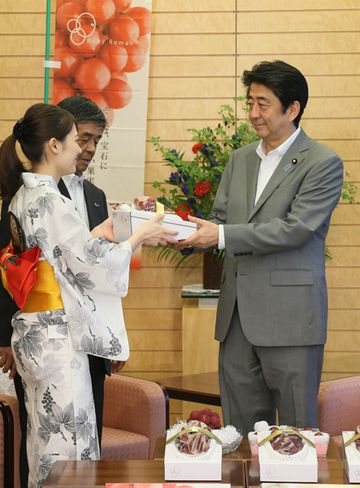
11:45 Presentation of grapes from Governor of Ishikawa Prefecture Tanimoto Masano. Senior Vice-Minister of Environment Kitamura Shigeo also attends
11:53 Presentation of grapes ends

PM
04:18 Meet with MOFA’s Director-General of Foreign Policy Bureau Hiramatsu Kenji
04:43 End meeting with Mr. Hiramatsu
04:58 Depart from office
04:59 Arrive at Diet
05:00 Enter LDP President’s Office
05:01 LDP Officers Meeting
05:15 Meeting ends
05:39 Exit LDP President’s Office
05:41 Depart from Diet
05:42 Arrive at office
05:59 Depart from office
06:00 Arrive at official residence. Dinner meeting with Chairman of Lower House Special Committee on Legislation for the Peace and Security of Japan and the International Community Hamada Yasukazu, Director of Lower House Special Committee on Legislation for the Peace and Security of Japan and the International Community Toyama Kiyohiko, and other colleagues. Chief Cabinet Secretary Suga Yoshihide and Deputy Chief Cabinet Secretary Kato Katsunobu also attend
07:24 Everyone leaves

Tuesday, September 1, 2015
AM
12:00 At official residence (no visitors)
08:00 At official residence (no morning visitors)
08:17 Depart from official residence
08:18 Arrive at office
08:25 Hold the first meeting of the Emergency Disaster Response Headquarters as part of the annual comprehensive disaster prevention drills for 2015. Phone conference with Governor of Tokyo Prefecture Masuzoe Yoichi. Temporary Cabinet meeting
08:50 Meeting ends
09:00 Press conference
09:03 Press conference ends
09:12 Cabinet meeting
09:22 Cabinet meeting ends
10:27 Depart from office
11:17 Arrive at Showa Commemorative National Government Park in Tachikawa, Tokyo
11:20 Depart from park
11:27 Arrive at Takamatsu station of Tama-monorail in Tachikawa, Tokyo. Observe a rescue and assistance drill
11:33 Depart from Takamatsu station of Tama-monorail
11:39 Arrive at Showa Commemorative National Government Park. Participate in a firefighting drill. Observe a rescue and assistance drill from a collapsed building. Deliver address

PM
12:53 Presentation of a disaster prevention book from Governor of the Tokyo Metropolitan Government Masuzoe Yoichi
12:56 Presentation of the book ends
12:59 Interview with news reporters. Respond to the question "Why do you run for the LDP President?" by saying "Continuation is power, and I want to fully fulfill the responsibility."
01:02 End interview
01:03 Depart from park
01:48 Arrive at official residence
01:59 Depart from official residence
02:00 Arrive at office
02:58 Meet with Vice-Minister for Foreign Affairs Saiki Akitaka
03:34 End meeting with Mr. Saiki
04:06 Meet with Director of National Security Council (NSC) Yachi Shotaro, Director of Cabinet Intelligence Kitamura Shigeru, and Deputy Director-General of Public Security Intelligence Agency (PSIA) Sugiyama Haruki
04:18 Mr. Yachi and Mr. Sugiyama leave
04:30 Mr. Kitamura leaves
04:31 Deputy Prime Minister and Minister of Finance Aso Taro, Vice-Minister of Finance Tanaka Kazuho, and Deputy Vice-Minister of Finance Sato Shinichi enter
05:05 Mr. Sato leaves. Vice Minister of Finance for International Affairs Asakawa Masatsugu enters
05:18 Mr. Tanaka and Mr. Asakawa leave
05:25 Mr. Aso leaves
05:34 National Security Council meeting. Minister of Economy, Trade and Industry Miyazawa Yoichi also attends
06:08 Meeting ends
06:22 Depart from office
06:37 Arrive at Italian restaurant LA BETTOLA da Ochiai in Ginza, Tokyo. Dinner meeting with Assistant Chief Cabinet Secretary Kanehara Nobukatsu, Special Adviser to the Cabinet Taniguchi Tomohiko, and other colleagues
09:20 Depart from restaurant
09:40 Arrive at private residence

Wednesday, September 2, 2015

AM
12:00 At private residence (no visitors)
08:00 At private residence (no morning visitors)
09:32 Depart from private residence
09:47 Arrive at official residence
12:00 Meet with LDP Secretary-General Tanigaki Sadakazu

PM
12:38 End meeting with Mr. Tanigaki
02:41 Meet with Secretary-General of Headquarters for Abduction Issue Ishikawa Shoichiro
02:56 End meeting with Mr. Ishikawa
06:39 Depart from office
06:40 Arrive at official residence

Thursday, September 3, 2015

AM
12:00 At official residence (no visitors)
08:00 At official residence (no morning visitors)
08:47 Depart from official residence
08:48 Arrive at office
08:52 Meet with Deputy Chief Cabinet Secretary Seko Hiroshige
09:33 End meeting with Mr. Seko
09:54 Depart from office
09:56 Arrive at Diet
09:57 Enter Upper House 43rd Committee Members’ Room
10:00 Meeting of the Committee on Health, Labour, and Welfare of the House of Councillors

PM
12:02 Meeting recesses. Exit Upper House 43rd Committee Members’ Room
12:03 Depart from Diet
12:06 Arrive at office
02:02 Meet with Vice-Minister of Cabinet Office Matsuyama Kenji and Cabinet Office’s Director-General of Decoration Bureau Kuroba Ryosuke
02:12 End meeting with Mr. Matsuyama and Mr. Kuroba
02:17 Meet with Deputy Vice Minister of Finance Okamoto Shigeaki and Director-General of the Financial Bureau Sakota Hidenori
02:27 End meeting with Mr. Okamoto and Mr. Kuroba
03:00 Meet with Chairman of LDP Regional Government (doshu-sei) Promotion Headquarters Sata Genichiro. Special Advisor to the Prime Minister Isozaki Yosuke also attends
03:21 End meeting with Mr. Sata
03:22 Meet with Vice-Minister for Foreign Affairs Saiki Akitaka
03:45 End meeting with Mr. Saiki
04:01 Meet with MOFA’s Director-General of Asian and Oceanian Affairs Bureau Ihara Junichi
04:34 End meeting with Mr. Ihara
04:37 Receive a proposal from a delegation led by Chairman of LDP General Council Toshihiro Nikai on the development of Ogasawara
04:55 End reception
05:04 Meet with Director of Cabinet Intelligence Kitamura Shigeru
05:32 End meeting with Mr. Kitamura
06:23 Depart from office
06:32 Arrive at Tokyo Prince Hotel in Shiba-park, Tokyo. Attend a social gathering of LDP policy group Kisaragi-kai in banquet hall Sun Flower Hall, deliver address
07:19 Depart from hotel
07:27 Arrive at official residence

Abe supporters, Abe successors

Doubts about Shinzo Abe’s health and ability to serve as president of the LDP emerged in late June. According to an article in the August 27th  issue of the Shukan Bunshun, Abe’s ulcerative colitis resurfaced. 

The gossip magazine claims that he began to vomit blood during a dinner meeting with JR East President Tetsuro Tomita, JR East adviser Mutsutake Otsuka, and LDP policy chief Tomomi Inada. The magazine speculates that these health problems, stemming in part from stress, forced him to tone down his speech commemorating the end of World War II.

Rumors about Abe’s health and fitness for office appear regular in the tabloid press. Nevertheless, Abe won the LDP presidency unopposed in early September with his term expiring in 2018. This begs the question, “Who will win succeed him as LDP president and, by extension, Prime Minister?”  Some think that if Abe finds it difficult to carry out his duties due to bad health, he will name Deputy Prime Minister Taro Aso or LDP Secretary-General Sadakazu Tanigaki as his successor in a bid to maintain his influence.
According to a March 10th article in The Japan News, an English-language news source published by the conservative Yomiuri Shimbun, LDP factions have neglected grooming candidates that would be able to muster support like Abe. Some contenders, however, are beginning to appear.

Abe has recently called attention to Tomomi Inada, a member of his own Hosoda faction and the Minister of State for Regulatory Reform. She is expected to be named the Chief Cabinet Secretary or Minister of Economics, Trade, and Industry (METI) in Abe’s new cabinet, according to a September 4th article in the liberal magazine, Shukan Asahi. Inada has defended Abe, even in his disagreements with members of his own cabinet, such as Chief Cabinet Secretary Yoshihide Suga, as reported in the August edition of Facta. Abe’s focus on Inada, whom he likens to Joan of Arc, makes her his likely choice for the next Prime Minister.

Toshimitsu Motegi belongs to the Nukaga faction, currently second in strength behind Hosoda. His faction has been rocked by calls for him to take over Fukushiro Nukaga’s leadership role, and by scandals over misuse of political funds involving Yuko Obuchi, the faction’s previous choice for LDP president. Currently, the Shukan Asahi reports that Motegi is the Nukaga faction’s candidate of choice.

Fumio Kishida, who serves as Foreign Minister, is the Kochi-kai group’s choice to lead the party. He supported Abe in his 2015 bid for presidency, but is expected to mount his own campaign in 2018. Outlying candidates include Shigeru Ishiba and Seiko Noda, who vocally oppose Abe, have not yet been unable to secure enough support to overtake him, as the Shukan Asahi reports.

The magazine observes that both Ishiba and Noda see an opportunity after the Upper House election next summer. The LDP is expected to face an uphill battle in this election due to the unpopularity of the security and TPP legislation with the prospects of losing many seats. Prime Minister Abe may step down and the LDP may hold its presidential election in the autumn. er. The Abe Cabinet aims to enact the security bills within September. There are also concerns over possible economic downturn, as preliminary GDP figures for the April-June quarter released recently showed negative growth.


Although Abe has successfully defended his position in the LDP, rumors of his illness, coupled with a field of aspiring leaders, makes future party infighting a strong possibility. Individual approaches to upcoming contentious issues, including collective self-defense, may reveal more about the LDP’s future and stability.

As the Shukan Asahi concludes: "The LDP is still controlled solely by Abe. But possible successors to Abe are seeking an opportunity to become next prime minister. When will the signal gun be fired for the start of race for premiership?"

Exhibit & Conference: World War II in the Philippines


Click for More Information

Tuesday, September 8, 2015

Prime Minister of Japan’s Schedule August 24-30, 2015

Monday, August 24, 2015
AM


12:00 At private residence (no visitors)
07:13 Depart from private residence
07:25 Arrive at office
07:32 Meet with Deputy Chief Cabinet Secretary Seko Hiroshige
08:45 End meeting with Mr. Seko
08:49 Depart from office
08:51 Arrive at Diet
08:53 Enter Upper House Committee Room No.1
08:55 Meeting of Budget Committee of the House of Councilors opens
11:55 Meeting recesses. Exit Upper House Committee Room No.1
11:57 Depart from Diet
11:58 Arrive at office
12:00 Meet with LDP Lower House member Kaneko Megumi and Miyazaki Kensuke

PM
12:06 End meeting with Ms. Kaneko and Mr. Miyazaki
12:07 Meet with Director of Cabinet Intelligence Kitamura Shigeru
12:11 End meeting with Mr. Kitamura
12:55 Depart from office
12:57 Arrive at Diet
12:58 Enter Upper House Committee Room No.1
01:00 Meeting of Budget Committee of the House of Councilors reopens
05:18 Meeting adjourns. Exit Upper House Committee Room No.1
05:19 Enter LDP President’s Office
05:20 LDP Officers Meeting
05:39 Meeting ends
05:40 Speak with Chairman of LDP Election Strategy Committee Motegi Toshimitsu
05:41 End speaking with Mr. Motegi
05:42 Exit LDP President’s Office
05:43 Depart from Diet
05:45 Arrive at office
06:02 Receive a courtesy call from Deputy President of the Republic of South Africa Cyril Ramaphosa
06:30 Courtesy call ends
06:47 Depart from office
06:48 Arrive at official residence
06:49 Host a dinner banquet for female ambassadors to Japan
08:28 Dinner banquet ends

Tuesday August 25, 2015
AM
12:00 At official residence (no visitors)
07:08 Depart from official residence
07:09 Arrive at office
07:16 Meet with Deputy Chief Cabinet Secretary Seko Hiroshige
08:27 End meeting with Mr. Seko
08:29 Cabinet meeting
08:41 Meeting ends
08:42 Meet with Deputy Chief Cabinet Secretary Seko Hiroshige
08:49 End meeting with Mr. Seko
08:55 Depart from office
08:57 Arrive at Diet
08:58 Enter Upper House Committee Room No.1
09:02 Meeting of Special Committee of the House of Councillors on the Legislation for Peace and Security of Japan and the International Community opens
11:31 Meeting recesses
11:32 Exit Upper House Committee Room No.1
11:35 Enter State Ministers’ Room
11:46 Exit State Ministers’ Room
11:47 Enter Upper House Committee Room No.1
11:48 Meeting of Special Committee of the House of Councillors on the Legislation for Peace and Security of Japan and the International Community reopens. Meeting recesses
11:49 Speak with Minister of Defense Nakatani Gen, LDP Upper House member Sato Masahisa, and other colleagues
11:51 Finish speaking with Mr. Nakatani, Mr. Sato and other colleagues
11:54 Depart from Diet
11:55 Arrive at office

PM
12:55 Depart from office
12:56 Arrive at Diet
12:58 Enter Upper House Committee Room No.1
01:00 Meeting of Special Committee of the House of Councillors on the Legislation for Peace and Security of Japan and the International Community reopens
06:19 Meeting adjourns
06:20 Exit Upper House Committee Room No.1
06:22 Depart from Diet
06:24 Arrive at office
06:25 Meeting with Minister in charge of Tokyo Olympic and Paralympics Endo Toshiaki
06:40 End meeting with Mr. Endo
06:46 Meeting with Director of Cabinet Intelligence Kitamura Shigeru
06:52 End meeting with Mr. Kitamura
06:58 Depart from office
07:07 Arrive at the building of Urban-Net Ōtemachi Building in Ōtemachi, Tokyo. Dinner meeting with Minister of Education, Culture, Sports, Science and Technology Shimomura Hakubun, Chairperson of National Public Safety Commission Yamatani Eriko, JR Tokai Honorary President Kasai Yoshiyuki, and President of Research Institute for Peace and Security (RIPS) Nishihara Masashi, and other colleagues in Level 21 Tokyo Hall in the building
08:42 Depart from the building
08:57 Arrive at private residence

Wednesday, August 26, 2015
http://japan.kantei.go.jp/97_abe/actions/201508/__icsFiles/afieldfile/2015/08/27/26caucus01_1.jpg?w=360
AM
08:00 At private residence (no visitors)
08:52 Depart from private residence
09:08 Arrive at office
09:30 Phone conference with U.S. President Barack Obama. Deputy Chief Cabinet Secretary Kato Katsunobu, Deputy Chief Cabinet Secretary Seko Hiroshige, Director of National Security Council (NSC) Yachi Shotaro, and Director of Cabinet Intelligence Kitamura Shigeru also attend
10:10 Phone conference ends
10:45 Meet with Chairman of Science and Technology in Society (STS) Forum, former Minister of State for Science and Technology Policy Omi Koji
11:05 End meeting with Mr. Omi
11:06 Meet with former Minister for Reconstruction Nemoto Takumi
11:35 End meeting with Mr. Nemoto
11:36 Meet with LDP Lower House member Kawai Katsuyuki
11:47 End meeting with Mr. Kawai
11:50 Meet with Ministry of Defense (MOD)’s Director-General of Bureau of Finance and Equipment Mimura Toru

PM
12:10 End meeting with Mr. Mimura
12:12 Meet with Chief Representative of New Komeito Yamaguchi Natsuo
01:05 End meeting with Mr. Yamaguchi
02:30 Meet with Minister of State for Economic and Fiscal Policy Amari Akira and Cabinet Office’s Director-General for Policies on Cohesive Society Tawa Hiroshi
02:48 End meeting with Mr. Amari and Mr. Tawa
02:52 Meet with Chairman of LDP Research Commission on Tax System Noda Takeshi
03:21 End meeting with Mr. Noda
03:22 Meet with LDP Secretary-General Tanigaki Sadakazu
03:51 End meeting with Mr. Tanigaki
04:14 Receive a courtesy call from a congressional delegation of the U.S.-Japan Caucus led by U.S. Representative Joaquin Castro (TX-20)
04:32 Courtesy call ends
05:30 Meet with new Chairman of Sankei News Ota Hideaki and former Chairman of Sankei News Kiyohara Takehiko
05:52 End meeting with Mr. Ota and Mr. Kiyohara
05:53 Attend a meeting of the Ministerial Council on the Monthly Economic Report and Other Relative Issues
06:08 Meeting ends
06:09 Meet with Secretary-General of Headquarters for Abduction Issue Ishikawa Shoichiro
06:23 End meeting with Mr. Ishikawa
06:24 Meet with Special Advisor to the Prime Minister Kimura Taro
06:26 End meeting with Mr. Kimura
06:29 Depart from office
06:31 Arrive at official residence
08:15 Depart from official residence
08:34 Arrive at National Museum of Emerging Science and Innovation in Aomi, Tokyo. Communicate with Kimiya Yui, an astronaut assigned to the Japanese Experiment Module “Kibo” of International Space Station (ISS), and other astronauts
09:25 Depart from museum
09:48 Arrive at private residence

Thursday, August 27, 2015

AM
12:00 At private residence in Tokyo (no visitors)
08:55 Depart from private residence
09:11 Arrive at office
09:20 Meet with Deputy Chief Cabinet Secretary Seko Hiroshige
09:44 End meeting with Mr. Seko
09:54 Depart from office
09:56 Arrive at Diet
09:57 Enter Upper House 32nd Committee Members’ Room
10:00 Meeting of the Committee on Agriculture, Forestry and Fisheries of the House of Councillors opens
11:08 Leave seat during proceedings
11:10 Depart from Diet
11:12 Arrive at office
11:33 Meet with Chairman of Central Union of Agricultural Co-operatives (JA-Zenchu) Okuno Choei, and colleagues
11:44 End meeting with Mr. Okuno
11:50 Meet with MOFA’s Director-General of Foreign Policy Bureau Hiramatsu Kenji and Director of Gender Mainstreaming Division Matsukawa Rui

PM
12:08 End meeting with Mr. Hiramatsu and Ms. Matsukawa
12:46 Meet with Minister in charge of Tokyo Olympic and Paralympics Endo Toshiaki
01:22 End meeting with Mr. Endo
01:42 Receive a courtesy call from a delegation of Latin Americans of Japanese descent
01:49 End reception
01:54 Vice-Minister for Foreign Affairs Saiki Akitaka enters
02:11 Administrative Vice-Minister for Foreign Affairs Sugiyama Shinsuke enters
02:18 MOFA’s Director-General of Foreign Policy Bureau Hiramatsu Kenji enters
02:35 Mr. Hiramatsu leaves
03:02 Everyone leaves
03:07 Record video message for the First Ise-Shima Summit Forum
03:26 End recording
03:27 Meet with Minister of State for Measures for Declining Birthrate Arimura Haruko, Cabinet Office Director-General for Policies on Cohesive Society Takekawa Mitsuo, Ministry of Education, Culture, Sports, Science, and Technology (MEXT)’s Director-General of Lifelong Learning Policy Bureau Kawamura Junko, and Ministry of Health, Labor and Welfare (MHLW)’s Director-General of Equal Employment, Children and Families Bureau Ando Yoshiko
04:02 End meeting with Ms. Arimura, Mr. Takekawa, Ms. Kawamura and Ms. Ando
04:03 Meet with Minister of State for Disaster Management Yamatani Eriko
04:08 End meeting with Ms. Yamatani
04:24 Meet with President of Japan-Korea Parliamentarians’ Union Nukaga Fukushiro
04:47 End meeting with Mr. Nukaga
04:48 Meet with Chairman of Parliamentary League for Volcanic Eruption Prediction and Countermeasures of the LDP Furuya Keiji
05:13 End meeting with Mr. Furuya
05:17 received proposal from the Parliamentary League for Volcanic Eruption Prediction and Countermeasures of the LDP
05:30 End reception
05:31 Meet with Minister of Internal Affairs and Communications Takaichi Sanae
05:56 End meeting with Ms. Takaichi
06:32 Welcome President of the Republic of Liberia Mrs. Ellen Johnson Sirleaf. Attend commemorative photo session
06:33 Attend ceremony by the guard of honor
06:38 Ceremony ends
06:42 Attend Japan-Liberia Summit Meeting with Mrs. Sirleaf
07:18 Summit meeting ends
07:22 Joint press release
07:34 Joint press release ends
07:35 Depart from office
07:37 Arrive at official residence. Host banquet
08:42 Give a send-off to Mrs. Sirleaf
08:44 Send-off ends

Friday, September 4, 2015

Tuesday in Washington September 8, 2015

Welcome Back DC
THE NUCLEAR DEAL WITH IRAN AND THE IMPLICATIONS FOR US SECURITY. 9/8, 9:00-10:00am, Washington, DC. Sponsor: AEI. Speakers: Richard B. "Darth" Cheney, Former Vice President of United States; Moderator: Danielle Pletka, Senior Vice President, Foreign and Defense Policy Studies, AEI.

THE IRAN NUCLEAR DEAL IS A WIN FOR NUCLEAR NONPROLIFERATION AND SECURITY. 9/8, 9:00-Noon. [Will break to hear Senator Reid at 10:00am] Sponsor: Arms Control Association (ACA). Speakers: Colin Kahl, Deputy Assistant to the President, National Security Advisor to the Vice President; Ellie Geranmayeh, Policy Fellow, European Council on Foreign Relations; George Perkovich, Vice President for Studies, Carnegie; Kelsey Davenport, Director for Nonproliferation Policy, ACA; Moderator: Daryl G. Kimball, Executive Director, ACA.

US SENATOR HARRY REID ON THE IRAN NUCLEAR DEAL. 9/8, 10:00-11:00AM, Washington, DC. Sponsor: Carnegie Endowment. Speakers: Senator Harry Reid (D-NV), Democratic leader in the Senate since 2005; Introduction: Howard Berman, former U.S. representative from California’s 28th congressional district from 1983 to 2013; Moderator: George Perkovich, vice president for studies at the Carnegie Endowment for International Peace.

XI JINPING IN WASHINGTON: THE TAIWAN FACTOR. 9/8, 11:00am-12:15pm, Washington, DC. Sponsor: Hudson Institute. Speakers: Parris Chang, President, Taiwan Institute for Political, Economic and Strategic Studies (TIPESS); Ian Easton, Research Fellow, Project 2049 Institute; Seth Cropsey, Senior Fellow, Director, Center for American Seapower, Hudson; Moderator: Michael Pillsbury, Senior Fellow & Director for Chinese Strategy, Hudson.

A COMPREHENSIVE LOOK AT PATENT REFORM IN THE 114TH CONGRESS. 9/8, Noon-1:00pm. Sponsor: AEI. Speakers: Mike Godwin, Director, Innovation Policy and General Counsel, R Street Institute; Paul Hastings, Chairman, CEO, OncoMed Pharmaceuticals; Phil Johnson, Senior Vice of Intellectual Property Policy and Strategy, Johnson & Johnson; Matthew Levy, Patent, Counsel, Computer and Communications Industry Association; Michael Rosen, Visiting Fellow, Center for Internet, Communication, and Technology Policy, AEI, Intellectual Property Attorney, Fish and Richardson; Laurie Self, Vice President, Qualcomm; Robert Taylor, Founder, Owner, RPT Strategies and National Venture Capital Association.

FACING AN EAST ASIA OF DEMOGRAPHIC MATURATION, LESSONS OF ABENOMICS. 9/8, Noon-2:00pm, Lunch, Washington, DC. Sponsor: Japan Commerce Association of Washington DC (JCAW). Speaker: Motani Kosuke, Chief Senior Economist, Japan Research Institute, Special Advisor, Regional Planning Department, Development Bank of Japan. Fee for Non-JCAW Members. In Japanese.

THE IRAN NUCLEAR AGREEMENT: NOW OR NEVER? 9/8, 1:00-3:00pm. Sponsor: International Crisis Group and the Ploughshares Fund. Speakers: Samuel Berger, former National Security Advisor; Thomas Pickering, former Undersecretary of State for Political Affairs; Joseph Cirincione, Ploughshares Fund; and Ali Vaez, International Crisis Group, Location: 236 Russell Senate Office Building,

Thursday, September 3, 2015

Prime Minister of Japan’s Schedule August 17-23, 2015

Monday, August 17, 2015

AM

06:36 Depart from holiday home in Narusawa village, Yamanashi Prefecture
06:40 Arrive at golf course Fujizakura Country Club in Fujikawaguchiko-machi, Yamanashi Prefecture. Play golf with Chairman of LDP Election Strategy Committee Motegi Toshimitsu, Chairman of Nippon Foundation Sasakawa Yohei, and Chairman of Fuji Television Network, Inc. Hieda Hisashi

PM
02:45 Depart from golf course
02:49 Arrive at holiday home
06:00 Depart from holiday home
06:24 Arrive at Hotel Mt. Fuji in Yamanakako village, Yamanashi Prefecture. Dinner meeting with Chairman of Fuji Television Network, Inc. Hieda Hisashi, Deputy Chief Cabinet Secretary Kato Katsunobu, LDP Lower House member Kishi Nobuo and colleagues in banquet hall Menuet
08:55 Depart from hotel
09:18 Arrive at holiday home

Abe Akie at Yasukuni
Tuesday, August 18, 2015
AM
08:00 At holiday home in in Narusawa village, Yamanashi Prefecture (no visitors)
Stay at holiday home throughout morning (no morning visitors)
Abe Akie , in Tokyo, visits Yasukuni Shrine. She wrote on her Facebook page that she “felt different” during her latest visit to the Shinto shrine because it came three days after she went to the Chiran Peace Museum for Kamikaze Pilots (知覧特攻平和会館 Chiran Tokkō-Heiwa-Kaikan) former site of the Chiran Imperial Army Air Base in Kagoshima Prefecture, from which some kamikaze pilots left on suicide missions at the end of World War II.
PM
12:57 Meet with Village Mayor of Narusawa Kobayashi Masaru
01:17 End meeting with Mr. Kobayashi
01:28 Meet with American Cardinal Theodore Edgar McCarrick
Archbishop emeritus of Washington, was named a CSIS counselor in March 2007. 02:14 End meeting with Mr. McCarrick
04:30 Director of Cabinet Intelligence Kitamura Shigeru enters the villa
06:15 Barbeque with Director of Cabinet Intelligence Kitamura Shigeru, Special Advisor to the Prime Minister Hasegawa Eiichi, and secretaries
08:18 Mr. Kitamura leaves
11:02 Barbeque ends. Everyone leaves

Wednesday, August 19, 2015

AM

08:00 At holiday home in Narusawa village, Yamanashi Prefecture (no visitors)
Stay at holiday home throughout morning (no morning visitors)

PM
12:52 Depart from holiday home
01:02 Arrive at hot springs facility Fujiyama-Onsen in Fujiyoshida city, Yamanashi Prefecture. Take a bath
03:22 Depart from Fujiyama-Onsen
03:32 Arrive at holiday home
05:49 Depart from holiday home
05:59 Arrive at Chinese restaurant Ren in Fujiyoshida city. Dinner with his mother Abe Yoko and secretary
07:10 Depart from restaurant
07:20 Arrive at holiday home
11:59 At holiday home (no visitors)

Thursday, August 20, 2015

AM

08:00 At holiday home in Narusawa village, Yamanashi Prefecture (no visitors)
Stay at holiday home throughout morning (no morning visitors)

PM
02:57 Depart from holiday home
04:30 Arrive at private residence in Tokyo
11:59 At private residence (no visitors)

Friday, August 21, 2015
AM
08:00 At private residence (no visitors)
08:43 Depart from private residence
08:57 Arrive at office
09:03 Cabinet meeting
09:12 Meeting ends
09:13 Meet with Deputy Prime Minister, Minister of Finance Aso Taro
09:18 End meeting with Mr. Aso
09:19 Meet with Minister of Health, Labor and Welfare Shiozaki Yasuhisa
09:36 End meeting with Mr. Shiozaki
10:06 Meet with Deputy Chief Cabinet Secretary Seko Hiroshige
11:16 End meeting with Mr. Seko
11:17 Meet with Minister for Foreign Affairs Kishida Fumio, Vice-Minister for Foreign Affairs Saiki Akitaka, and MOFA’s Director-General of Asian and Oceanian Affairs Bureau Ihara Junichi

PM
12:03 End meeting with Mr. Kishida, Mr. Saiki, and Mr. Ihara
12:04 Meet with Deputy Chief Cabinet Secretary for Crisis Management Nishimura Yasuhiko, Assistant Chief Cabinet Secretary Takamizawa Nobushige, and Director of Cabinet Intelligence Kitamura Shigeru
12:11 End meeting with Mr. Nishimura, Mr. Takamizawa and Mr. Kitamura
12:54 Depart from office
12:56 Arrive at Diet
12:58 Enter Committee Room No.1 of the House of Councilors
01:00 Meeting of the Special Committee of the House of Councilors on the Legislation for Peace and Security of Japan and the International Community opens
04:11 Meeting adjourns
04:12 Leave Committee Room No.1 of the House of Councilors
04:14 Depart from Diet
04:16 Arrive at office
04:30 Meet with Director of Cabinet Intelligence Kitamura Shigeru
04:39 End meeting with Mr. Kitamura
04:40 Meet with United States Senator Mazie Hirono
05:02 End meeting with Ms. Hirono
05:30 National Security Council meeting
05:43 Meeting ends
06:18 Depart from office
06:20 Arrive at the Capitol Hotel Tokyu in Nagata-cho, Tokyo. Dinner with secretary in restaurant ORIGAMI in the hotel
07:36 Depart from hotel
08:01 Arrive at private residence