Saturday, February 1, 2020

Repeating Past Mistakes in Japan-Korea Reconciliation

by Tom Le and Daphne Yang, Pomona College
Tokyo Review, January 30, 2020.

The Japan-South Korea reconciliation process continues to be hindered by the same three mistakes: a lack of victims’ voices, a lack of ambition, and a lack of long-term commitment. Several agreements, the first dating back to 1965, have failed to sustain positive relations between the two democracies. Only half a year ago, Japan and South Korea entered a costly trade war and considered ending the General Security of Military Information Agreement (GSOMIA). According to a poll conducted before this latest spat, of those holding a negative view of the other side, approximately half of Japanese and three-quarters of Koreans do so because of the “history issue.”

The “Memory ⋅ Reconciliation ⋅ Future Foundation Act” proposed by South Korea’s National Assembly Speaker Moon Hee-sang – the same Moon who was forced to apologize for demanding the Japanese emperor apologize to comfort women – is the most recent attempt to settle the legacy of Japanese colonization. The bill proposes that private corporations in South Korea and Japan would contribute to a foundation to pay victims of forced labor in accordance with the November 2018 South Korea Supreme Court rulings. It is likely to do little to improve relations between Japan and South Korea, far less settle the legacy of WWII finally or irreversibly.

Since relations between the two countries were normalized in the 1965 Treaty of Basic Relations, Japan has issued dozens of apologies and several agreements have been passed to address its wartime atrocities, most notably the 1993 Kono Statement, 1995 Asian Women’s Fund (AWF), 1995 Murayama Statement, and 2015 Comfort Women Agreement. The Memory ⋅ Reconciliation ⋅ Future Foundation Act repeats the same mistakes that not only prevented the 1995 AWF and 2015 Comfort Women from settling the “history problem” but will likely lead to the same backlash among both the publics of both nations once it fails.

The primary public complaint about the 2015 agreement was the lack of representation of comfort women; the new proposed bill repeats this mistake

First, the bill does not include forced laborers in the establishment or operation of the foundation. As outlined in a Korean Ministry of Foreign Affairs report, the primary complaint of the public concerning the 2015 Comfort Women Agreement was the lack of representation of comfort women at the negotiating table. Immediately after the 2015 Agreement came into force, Koreans took to the streets in protest, and despondent comfort women in media-filled rooms railed at government officials for ignoring their voices. The new proposed bill has similarly been submitted to the Korean parliament without input from civil society. Moreover, the bill seeks to silence the voices of victims, who would give up their right to litigation if they accept a payout from the foundation. The proposed fund effectively splits the voice of around 1,000 victims involved in or planning to take legal action.

Second, like the 1995 AWF, funding for the foundation will be on a voluntary basis from public and private corporations. One of the main criticisms of the 1995 AWF was that it was not financed by Japanese taxes, and thus, could not be considered official compensation. Although donations may be a good reflection of what Japanese society today believes, by allowing and encouraging South Korean corporations and civilians to voluntarily donate as well, the bill removes the direct historical responsibility of the Japanese government and corporations from the reconciliation process.

Third, the Memory ⋅ Reconciliation ⋅ Future Foundation Act is billed as a “catch-all” proposal that will address all the issues concerning Japan’s wartime atrocities through financial compensation. The Korean public was furious at the 2015 Comfort Women Agreement because it sought to settle one single issue “finally” and “irreversibly.” One can expect a stronger reaction when it is the Korean government that is using similar language. In a poll conducted immediately after the act was announced, the majority of the South Korean public opposed the bill in every age group except for respondents over 60. According to a poll run by the Korea Institute of Research (commissioned by Moon Hee-sang’s office), 82.3% of South Korean citizens did not believe that Japanese companies would step up and provide the funds.

From Japan’s side, there is little incentive to reach an agreement that the other side can simply abandon so quickly

Government leaders have failed in the reconciliation process due to a combination of personal failings and circumstances beyond their control. Both governments have inherited decades of failed treaties and ineffectual apologies and face significant pressure to “win,” which may not actually involve an agreement or reconciliation. Yet, their solutions continue to be elite-driven, non-transparent, and short-sighted.

Following the collapse of the 2015 Comfort Women Agreement, “apology fatigue” was at an all-time high in Japan. There are no incentives to come to an agreement if the other side can choose to abandon the resulting agreement after less than a year. The legacies of WWII can only be addressed in an education-based and future-oriented agreement that includes victims at the negotiating table.

Moreover, inter-generational trauma requires solutions that last well beyond the date where foundation funds run dry. Beyond financial compensation, the governments should establish a foundation to educate the public on the decades-long reconciliation process that has been costly for both sides. This would mean Japan should offer a grand gesture to show remorse, possibly a memorial of its own acknowledging the victims – while for South Korea, it requires a reevaluation of the homespun narrative that Japan has never issued a “genuine” apology and an acceptance that it too has played a significant role in failing to come to terms with the past.

---

Tom Le is as an Assistant Professor of Politics at Pomona College, specializing in Japanese security policy, war memory and reconciliation, East Asia regionalism, and militarism norms. Le's work has been published by the Journal of Asian Security and International Affairs and the Journal of Asian Studies, as well as in popular outlets such as Foreign Affairs, The Washington Post, The Hill, and The Diplomat. Le received a PhD in Political Science from the University of California, Irvine and BAs in History and Political Science at the University of California, Davis. He is a research associate at the PRIME Institute at Meiji Gakuin University, a CSIS US-ROK NextGen Fellow, and an AFIHJ Next Generation Fellow. His work has been supported by the Fulbright Program, the Japan Foundation, The Korea Foundation, CION Trust, and JASSO.

Daphne Yang is a senior at Pomona College majoring in International Relations with an Economics minor. She studies East Asian security issues with a socioeconomic lens, and has published works in Diplomatic Courier, The Korea Times, and International Policy Digest.

Wednesday, January 8, 2020

The dark corners of Japanese justice

  
The Carlos Ghosn case shines a light into the dark corners of Japanese justice

The former Nissan boss is right to point the finger at a legal system that the UN has described as ‘medieval’
by Jeff Kingston, director of Asian studies at Temple University Japan and APP member

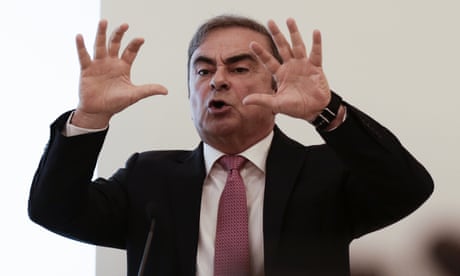
In a long and detailed press conference on Wednesday, Carlos Ghosn – former head of the Renault-Nissan-Mitsubishi alliance, who made a dramatic escape from his house arrest in Japan last month – came out with guns blazing.

Speaking in Beirut, he alleged that former Nissan colleagues and prosecutors were co-conspirators in a plot to oust him in order to prevent a closer merger with Renault. Ghosn denied the allegations against him, which include under-reporting his income and misusing company funds, and said that he was mistreated while in solitary confinement. This included interrogations that lasted for up to eight hours a day without a lawyer present. The presumption of guilt, and the pressure placed on him by Japanese prosecutors to confess, convinced him that there was no chance of a fair trial. And so he fled.

Given his brash demeanour and immense wealth, Ghosn is not a sympathetic character. Indeed, he may well be guilty of financial misconduct. But he is right to shine a light into the dark corners of Japan’s justice system. Anyone familiar with the Japanese justice system would know that Ghosn’s allegations are not far-fetched.

In Japan, laws are used as weapons against targeted people and not applied equally. One example of this is the “hostage justice” (hitojichi-shiho) system. Hostage justice boils down to the accused remaining in custody until they incriminate themselves by signing a confession. Often this is drawn up by prosecutors who browbeat the accused without defence counsel. Knowing that the playing field is tilted in favour of the prosecutors and that they could spend a very long time in jail even before going to court, many innocent defendants confess. Ghosn spent more than 120 days in detention.

In the late 1980s, a once high-flying company president called Hiromasa Ezoe was accused of bribery. Despite extreme pressure to confess, Ezoe defied prosecuting authorities by pleading not guilty. Over a decade of judicial purgatory later, he was effectively exonerated by receiving a suspended three-year sentence in 2003. In 2010 he published a book, Where is the Justice?, a savage indictment of a system in which the presumption of innocence is abandoned and defendants are railroaded. Ghosn may well have wanted to avoid this fate.

In Japan, the accused can be held for 23 days without charge – this is almost indefinitely renewable as judges normally give prosecutors the benefit of the doubt. In April 2019, more than 1,000 lawyers and scholars submitted a petition to the justice ministry demanding an end to this antediluvian system. The Japan Federation of Bar Associations has also long lobbied against it.

The 2019 petition doesn’t mince its words, asserting that the “long-term detention in the Carlos Ghosn case has triggered surprise and criticism overseas, leading to doubts about Japan’s integrity as a democratic nation that guarantees human rights”.

Japan’s hostage justice, interrogation procedures barring lawyers and arbitrary denial of family contact are out of step with many other democracies and international law. The UN Human Rights committee has called on Japan to reform its criminal justice system to allow for the presence of defence counsel, while a UN committee against torture called Japan’s criminal justice system “medieval”.

In recent years, the media has exposed many cases of prosecutors’ abuse of power, inventing, misinterpreting or ignoring exonerating evidence in an attempt to maintain the dubious distinction of a 99% conviction rate. Recognising the problem, the justice ministry has since the 2000s introduced piecemeal reforms to reduce dependence on confessions and allowing some videotaping of interrogations. Even so, the system remains stacked against defendants.

While Ghosn managed a dramatic escape, ordinary Japanese citizens remain vulnerable to a judicial system that draws sharp criticism from domestic civil society organisations, lawyers’ federations and the media. The vested interests are scrambling to defend this system, but it’s high time to end the era of Japanese prosecutors running amok and trampling on civil liberties.

Sunday, January 5, 2020

Monday In Washington, January 6, 2020

Monday will be back to business. The next day the games begin.

NORTH KOREA IN 2020 - FIRE AND FURY OR A PATH TOWARDS PEACE? 9:30am-3:30pm. Sponsors: Center for the National Interest, Korea Foundation. Speakers: Key Note Address: Dr. Moon Chung-in (Special Adviser to ROK President Moon); Jessica Lee, Quincy Institute; Doug Bandow, CATO; LT. General Wallace Gregson, (U.S. Marines, Retired, former head of U.S. Marines in Pacific; Daniel Davis, Defense Priorities; Henri Feron, Center for International Policy; Uri Friedman; The Atlantic; William Ruger, Charles Koch Institute; Douglas Macgregor, Author,; Scott Snyder, Council on Foreign Relations.

Friday, January 3, 2020

Glimmers Of Hope For Japan-Korea Relations

by Daniel Sneider, Lecturer, International Policy at Stanford University and APP Member
Toyokeizai Online, January 2, 2020

This past year marked the lowest point in relations between Japan and its neighbor, South Korea, since the two countries established diplomatic relations more than a half century ago. As the new year dawns, however, there are glimmers of hope that the tide is slowly turning.

The meeting in China between South Korean President Moon Jae-in and Japanese Prime Minister Shinzo Abe in China at least demonstrated that channels for dialogue remain open. Before that, trade officials met in Tokyo to discuss the export control measures imposed by both sides, followed by a small step from Japan to ease restrictions on key exports to Korea related to semiconductor manufacture.

And with the threat of a court order to seize the assets of Japanese companies looming, Korean legislators are discussing a compensation plan for former forced laborers that might offer a way out of that difficult issue of wartime justice.

This is a fragile process that could break down in the blink of an eye, but informed actors in both Korea and Japan see reasons for guarded optimism.

“Our bilateral relations now cannot get worse and there is a growing consensus among our people that Korea cannot afford to let its relations with Japan break down completely,” former South Korean Foreign Minister and Ambassador to Tokyo, Yu Myung Hwan, told me. “I think we have passed the lowest point,” says Yu, who has been a key figure in Japan-Korea relations.

Still, Yu warns, “one time-bomb is left – when, and how, the seized assets of Japanese companies might be cashed in.” For now, Korean courts have only taken preliminary steps to sell those assets, but if they actually move to do so, “Abe will have to respond likewise and that will surely provoke another downward spiral in relations,” he predicts.

The lawyers for the Korean laborers who brought the suit claiming compensation remain in a dialogue with the Moon administration, delaying the next steps. But this will not last forever – “I am not fully optimistic at this point,” Yu told me.

A veteran Japanese journalist specializing in foreign affairs takes a somewhat less upbeat view of where things may be headed. “I hope this bilateral relationship has hit the bottom, but I don’t find a solid reason to say so,” the senior editor told me. “I am one of the guys who predict that this cold war between Abe and Moon is likely to go on in a mild way next year.”

The political dimension
For now, there is a cease-fire in this crisis. But neither Moon nor Abe are highly motivated to find an early solution.

The impact on Japan from the economic boycott in South Korea, most visible in the dramatic drop in Korean tourists coming to Japan, is still minor. Combined with pressure from the U.S. to ease tensions, “Abe has some incentive to move,” says Tokyo University Professor and foreign policy expert Ryo Sahashi. But there is very little potential political upside in improving relations for the Japanese leader, especially among conservative voters and lawmakers.

“Diplomacy with South Korea only costs him political capital,” Sahashi told me, “he doesn’t gain anything from it.” Still, Abe seems unlikely to take further steps to provoke a Korean reaction, as happened with the export controls imposed last summer.

Moon, for his part, faces crucial elections to the South Korean National Assembly in April. The possible return to serious tensions in relations with North Korea potentially undermines support for the ruling progressive party which has put North-South Korea engagement at the top of its agenda. A possibly unpopular move to reach a compromise with Japan on the forced laborer issue might be too much of a risk for Moon. But a worsening of relations would also not help Moon, observers believe.

“The upcoming parliament election in April 2020 will be an Armageddon for the government party since it will be a sort of midterm evaluation of the incumbent Moon administration,” observes Yu, a veteran diplomat. “And the worsening of the relationship with Japan would not help before the election unless Japan provokes further in a nasty way. But I think Abe wouldn't do that again. I believe that after the general election next year the Korean government will be more flexible in dealing with Japan.”

Until then, however, Moon continues to be very cautious. He has not embraced the effort to find a compromise solution to the forced laborers problem led by South Korean National Assembly Speaker Moon Hee-sang. Speaker Moon introduced legislation to establish a foundation formed by voluntary contributions from both Korea and Japanese companies, and individuals, to compensate the former laborers.

The proposed fund is modeled on the German Remembrance, Responsibility and Future Foundation, formed in 2000, which paid compensation to all those forced to work in German mines and factories during the war. It was funded by both the German government and by the German firms who used that labor, just as Japanese companies did during the war.

The model is cited by many experts, but the decision of the Moon government to dismantle a similar fund created to compensate the so-called Comfort Women in the 2015 agreement between Japan and South Korea undermines the viability of this proposal.

The new proposal does not yet have the support of those who filed suit in Korean courts, and their lawyers. The Abe administration has also been cautious toward this proposal, even though it does not demand either official Japanese funds or a formal apology to the victims.

“Speaker Moon's idea is not perfect,” notes Tokyo University’s Sahashi. “It would be better if the fund was divided equally between South Korean companies, the South Korean government and Japanese companies. But even this solution would face domestic criticism in both countries. Still, I can’t imagine any other option.”

South Korea’s former foreign minister Yu, who played a key role in setting up the Comfort Women foundation, agrees with this assessment. “Speaker Moon's proposal is not a bad idea at all if it can be passed as a bill in the parliament and Japan is willing to participate in ‘donating’ money to the Fund,” he says.

But Yu worries that the Assembly leader does not yet have sufficient support in the legislature to pass the bill and may have higher priorities, such as passage of an election law and a reform of the prosecution system. “I wonder whether he can spare some of his political assets to push through his idea to resolve the ‘war-time forced labor issue’ once and for all,” he told me.

Behind this lurks the status of the 1965 treaty which normalized diplomatic relations between Japan and South Korea and dealt with the problem of compensation for forced laborers and others through a large transfer of Japanese grants and loans. Those funds were used to finance the industrialization of South Korea, though limited individual compensation was also paid out.

The progressives in South Korea have long challenged the legitimacy of this treaty, arguing it was forced on Korea by the United States and was the creation of a ‘pro-Japanese’ regime led by military leader Park Chung-hee.

The Japanese government continues to insist this issue was settled by the treaty and proposed to deal with the current crisis through a third-party arbitration process set out in that treaty. The Moon government has so far sidestepped whether they still feel bound by the 1965 treaty, carefully avoiding triggering the question of renegotiating the entire treaty.

Even Korean scholars who have been critical of Japan question this ambiguous position taken by the Blue House. The Korean government should clearly communicate through official channels that it will respect the treaty, Professor Chung Jae-jeong, the former head of the Northeast Asia History Foundation, said in a recent interview. “This will facilitate negotiations on how to resolve the current disputes,” Professor Chung said. “I think we as a country have passed a stage where we approach state-to-state conflicts emotionally. They should be handled with professional judgment and knowledge.”

The geopolitics of the Japan-South Korea dispute
The prospects for improvement in Japan-South Korea relations will undoubtedly be affected by the broader geostrategic environment in Northeast Asia. If tensions rise again with North Korea, that may drive Japan and South Korea closer together, though it will not in itself overcome the underlying historical issues.

American policy makers have persistently urged the two countries, both allied to the U.S., to focus on their shared security interests. And that pressure at least yielded some results in the Korean decision to back off from abandoning the defense intelligence sharing agreement. But the forces of nationalism in both countries tend to overwhelm those appeals to joint security interests.

The withdrawal of the U.S. from its traditional leading role as the guarantor of security in Northeast Asia has left Japan and South Korea increasingly on their own in managing out these long-standing tensions. And it has left open the door for China to assert its leadership role, as took place at the trilateral summit in Chengdu. President Moon, speaking at the summit, evoked the “common destiny” binding the three countries together.

“This is a new trial for both countries to explore their own capability to sustain and develop the East Asia order which has long kept the stable environment since the end of World War Two,” comments the senior Japanese foreign affairs journalist.

“In that sense, the trilateral dialogue framework of Sino-ROK-Japan should have more and more implication for the future to come. I have no doubt Japan’s bond with the US will stay firm and solid regardless of whatever chemistry will emerge in the Sino-Korean-Japan relationship. But when it comes to South Korea’s position, frankly, I am much less certain.”

Friday, December 13, 2019

Tokyo Olympics 2020 Sing a Long


Japanese hit song “Paprika”that is the official Tokyo Olympics song 
has gone global and viral with this English version and multi-cultural cast. 
It was released November 19, 2019.

Saturday, December 7, 2019

Merry Christmas Mr. Trump

MERRY CHRISTMAS FROM KIM JONG UN: THE COMING TEST OF U.S.-NORTH KOREA RELATIONS

By Daniel Sneider, Associate Editor, Nelson Report, Stanford University, and APP member


The resumption of a war of words between the North Korean regime and the Trump administration should set off alarm bells in Washington, Tokyo and other capitals. While it is not yet at the level of the 'fire and fury' rhetoric of 2017, the North Koreans are clearly laying the groundwork to resume the testing of long-range ballistic missiles suspended since early 2018. Analysts report signs of preparatory activity at launch sites. Hanging over this is a deadline, set by North Korean leader Kim Jong Un last April, of the end of the year to reach a deal with the United States.

The North Koreans have rolled out a series of statements from senior foreign ministry and military officials, reiterating those warnings and responding with unusual speed to comments from U.S. officials, including the loose talk of President Donald Trump at the NATO meeting. North Korean Chief of the General Staff, General Pak Jong Chon, warned Trump about "elated spirit and bluffing" leading to war. "The use of armed forces is not the privilege of the U.S. only," Gen Pak said in a statement released on December 4.

Despite these signs, many analysts interpret this as business as usual for Pyongyang. They see the escalating rhetoric as a standard North Korean tactic designed to force the U.S. back to the negotiation table. In this view, the North Koreans still want to make the deal they have been seeking since last year -- to lift economic sanctions in exchange for limited steps to cut back their nuclear arms capability. According to those analysts, the breakdown in negotiations at the Hanoi summit last February was mainly the consequence of an 'all or nothing' American approach and the road to a limited bargain more along the lines of what Pyongyang offered remains open.

"Their goal has not changed: they want the Americans back at the negotiation table," wrote Seoul-based Russian scholar Andrei Lankov in NK News. "They still need a deal that will serve their interests - above all, in regard to sanctions relief. But as they have not been able to find a sufficiently sweet carrot to get what they want, they will stick to the stick for now."

The North Koreans have reason to believe they can successfully escalate tensions without much risk. "The North Koreans seem confident that the U.S. and ROK non-response to their ballistic missile tests and other recent actions means there is room for Pyongyang to push the envelope of U.S.-ROK tolerance and even toe-up to a U.S. red line," observes former Principal Deputy Assistant Secretary of State for East Asia and the Pacific, Evans Revere. "They may well be right, since we currently have two conflict-averse leaders in the Blue House and the White House, both of whom are under some pressure because of upcoming elections.

The resumption of a robust testing program risks reinvigorating the sanctions regime, which has been eased in the last year and a half. "At the moment, it is very difficult to see the rekindling of 'maximum pressure' but long-range missile testing could resuscitate that effort and that is not in North Korea's interest, particularly since it can already claim a long-range missile capability," Naval War College expert Terence Roehrig told me.

"However," he added, "I'm not sure they see it that way. If the economic situation is sufficiently dire, Pyongyang may believe it has no choice but to roll the dice on this."

Pyongyang's Strategic Decision
As is often the case, there is a tendency to impose on North Korea our own logic. Some long-time analysts of North Korea in the Intelligence Community believe, however, that the North Korean leadership made the decision to abandon the negotiations last summer, convinced that there was little hope of getting what they wanted out of Trump. They point to a trail of evidence - - mostly in open statements by the regime - - of a significant shift in strategy.

At the beginning of the opening of Pyongyang's peace offensive, in early 2018, Kim had announced that the regime was moving away from the byungjin policy of pursuing parallel goals of economic growth and building military strength, in favor of a shift of resources and focus to a more open, market-driven economy. Analysts argued the regime had made a strategic shift, and therefore it was open to denuclearization in exchange for economic development. Skeptics who pointed out the consistent refusal of the North Koreans to open its program to outside scrutiny or take irreversible steps to shut down its weapons program were dismissed.

The Singapore summit in 2018 seemed to lend credibility to those views, clearly held by Trump himself. But things clearly changed in the aftermath of the failed Hanoi summit in February 2019, where the North Korean bid to exchange lifting of all the major economic sanctions in exchange for vague and limited steps to shut down some of its nuclear facilities fell flat. In his April 12 speech, which set the year-end deadline for a negotiated deal with the U.S., Kim re-embraced the goals of autarchic economy and a nuclear armed defense. "As we put an end to the prolonged nuclear threat by dint of nukes," Kim declared, "we must frustrate the hostile forces' sanctions on the strength of self-sufficiency and self-reliance."

On August 31, the North Korean party paper published a 'special article' declaring that defense industry must now "lead" the national economy. Only military power can guarantee the survival of the state and the country, the paper wrote, echoing earlier comments by Kim at a weapons test. The tests of missile systems, including of a submarine launched missile, resumed with growing frequency. At the same time, the North Korean regime escalated pressure on the progressive Moon Jae-in government in Seoul to cut ties with Washington, demanding an end to even minor joint military exercises planned with the U.S.

The decision to effectively end negotiations appears to have been made sometime in the summer, a long-time former senior U.S. intelligence analyst believes. Kim agreed to hold working level talks after a hastily organized meeting with Trump at the Demilitarized Zone in Panmunjom in June but those talks did not convene until early October, in Stockholm. The talks lasted only one day, with the North Koreans issuing a lengthy statement at the end of the day denouncing the U.S. for failing to move from "its old stance and attitude."

Some U.S. and South Korean commentators leaped to echo this statement, blaming the U.S. for refusing to shift away from its demand for major steps by the North Koreans before giving any sanctions relief. But U.S. negotiators led by envoy Steve Biegun insist that they in fact had offered new ideas to ease sanctions and offered a phased approach.

Instead there is evidence that the North Koreans never had any intention to engage in serious negotiations. According to two former U.S. intelligence officers who have been in close touch with Amb Biegun and his team, the North Korea delegation arrived at the talks with their full statement already in hand. The North Koreans also insisted that the talks last no longer than one day. Both are taken as evidence that the North Koreans never intended to grapple with the substance of a possible agreement to be discussed at a summit. Any previous serious talks have always taken at least two days, to allow for consultation with the leadership, even talks held in Pyongyang.

The door to a third major summit with Trump remains slightly open - - the North Koreans are still careful not to attack him personally and are said to seek a Trump visit to Pyongyang. That would be an enticing prospect for Kim, but there is no indication of Trump's readiness to take such a political risk.

The clearest sign that Pyongyang is no longer waiting on Trump came with a rare announcement this past week by the Workers Party of Korea (WPK) Central Committee Politburo Presidium (the inner core of the leadership) to convene a Party Plenum in the last 10 days of December. The plenum, the announcement said, will "discuss and decide on important issues in line with the demands of the changed internal and external situations," a formula that hints they have concluded already that the U.S. will not "withdraw its hostile policy."

The announcement was accompanied by a propaganda show in the form of photos and videos of Kim, astride a white horse, accompanied by his wife, senior party leaders and key military commanders, all following on horseback, visiting the sacred site of Mt Paektu, the symbol of the birth of the regime. That visit, the second in the last two months, was preceded by a visit to a showcase tourist complex near the Chinese border, intended to attract a growing flow of Chinese tourists. This is now the path for regime survival - - self-reliance, with key Chinese support, and emphasis on a toughened militarized regime.

"The announcement of the plan for the plenum later this month, along with the unusually long report of Kim's latest appearance on Paektu (accompanied by corp commanders) means we won't have to wait long to see what's in store," a former senior intelligence community expert told me. "There are still three weeks left in December for Washington to head off Kim's deadline, but scheduling the plenum suggests Kim has already made up his mind and isn't going to wait."

What will Kim do?
What is Kim going to do? Most U.S. experts see no evidence of preparation, either on the ground or in statements, for a resumption of nuclear tests, at least for now. Instead speculation has focused on a long-range missile test, perhaps one disguised as a satellite launch. Satellite imagery analyzed by non-proliferation program at the Middlebury Institute for International Studies this week shows renewed activity at the Sohae Satellite Launching Station, including the facility's engine test stand which had been shut down as part of the test freeze. There are also some signs of renovation work at a launch site in eastern North Korea which had been dormant since 2009 but used to launch missiles over and toward Japan, says Middlebury senior researcher Joshua Pollack.

"I had been inclined to seeing a renewal of space launches as Kim's best shot at threading the needle - sticking to his April 20, 2018 commitments, and therefore not unduly alarming or offending Beijing - while defying the Security Council and poking Japan in the eye," he told me. But Pollack thinks the North Koreans may not even bother with that thin cover. "ICBM testing may be in our near future, perhaps even over Japan into the Pacific," he said.

The North Koreans, in typical fashion, have already set the stage for precisely this kind of missile test. In a nasty attack on Prime Minister Shinzo Abe, published on November 30, a senior foreign ministry official responded to Abe's criticism of the test of a multiple launch rocket system with a much more ominous threat. "Abe may see what a real ballistic missile is in the not distant future, and under his nose," the statement said.

Japanese may well celebrate the New Year with alarm bells on their cell phones, alerting them to a North Korean missile heading their way.
 

Friday, November 22, 2019

Chinese Repression of Muslims in Xinjiang Echoes Across Central Asia

By: Paul Goble

First Published by Eurasia Daily Monitor, Jamestown Foundation, November 21, 2019

Beijing’s efforts to expand its power in Central Asia by investment and cooperation with the governments in the region (see China Brief, November 19, 2019; see EDM, April 4, 2019, January 30, 2018, August 2, 2016) are currently being undercut by the reactions of Central Asian populations to China’s repression of their co-ethnics and fellow Muslims in Xinjiang. Central Asians know far more about Chinese actions there than many might expect for three reasons: 1) the flight of such people from China to Central Asia, 2) the use of the Internet by Uyghurs and other activists to tell the world and particularly Central Asia about their plight, and 3) the exploitation of this information by opposition politicians in Central Asian countries.

Many members of the Central Asian nationalities currently living in Xinjiang have ancestors who escaped there after the Soviets crushed the Basmachi movement (Turkestan Liberation Organization) in the 1920s and 1930s. But over the past several months, they have been fleeing western China in increasing numbers and, upon arrival to their ancestral homelands, telling their co-ethnics about the concentration camps that the Chinese authorities have confined them to in the hopes of “re-educating” them away from Islam and national traditions and toward Beijing’s preferred values. The massive scale of this flight was highlighted in a recent report issued by the Ministry of Foreign Affairs of the Republic of Kazakhstan. It states that during the first nine months of 2019, 4,500 ethnic Kazakhs from China resettled in Kazakhstan with the right of permanent residence as “oralmans,” the name Nur-Sultan has used for co-ethnic returnees (Centralasian.org, November 17; Fergana.agency, September 19).

Their personal accounts of mistreatment at the hands of the Chinese have inflamed Kazakhstani opinion, which had already been growing more hostile to Beijing because of Uyghur use of the Internet to document Chinese repression. In a recent issue of the Central Asian Survey, Rachel Harris of London’s SOAS and independent scholar Aziz Isa report on the way this works in an article entitled “Islam by Smartphone: Reading the Islamic Revival on WeChat.” Because this channel has proven so influential in Central Asia, and especially in Kazakhstan, it has attracted enormous attention there by independent media there and, thus, had a dramatic effect on the populations (Fergana.agency, March 6).

This development appears to have contributed in a significant way to the spread of anti-Chinese protests in Kazakhstan this fall. Those demonstrations, some of the largest in that country’s history, have taken place in almost all major cities and have put strains on relations between Kazakhstan and China. To be sure, the reports from Xinjiang and first-person accounts by those who fled that Chinese region are not the only cause. Many Central Asians have long resented the fact that the Chinese have often behaved extremely arrogantly in their dealings with the governments in the region, seemingly exploiting them in an openly neo-colonial way, and not providing these countries with the kind of support (relative to the Russian Federation and other outside powers) they had hoped China’s involvement would create (see EDM, September 10).

Anti-Chinese attitudes, linked to the Xinjiang case and otherwise, are not confined to Kazakhstan but exist, and appear to be intensifying, in all the countries of the region, with Chinese involvement in their economies and politics and Chinese mistreatment of their co-ethnics in Xinjiang being the leading causes. According to Bishkek-based journalist Pavel Dyatlentko, anti-Chinese attitudes have been on the rise throughout Central Asia; and whenever they have led to protests, Beijing reacted quickly and punitively, shutting consulates and suspending investment projects—actions that are only making the situation worse (Ia-centr.ru, September 11).

In Kyrgyzstan and Tajikistan, he says, some Kyrgyz and Tajiks have expressed alarm at the massive debts to China that Bishkek and Dushanbe have run up, a development that many fear Beijing will exploit to gain political dominance. Elsewhere, the fact that Chinese investments have sparked Chinese immigration rather than created jobs for Central Asians is the bigger problem. Central Asians resent the appearance of “China towns” in their countries just as much as some in Russia’s Far East do (Vzglyad, August 15, 2018). And protests against the Chinese presence and Chinese repression have become part of the domestic political struggle in many of these countries.

According to Dyatlenko, as China has expanded its presence with the full cooperation of the regimes in power, opposition politicians have begun to play on this theme, recognizing that the Central Asian populations are not on the same page as their governments, as far as China is concerned. Given that China is likely to continue to expand its presence, further irritating local publics, the temptation of opposition groups to exploit such anger will only grow. If that happens—and the Bishkek commentator argues it will unless alternative sources of foreign investment appear—the anti-Chinese demonstrations that have taken place to date will be only the prelude to a situation that could easily spiral out of control, ethnicizing politics in these countries still further.

Should that occur, the consequences of the impact of China’s actions in Xinjiang and its moves to expand its position in Central Asia could transform the regional republics still further, sparking more Russian flight and even becoming another source of discord between Moscow and Beijing. The timing of such a cooling of relations would be particularly inauspicious for the Kremlin considering President Vladimir Putin’s current efforts to both promote a Russian-Chinese alliance against the United States as well as to recover Russia’s influence in Central Asia.

Wednesday, November 20, 2019

600 Years of China-Korea Relations


November 20, 2019 at the MacMillan Center of Yale University

Odd Arne Westad, Elihu Professor of History and Global Affairs, Yale University talks about Empire and Righteous Nation: 600 Years of China-Korea Relations.

Professor Westad is a scholar of modern international and global history, with a specialization in the history of eastern Asia since the 18th century. He has published sixteen books, most of which deal with twentieth century Asian and global history.

Sunday, November 3, 2019

Monday in Washington November 4, 2019

CATO'S 37TH ANNUAL MONETARY CONFERENCE: FED POLICY: A SHADOW REVIEW. 11/4, 8:00am-5:00pm. Sponsor: Cato Institute’s Center for Monetary and Financial Alternatives. Speakers including: James A. Dorn, Vice President for Monetary Studies, Cato Institute; Richard H. Clarida, Vice Chairman, Federal Reserve Board; Peter Ireland, Murray and Monti Professor of Economics, Boston College; Jeffrey M. Lacker, Distinguished Professor of Economics, ​​​​​​​​Virginia Commonwealth University, and former President, Federal Reserve Bank of Richmond; Carola Conces Binder, Assistant Professor of Economics, Haverford College; Eric R. Sims, Michael P. Grace II Collegiate Chair and Professor of Economics, University of Notre Dame.

IMPROVING THE U.S.-MEXICO-CANADA AGREEMENT. 11/4, Noon-1:00pm. Sponsor: Speaker: R Street Institute. Clark Packard, Trade Policy Counsel, R Street Institute; Jennifer Hillman, Senior Fellow for Trade and International Political Economy, Council on Foreign Relations; Bill Watson, Associate Fellow, R Street Institute.

NUCLEAR AND CONVENTIONAL ARMS CONTROL ON THE KOREAN PENINSULA. 11/4, 2:00-4:00pm. Sponsor: Institute for Korean Studies, GW. Speakers: Yong-sup Han, Professor, Korea National Defense University; Young-jun Kim, Professor, Korea National Defense University; Joanna Spear, Associate Professor of International Affairs, the George Washington University; Yonho Kim, Associate Director, GW Institute for Korean Studies.

AUSTRALIA, INDIA AND THE MAKING OF AN INDO-PACIFIC STRATEGIC PARTNERSHIP. 11/4, 3:00-4:30pm. Sponsor: Georgetown U. Speaker: Dr. Ian Hall of Griffith University will discuss the Australia-India strategic partnership in the Indo-Pacific.

IMPEACHMENT, FOREIGN INTERFERENCE, AND ELECTION SECURITY IN 2020. 11/4, 3:30-5:00pm. Sponsor: Brookings. Speakers: William A. Galston, Ezra K. Zilkha Chair, Senior Fellow, Governance Studies, Brookings; Elaine Kamarck, Senior Fellow, Founding Director, Center for Effective Public Management, Brookings; Molly E. Reynolds, Senior Fellow, Governance Studies, Brookings Benjamin Wittes, Senior Fellow, Governance Studies, Editor-in-Chief, Lawfare, Brookings; Darrell M. West, Vice President and Director, Governance Studies, Brookings.

MEASURING ENERGY SECURITY RISK: ASSESSING RISK IN A GLOBAL ENERGY MARKET. 11/4, 4:00-5:00pm. Sponsor: Institute of World Politics (IWP). Speaker: Stephen D. Eule, Vice President for climate and technology, U.S. Chamber of Commerce’s Global Energy Institute.

THE RISE AND FALL OF "GOOD GOVERNANCE" PROMOTION. 11/4, 6:00-8:30pm. Sponsors: Embassy of Canada; National Endowment for Democracy. Speakers: Alina Mungiu-Pippidi, Professor of Democracy Studies, Hertie School of Governance.