Sunday, February 23, 2020

Monday in Washington February 24, 2020

CODE RED: A BOOK EVENT WITH E.J.DIONNE JR. 2/24, 10:00-11:30am. Sponsor: Brookings. Speakers: Author, E.J. Dionne, Jr., W. Averell Harriman Chair, Senior Fellow, Governance Studies, Code Red: How Progressives and Moderates Can Unite to Save Our Country; Alexandra Petri, Columnist, Washington Post

Click to order

PROGRAM TO FOCUS ON THE POWER OF PUBLIC DIPLOMACY: LEADING TODAY’S CHALLENGES. THE FIRST THREE FEET. 2/24, Noon-2:00pm. Sponsor: Public Diplomacy Association of America (PADD). Speaker: Jean Manes, Former Ambassador to El Salvador, Deputy to Commander and Foreign Affairs Advisor, U.S. Southern Command.

MEMORIALIZING THE COMFORT WOMEN OF ASIA. 2/24. Noon-1:30pm. Sponsor: Organization of Asian Studies at the Elliott School, GW. Speakers: Dr. Jungsil Lee, art historian, independent curator, and Adjunct Professor at Maryland Institute College of Art and George Washington University; Dr. Mike M. Mochizuki, Associate Professor of Political Science and International Affairs at the George Washington University Elliott School of International Affairs.


GLOBAL WARMING AND SMALL ISLAND STATES: THE CASE OF TIMOR-LESTE. 2/24, Noon-2:00pm. Sponsor: GW, Elliot School. Speaker: Isilio António de Fátima Coelho da Silva, Ambassador of the Democratic Republic of Timor-Leste (Timor-Leste) to the United States of America. 

A SECURITY THREAT PROFILE OF GLOBAL CLIMATE CHANGE. 2/24, 3:30-5:00pm. Sponsors: Center for Climate and Security and the Environmental and Energy Study Institute. Speakers: Craig Gannett, President of the Board, Henry M. Jackson Foundation; Hon. John Conger (moderator), Director, Center for Climate and Security; Former Principal Deputy Undersecretary of Defense (Comptroller); Kate Guy, Principal Investigator, Center for Climate and Security; University of Oxford; Hon. Sherri Goodman, Chair of the Board, the Council on Strategic Risks; Former Deputy Undersecretary of Defense (Environmental Security); Dr. Rod Schoonover, CEO, Ecological Futures Group; Adjunct Professor, Georgetown University School of Foreign Service; Former Director of Environment and Natural Resources, National Intelligence Council; Ambassador (ret) Richard Kauzlarich, Co-Director of the Center for Energy Science and Policy, George Mason University; Former National Intelligence Officer for Europe; Former U.S. Ambassador to Azerbaijan, & Bosnia and Herzegovina; Christine Parthemore, CEO of the Council on Strategic Risks.

BREXIT IMPLEMENTATION: GERMAN AND EU INTERESTS IN NEGOTIATIONS WITH THE UK. 2/24, 4:00-5:15pm. Sponsor: American Institute for Contemporary German Studies (AICGS). Speaker: Paul Welfens, Jean Monnet Professor, University of Wuppertal. 

Sunday, February 16, 2020

Tuesday in Washington, February 18, 2020

Congress and the Asia Policy Calendar are in recess

CONTROLLING U.S. TECH EXPORTS TO CHINA: HOW TO GET IT RIGHT. 2/18, 10:00-11:30am. Sponsor: Information Technology and Innovation Foundation (ITIF). Speakers: David Hanke, Partner, Arent Fox; John Neuffer, President and CEO, Semiconductor Industry Association; Moderator: Robert D. Atkinson, President, ITIF.

INTERPRETING CHINA’S ECONOMIC SLOWDOWN: COUNTERING BEIJING’S PLANS TO WIN FRIENDS AND INFLUENCE COUNTRIES. 2/18, 11:30am-1:30pm. Sponsor: Hudson Institute. Speakers: Patrick Cronin, Senior Fellow, Hudson Institute; Thomas Duesterberg, Senior Fellow, Hudson Institute; Nicholas Lardy, Anthony M. Solomon Senior Fellow, Peterson Institute; John Lee, Senior Fellow, Hudson Institute.

THE ORDEAL OF A UYGHUR COUNTY: CASE RECORDS OF MASS DETENTION. 2/18, 2:30-4:00pm. Sponsor: The Uyghur Human Rights Project (UHRP). Speakers: Dr. Adrian Zenz, Non-resident Senior Fellow, China Studies, Victims of Communism Memorial Foundation; Abduweli Ayup, Uyghur linguist, Fellow, International Cities of Refuge Network (ICORN); Dr. Elise Anderson, Senior Program Officer for Research and Advocacy, UHRP.

AMERICAN VALUES IN A TIME OF GLOBAL TRADE AND MODERN MONETARY POLICY. 2/18, 4:00-5:00pm. Sponsor: Institute of World Politics (IWP). Speaker: Frances Newton Stacy, Director, Portfolio Strategy at Optimal Capital.

WELCOME TO THE JUNGLE? PROSPECTS FOR THE INTERNATIONAL ORDER AFTER TRUMP. 2/18, 6:00-8:00pm. Sponsor Center for the Study of Statesmanship Catholic University. Speakers: author, Patrick Porter, Quincy Institute; author, Robert Kagan Brookings; Moderated by Kathy Gilsinan, The Atlantic.


Sunday, February 9, 2020

Monday in Washington, February 10, 2020

ASSESSING 30 YEARS OF PEACEFUL REVOLUTION. 2/10, Noon-2:00pm. Sponsor: American Institute for Contemporary German Studies (AICGS). Speakers: Piotr Wilczek, Polish Ambassador to the U.S.; Emily Haber, German Ambassador to the U.S.

FORGING THE ARMY’S FUTURE. 2/10, 1:00-2:30pm. Sponsor: Atlantic Council. Speaker: John M. Murray, Commanding General, Army Futures Command (AFC). 

A CONSENSUS PROPOSAL FOR A REVISED REGIONAL ORDER. 2/10, 1:30-3:00pm. Sponsor: CSIS. Speakers: Alexandra Dienes, Research Associate, Regional Office for Cooperation and Peace in Europe, Friedrich Ebert Stiftung; Samuel Charap, Senior Political Scientist, RAND Corporation; Vasyl Filipchuk, Senior Adviser, International Center for Policy Studies; Yulia Nikitina, Associate Professor, World Politics and Research Fellow, Moscow State Institute of International Relations (MGIMO); Paul Schwartz, Research Analyst, CNA; Jeff Mankoff, Senior Fellow, Russia and Eurasia Program, CSIS.

CONTAINING THE CORONAVIRUS: CHALLENGES TO THWARTING THE OUTBREAK. 2/10, 1:30-3:30pm. Sponsor: Hudson. Speakers: Eric Brown, Senior Fellow, Hudson Institute; Dr. Daniel Chertow, Head, Emerging Pathogens Section, National Institutes of Health; Dr. Julie Gerberding, Executive Vice President, Merck; Dr. William Karesh , Executive Vice President, EcoHealth Alliance; Joe Lieberman, Co-Chair, Bipartisan Commission on Biodefense; Tim Morrison, Senior Fellow, Hudson Institute. 

AMERICA RETHINKS CHINA: A CONVERSATION WITH JIAYANG FAN AND KAISER KUO. 2/10, 2:00-3:30pm. Sponsor: Kissinger Institute, Wilson Center. Speakers: Jiayang Fan, Staff Writer, The New Yorker; Kaiser Kuo, Host of the Sinica Podcast and Editor-at-Large at SupChina.com.

HOW CAN TAIWAN ASSURE ITS INNOVATION ADVANTAGE? 2/10, 2:00-3:30pm. Sponsor: Carnegie. Speakers: Alexa Lee, Senior Manager of Policy, Information Technology Industry Council; Evan A. Feigenbaum, Vice President for Studies, Carnegie. 

Friday, February 7, 2020

Shusenjo - Comfort Women Documentary Viewings

See the documentary Shusenjo: The Main Battleground of the Comfort Women Issue at the following universities:

🎥 February 10 - University of California, Berkeley 

🎥 February 13 - University of California, Santa Cruz

🎥 February 15 - University of Victoria

🎥 February 17 - University of Michigan, Ann Arbor

🎥 February 19 - University of Chicago

🎥 February 20 - University of Notre Dame

🎥 February 24 - Colby College

🎥 February 26 - University of Massachusetts, Amherst

🎥 February 27 - Smith College

🎥 February 28 - Amherst College

🎥 February 29 - Boston University, We Hope

🎥 March 2 - Harvard University

🎥 March 4 - Haverford College

🎥 March 9 - College of St. Benedict and St. John’s University, TBA

🎥 March 11 - University of Texas, Austin

🎥 March 23 - Soka University

🎥 March 24 - California State University, Fullerton, TBA

🎥 March 25 - Loyola Marymount University

Thursday, February 6, 2020

Memorialising and Remembering

Truth-Telling, Victimhood, And Historical Amnesia

Australian Outlook, Australian Institute of International Affairs (AIIA), January 30 2020

By Caitlin O'Brien, Bachelor of Asian Studies/ Bachelor of Laws student at the Australian National University.

Why do some nations seem to be concerned with conflicts which have since ended? What is historical amnesia? Why is victimhood dangerous to national healing? A brief comparison of China, Finland and the Baltic States illustrates the necessary components for the reconciliation of historical injustice.

With extensive research completed on a nation’s conflict, the area of memory and remembering the conflict in contemporary society is a fascinating and intensely complex field. Broadly, nations would rather emphasise memories which evoke pride rather than those which admit guilt and express shame. Engrained within the difficulty of societies memorialising and remembering their history are the concepts of victimhood, reconciliation and truth. These three ideas are essential to the formula a nation must apply in order to successfully heal and progress from the trauma of historical injustice. This healing is vital if a nation’s identity is to be defined without the formative influence of historical injustice. “There cannot be reconciliation without truth” and essential to truth is accurate identification of perpetrators and victims. So often a victor’s history is told and remembered as fact, but, for societal fissures arising from warring parties to be amended, both sides’ history must be told and remembered.

Perpetuating individuals’ identification with victimhood obstructs reconciliation by delegating responsibility for the conflict and dismissing criticism from other groups. The major impediment to truth-telling and the following reconciliation, victimhood, pertains to the “white-washing” of the recollection of historical injustice which prevents an accurate collective memory being formed. Meaningful and long-term reconciliation requires “a changed understanding of the self and other that transcends the narrow roles of victim and perpetrator.”

“Victimhood” refers specifically to collective victimhood, which is “people’s sense of group-based victimisation by virtue of their identification with (that group), even without having been personally harmed.” “Reminding people of historical… victimisation (reduces) their… collective guilt for their group’s harmful actions.” An example of this is China where the perceived victimisation of Mao’s Cultural Revolution felt by all Chinese absolves the perpetrators from taking responsibility for the injustice they committed at the time. By delegating the perpetrating of the injustice to that of the “regime,” individuals are removed from blame and guilt. China’s acknowledgement of wrongdoing has not surpassed the blame of Mao and his Gang of Four. Until the issue of “victimhood,” where everyone suffered but no-one executed the violence of the Cultural Revolution, reconciliation remains elusive.

The complexity of this case stems from the fact that those who experienced the Revolution all see themselves as victims, not as the perpetrators. Arising from the unpredictable political climate at the time, where one day a person could be a victimiser and the next a victim, and vice versa, reconciliation has been unable to progress due to the ambiguity of who is at fault. Qui criticises this saying that “one can be a victim of the propaganda at the time as well as having the courage to admit that they participated in the cultural revolution as well.” An accurate collective history is not achieved as truth has not been discovered. Thus, the trauma of the Cultural Revolution remains an aspect of national identity as the injustice has not been relegated to the realm of memory.

Finland offers a contrary example where the Civil War of 1918 was unable to be reconciled until the official version of history admitted the crimes and violence of the victors, the White army which resulted in the losers, the Reds, being unable to identify with the public recollection of the war. Only in the nineties, following rapid modernisation in Finland which addressed class inequality, which was a precursor to the civil war, when the public began to discuss the war did individual memories contribute to the collective one, facilitating the progression of reconciliation. This changed the public narrative from the one-sided victorious White’s recollection, to one more representative of the experience of the Whites and Reds.

Public commemoration and memorialisation of both the Red and White experience of the war is central to reconciliation. In the decades following the War, only the Whites could memorialise and grieve their dead in a public setting. The repression felt by the Reds and their descendants prevented a peaceful, harmonious society from developing as deep-seated dissatisfaction felt by the Reds inhibited reconciliation. Through the collection of individual testimonies, encouraged by the new generation’s interest in the war, a revised collective memory emerged that incorporated the victorious narrative, and the darker, violent experience of the Reds and Whites. In 2008, 90 years after the civil war, the conflict was mediated through various forms of memory work and finally relegated the associated emotions surrounding to their original historical context.

Unlike Finland, the Baltic States are yet to reconcile with their historical injustice. The devastating annexation of the Baltic States by the Soviet Union in 1939-40 has residual effects on contemporary society. Lithuania, Latvia and Estonia are unable to come to terms with the tens of thousands of deaths of their citizens at the hands of the Soviets primarily because of the historical amnesia surrounding it. Russia refuses to acknowledge that its occupation and annexation on the Baltic States was unlawful and classified as ‘foreign occupation’; Russia insists that it was a peaceful cooperation. Russian history books still educate people of this, which remains a perpetual thorn in the side of the Baltic States. Moscow’s historical amnesia of the Baltic States’ and its own role in occupation and annexation prevents the formation of a collective memory, obstructing the required unified collective memory. External historical amnesia coupled with particularly Estonia’s own national identity of victimhood surrounding the conflict known in Russia as the “Myth of 1939-40” impedes reconciliation.

“Civil wars in particular give rise to complex memory politics, as they often carve deep wounds into a society’s social memory”. The aforementioned cases were civil wars in the 20th century whose effects are being felt even now.

Sunday, February 2, 2020

Monday in Washington, February 3, 2020

REAL-WORLD BLOCKCHAIN: SAFEGUARDING THE TRACEABILITY OF CRITICAL MATERIALS. 2/3, 10:00-11:30am. Sponsor: Stimson. Speakers: Dr. Philippe Thevoz is the Executive Vice-President eGovernment Systems at SICPA; Cindy Vestergaard, Director, Blockschain in Practice and Director, Nuclear Safeguards.

SUCCESS OR REGRESS? THE STATE OF HIV IN 2020. 2/3, 10:30am-12:15pm. Sponsor: CSIS. Speakers: Regan Hofmann, Director, a.i., U.S. Liaison Office, UNAIDS; Jennifer Kates, Senior Vice President and Director of Global Health & HIV Policy, Kaiser Family Foundation; Greg Millett, Vice President and Director of Public Policy, amfAR; Moderator: Sara M. Allinder, Executive Director and Senior Fellow, CSIS Global Health Policy Center.

’NEVER AGAIN’ HAS BECOME AGAIN AND AGAIN: RISE OF ANTISEMITISIM AND WHAT MUST BE DONE. 2/3, Noon-1:15pm. Sponsor: Defense Forum Foundation. Speaker: Rabbi Abraham Cooper, President and CEO, Center for Security Policy. Location: 2043 Rayburn House Office Building. 

Saturday, February 1, 2020

Repeating Past Mistakes in Japan-Korea Reconciliation

by Tom Le and Daphne Yang, Pomona College
Tokyo Review, January 30, 2020.

The Japan-South Korea reconciliation process continues to be hindered by the same three mistakes: a lack of victims’ voices, a lack of ambition, and a lack of long-term commitment. Several agreements, the first dating back to 1965, have failed to sustain positive relations between the two democracies. Only half a year ago, Japan and South Korea entered a costly trade war and considered ending the General Security of Military Information Agreement (GSOMIA). According to a poll conducted before this latest spat, of those holding a negative view of the other side, approximately half of Japanese and three-quarters of Koreans do so because of the “history issue.”

The “Memory ⋅ Reconciliation ⋅ Future Foundation Act” proposed by South Korea’s National Assembly Speaker Moon Hee-sang – the same Moon who was forced to apologize for demanding the Japanese emperor apologize to comfort women – is the most recent attempt to settle the legacy of Japanese colonization. The bill proposes that private corporations in South Korea and Japan would contribute to a foundation to pay victims of forced labor in accordance with the November 2018 South Korea Supreme Court rulings. It is likely to do little to improve relations between Japan and South Korea, far less settle the legacy of WWII finally or irreversibly.

Since relations between the two countries were normalized in the 1965 Treaty of Basic Relations, Japan has issued dozens of apologies and several agreements have been passed to address its wartime atrocities, most notably the 1993 Kono Statement, 1995 Asian Women’s Fund (AWF), 1995 Murayama Statement, and 2015 Comfort Women Agreement. The Memory ⋅ Reconciliation ⋅ Future Foundation Act repeats the same mistakes that not only prevented the 1995 AWF and 2015 Comfort Women from settling the “history problem” but will likely lead to the same backlash among both the publics of both nations once it fails.

The primary public complaint about the 2015 agreement was the lack of representation of comfort women; the new proposed bill repeats this mistake

First, the bill does not include forced laborers in the establishment or operation of the foundation. As outlined in a Korean Ministry of Foreign Affairs report, the primary complaint of the public concerning the 2015 Comfort Women Agreement was the lack of representation of comfort women at the negotiating table. Immediately after the 2015 Agreement came into force, Koreans took to the streets in protest, and despondent comfort women in media-filled rooms railed at government officials for ignoring their voices. The new proposed bill has similarly been submitted to the Korean parliament without input from civil society. Moreover, the bill seeks to silence the voices of victims, who would give up their right to litigation if they accept a payout from the foundation. The proposed fund effectively splits the voice of around 1,000 victims involved in or planning to take legal action.

Second, like the 1995 AWF, funding for the foundation will be on a voluntary basis from public and private corporations. One of the main criticisms of the 1995 AWF was that it was not financed by Japanese taxes, and thus, could not be considered official compensation. Although donations may be a good reflection of what Japanese society today believes, by allowing and encouraging South Korean corporations and civilians to voluntarily donate as well, the bill removes the direct historical responsibility of the Japanese government and corporations from the reconciliation process.

Third, the Memory ⋅ Reconciliation ⋅ Future Foundation Act is billed as a “catch-all” proposal that will address all the issues concerning Japan’s wartime atrocities through financial compensation. The Korean public was furious at the 2015 Comfort Women Agreement because it sought to settle one single issue “finally” and “irreversibly.” One can expect a stronger reaction when it is the Korean government that is using similar language. In a poll conducted immediately after the act was announced, the majority of the South Korean public opposed the bill in every age group except for respondents over 60. According to a poll run by the Korea Institute of Research (commissioned by Moon Hee-sang’s office), 82.3% of South Korean citizens did not believe that Japanese companies would step up and provide the funds.

From Japan’s side, there is little incentive to reach an agreement that the other side can simply abandon so quickly

Government leaders have failed in the reconciliation process due to a combination of personal failings and circumstances beyond their control. Both governments have inherited decades of failed treaties and ineffectual apologies and face significant pressure to “win,” which may not actually involve an agreement or reconciliation. Yet, their solutions continue to be elite-driven, non-transparent, and short-sighted.

Following the collapse of the 2015 Comfort Women Agreement, “apology fatigue” was at an all-time high in Japan. There are no incentives to come to an agreement if the other side can choose to abandon the resulting agreement after less than a year. The legacies of WWII can only be addressed in an education-based and future-oriented agreement that includes victims at the negotiating table.

Moreover, inter-generational trauma requires solutions that last well beyond the date where foundation funds run dry. Beyond financial compensation, the governments should establish a foundation to educate the public on the decades-long reconciliation process that has been costly for both sides. This would mean Japan should offer a grand gesture to show remorse, possibly a memorial of its own acknowledging the victims – while for South Korea, it requires a reevaluation of the homespun narrative that Japan has never issued a “genuine” apology and an acceptance that it too has played a significant role in failing to come to terms with the past.

---

Tom Le is as an Assistant Professor of Politics at Pomona College, specializing in Japanese security policy, war memory and reconciliation, East Asia regionalism, and militarism norms. Le's work has been published by the Journal of Asian Security and International Affairs and the Journal of Asian Studies, as well as in popular outlets such as Foreign Affairs, The Washington Post, The Hill, and The Diplomat. Le received a PhD in Political Science from the University of California, Irvine and BAs in History and Political Science at the University of California, Davis. He is a research associate at the PRIME Institute at Meiji Gakuin University, a CSIS US-ROK NextGen Fellow, and an AFIHJ Next Generation Fellow. His work has been supported by the Fulbright Program, the Japan Foundation, The Korea Foundation, CION Trust, and JASSO.

Daphne Yang is a senior at Pomona College majoring in International Relations with an Economics minor. She studies East Asian security issues with a socioeconomic lens, and has published works in Diplomatic Courier, The Korea Times, and International Policy Digest.

Wednesday, January 8, 2020

The dark corners of Japanese justice

  
The Carlos Ghosn case shines a light into the dark corners of Japanese justice

The former Nissan boss is right to point the finger at a legal system that the UN has described as ‘medieval’
by Jeff Kingston, director of Asian studies at Temple University Japan and APP member

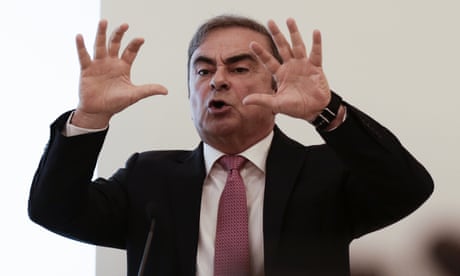
In a long and detailed press conference on Wednesday, Carlos Ghosn – former head of the Renault-Nissan-Mitsubishi alliance, who made a dramatic escape from his house arrest in Japan last month – came out with guns blazing.

Speaking in Beirut, he alleged that former Nissan colleagues and prosecutors were co-conspirators in a plot to oust him in order to prevent a closer merger with Renault. Ghosn denied the allegations against him, which include under-reporting his income and misusing company funds, and said that he was mistreated while in solitary confinement. This included interrogations that lasted for up to eight hours a day without a lawyer present. The presumption of guilt, and the pressure placed on him by Japanese prosecutors to confess, convinced him that there was no chance of a fair trial. And so he fled.

Given his brash demeanour and immense wealth, Ghosn is not a sympathetic character. Indeed, he may well be guilty of financial misconduct. But he is right to shine a light into the dark corners of Japan’s justice system. Anyone familiar with the Japanese justice system would know that Ghosn’s allegations are not far-fetched.

In Japan, laws are used as weapons against targeted people and not applied equally. One example of this is the “hostage justice” (hitojichi-shiho) system. Hostage justice boils down to the accused remaining in custody until they incriminate themselves by signing a confession. Often this is drawn up by prosecutors who browbeat the accused without defence counsel. Knowing that the playing field is tilted in favour of the prosecutors and that they could spend a very long time in jail even before going to court, many innocent defendants confess. Ghosn spent more than 120 days in detention.

In the late 1980s, a once high-flying company president called Hiromasa Ezoe was accused of bribery. Despite extreme pressure to confess, Ezoe defied prosecuting authorities by pleading not guilty. Over a decade of judicial purgatory later, he was effectively exonerated by receiving a suspended three-year sentence in 2003. In 2010 he published a book, Where is the Justice?, a savage indictment of a system in which the presumption of innocence is abandoned and defendants are railroaded. Ghosn may well have wanted to avoid this fate.

In Japan, the accused can be held for 23 days without charge – this is almost indefinitely renewable as judges normally give prosecutors the benefit of the doubt. In April 2019, more than 1,000 lawyers and scholars submitted a petition to the justice ministry demanding an end to this antediluvian system. The Japan Federation of Bar Associations has also long lobbied against it.

The 2019 petition doesn’t mince its words, asserting that the “long-term detention in the Carlos Ghosn case has triggered surprise and criticism overseas, leading to doubts about Japan’s integrity as a democratic nation that guarantees human rights”.

Japan’s hostage justice, interrogation procedures barring lawyers and arbitrary denial of family contact are out of step with many other democracies and international law. The UN Human Rights committee has called on Japan to reform its criminal justice system to allow for the presence of defence counsel, while a UN committee against torture called Japan’s criminal justice system “medieval”.

In recent years, the media has exposed many cases of prosecutors’ abuse of power, inventing, misinterpreting or ignoring exonerating evidence in an attempt to maintain the dubious distinction of a 99% conviction rate. Recognising the problem, the justice ministry has since the 2000s introduced piecemeal reforms to reduce dependence on confessions and allowing some videotaping of interrogations. Even so, the system remains stacked against defendants.

While Ghosn managed a dramatic escape, ordinary Japanese citizens remain vulnerable to a judicial system that draws sharp criticism from domestic civil society organisations, lawyers’ federations and the media. The vested interests are scrambling to defend this system, but it’s high time to end the era of Japanese prosecutors running amok and trampling on civil liberties.

Sunday, January 5, 2020

Monday In Washington, January 6, 2020

Monday will be back to business. The next day the games begin.

NORTH KOREA IN 2020 - FIRE AND FURY OR A PATH TOWARDS PEACE? 9:30am-3:30pm. Sponsors: Center for the National Interest, Korea Foundation. Speakers: Key Note Address: Dr. Moon Chung-in (Special Adviser to ROK President Moon); Jessica Lee, Quincy Institute; Doug Bandow, CATO; LT. General Wallace Gregson, (U.S. Marines, Retired, former head of U.S. Marines in Pacific; Daniel Davis, Defense Priorities; Henri Feron, Center for International Policy; Uri Friedman; The Atlantic; William Ruger, Charles Koch Institute; Douglas Macgregor, Author,; Scott Snyder, Council on Foreign Relations.

Friday, January 3, 2020

Glimmers Of Hope For Japan-Korea Relations

by Daniel Sneider, Lecturer, International Policy at Stanford University and APP Member
Toyokeizai Online, January 2, 2020

This past year marked the lowest point in relations between Japan and its neighbor, South Korea, since the two countries established diplomatic relations more than a half century ago. As the new year dawns, however, there are glimmers of hope that the tide is slowly turning.

The meeting in China between South Korean President Moon Jae-in and Japanese Prime Minister Shinzo Abe in China at least demonstrated that channels for dialogue remain open. Before that, trade officials met in Tokyo to discuss the export control measures imposed by both sides, followed by a small step from Japan to ease restrictions on key exports to Korea related to semiconductor manufacture.

And with the threat of a court order to seize the assets of Japanese companies looming, Korean legislators are discussing a compensation plan for former forced laborers that might offer a way out of that difficult issue of wartime justice.

This is a fragile process that could break down in the blink of an eye, but informed actors in both Korea and Japan see reasons for guarded optimism.

“Our bilateral relations now cannot get worse and there is a growing consensus among our people that Korea cannot afford to let its relations with Japan break down completely,” former South Korean Foreign Minister and Ambassador to Tokyo, Yu Myung Hwan, told me. “I think we have passed the lowest point,” says Yu, who has been a key figure in Japan-Korea relations.

Still, Yu warns, “one time-bomb is left – when, and how, the seized assets of Japanese companies might be cashed in.” For now, Korean courts have only taken preliminary steps to sell those assets, but if they actually move to do so, “Abe will have to respond likewise and that will surely provoke another downward spiral in relations,” he predicts.

The lawyers for the Korean laborers who brought the suit claiming compensation remain in a dialogue with the Moon administration, delaying the next steps. But this will not last forever – “I am not fully optimistic at this point,” Yu told me.

A veteran Japanese journalist specializing in foreign affairs takes a somewhat less upbeat view of where things may be headed. “I hope this bilateral relationship has hit the bottom, but I don’t find a solid reason to say so,” the senior editor told me. “I am one of the guys who predict that this cold war between Abe and Moon is likely to go on in a mild way next year.”

The political dimension
For now, there is a cease-fire in this crisis. But neither Moon nor Abe are highly motivated to find an early solution.

The impact on Japan from the economic boycott in South Korea, most visible in the dramatic drop in Korean tourists coming to Japan, is still minor. Combined with pressure from the U.S. to ease tensions, “Abe has some incentive to move,” says Tokyo University Professor and foreign policy expert Ryo Sahashi. But there is very little potential political upside in improving relations for the Japanese leader, especially among conservative voters and lawmakers.

“Diplomacy with South Korea only costs him political capital,” Sahashi told me, “he doesn’t gain anything from it.” Still, Abe seems unlikely to take further steps to provoke a Korean reaction, as happened with the export controls imposed last summer.

Moon, for his part, faces crucial elections to the South Korean National Assembly in April. The possible return to serious tensions in relations with North Korea potentially undermines support for the ruling progressive party which has put North-South Korea engagement at the top of its agenda. A possibly unpopular move to reach a compromise with Japan on the forced laborer issue might be too much of a risk for Moon. But a worsening of relations would also not help Moon, observers believe.

“The upcoming parliament election in April 2020 will be an Armageddon for the government party since it will be a sort of midterm evaluation of the incumbent Moon administration,” observes Yu, a veteran diplomat. “And the worsening of the relationship with Japan would not help before the election unless Japan provokes further in a nasty way. But I think Abe wouldn't do that again. I believe that after the general election next year the Korean government will be more flexible in dealing with Japan.”

Until then, however, Moon continues to be very cautious. He has not embraced the effort to find a compromise solution to the forced laborers problem led by South Korean National Assembly Speaker Moon Hee-sang. Speaker Moon introduced legislation to establish a foundation formed by voluntary contributions from both Korea and Japanese companies, and individuals, to compensate the former laborers.

The proposed fund is modeled on the German Remembrance, Responsibility and Future Foundation, formed in 2000, which paid compensation to all those forced to work in German mines and factories during the war. It was funded by both the German government and by the German firms who used that labor, just as Japanese companies did during the war.

The model is cited by many experts, but the decision of the Moon government to dismantle a similar fund created to compensate the so-called Comfort Women in the 2015 agreement between Japan and South Korea undermines the viability of this proposal.

The new proposal does not yet have the support of those who filed suit in Korean courts, and their lawyers. The Abe administration has also been cautious toward this proposal, even though it does not demand either official Japanese funds or a formal apology to the victims.

“Speaker Moon's idea is not perfect,” notes Tokyo University’s Sahashi. “It would be better if the fund was divided equally between South Korean companies, the South Korean government and Japanese companies. But even this solution would face domestic criticism in both countries. Still, I can’t imagine any other option.”

South Korea’s former foreign minister Yu, who played a key role in setting up the Comfort Women foundation, agrees with this assessment. “Speaker Moon's proposal is not a bad idea at all if it can be passed as a bill in the parliament and Japan is willing to participate in ‘donating’ money to the Fund,” he says.

But Yu worries that the Assembly leader does not yet have sufficient support in the legislature to pass the bill and may have higher priorities, such as passage of an election law and a reform of the prosecution system. “I wonder whether he can spare some of his political assets to push through his idea to resolve the ‘war-time forced labor issue’ once and for all,” he told me.

Behind this lurks the status of the 1965 treaty which normalized diplomatic relations between Japan and South Korea and dealt with the problem of compensation for forced laborers and others through a large transfer of Japanese grants and loans. Those funds were used to finance the industrialization of South Korea, though limited individual compensation was also paid out.

The progressives in South Korea have long challenged the legitimacy of this treaty, arguing it was forced on Korea by the United States and was the creation of a ‘pro-Japanese’ regime led by military leader Park Chung-hee.

The Japanese government continues to insist this issue was settled by the treaty and proposed to deal with the current crisis through a third-party arbitration process set out in that treaty. The Moon government has so far sidestepped whether they still feel bound by the 1965 treaty, carefully avoiding triggering the question of renegotiating the entire treaty.

Even Korean scholars who have been critical of Japan question this ambiguous position taken by the Blue House. The Korean government should clearly communicate through official channels that it will respect the treaty, Professor Chung Jae-jeong, the former head of the Northeast Asia History Foundation, said in a recent interview. “This will facilitate negotiations on how to resolve the current disputes,” Professor Chung said. “I think we as a country have passed a stage where we approach state-to-state conflicts emotionally. They should be handled with professional judgment and knowledge.”

The geopolitics of the Japan-South Korea dispute
The prospects for improvement in Japan-South Korea relations will undoubtedly be affected by the broader geostrategic environment in Northeast Asia. If tensions rise again with North Korea, that may drive Japan and South Korea closer together, though it will not in itself overcome the underlying historical issues.

American policy makers have persistently urged the two countries, both allied to the U.S., to focus on their shared security interests. And that pressure at least yielded some results in the Korean decision to back off from abandoning the defense intelligence sharing agreement. But the forces of nationalism in both countries tend to overwhelm those appeals to joint security interests.

The withdrawal of the U.S. from its traditional leading role as the guarantor of security in Northeast Asia has left Japan and South Korea increasingly on their own in managing out these long-standing tensions. And it has left open the door for China to assert its leadership role, as took place at the trilateral summit in Chengdu. President Moon, speaking at the summit, evoked the “common destiny” binding the three countries together.

“This is a new trial for both countries to explore their own capability to sustain and develop the East Asia order which has long kept the stable environment since the end of World War Two,” comments the senior Japanese foreign affairs journalist.

“In that sense, the trilateral dialogue framework of Sino-ROK-Japan should have more and more implication for the future to come. I have no doubt Japan’s bond with the US will stay firm and solid regardless of whatever chemistry will emerge in the Sino-Korean-Japan relationship. But when it comes to South Korea’s position, frankly, I am much less certain.”