Sunday, August 30, 2020

Monday Asia Events August 31, 2020


August 30 - Last Day to Register for the Association for Asian Studies (
AAS)-in-Asia 2020: Asia at the Crossroads: Solidarity through Scholarship Conference, August 31-September 

U.S.-TAIWAN ECONOMIC COOPERATION: LOOKING AHEAD9:00-10:00am (EDT), WEBINAR. Sponsor: Heritage. Speakers: Bi-khim Hsiao, Representative, Taipei  Economic and Cultural Representative Office in the United States; David R. Stilwell, Assistant Secretary of State for the Bureau of East Asian and Pacific Affairs, U.S. Department of State; Mei-hua Wang, Minister of Economic Affairs, Republic of China (Taiwan). 

ELECTIONS 2020: FOREIGN POLICY HALF-TIME REPORT. 10:00am (EDT), #ACELECTIONS2020 EVENT. Sponsors: Atlantic Council; Samsung. Speakers: Amb. Colleen Bell, Executive Director, California Film Commission, Former Ambassador to Hungary; Amb. Paula Dobriansky, Senior Fellow, Harvard University Belfer Center, Former Under Secretary of State for Global Affairs, US Department of State, Vice Chair, Scowcroft Center for Strategy and Security, Atlantic Council; Moderator: Damon Wilson, Executive Vice President, Atlantic Council. 

‘DESERT ONE’: HOW THE HOSTAGE CRISIS AND FAILED RESCUE RAID STILL CLOUD US-IRAN RELATIONS. Noon, ONLINE EVENT. Sponsors: Atlantic Council; IranSource. Speakers: Nasser Hadian, Professor, University of Tehran; Barbara Kopple, Director, “Desert One"; Ambassador (Ret.) John Limbert, US State Department and US Naval Academy, Col. (Ret.) Ed Sieffert, United States Marine Corps; Moderator: Barbara Slavin, Director, Future of Iran Initiative, Atlantic Council; Introduction: Ambassador (Ret.) Stuart Eizenstat, Senior Counsel, Covington & Burling LLP. 

SCIENCE & AMERICAN ADVANCEMENT. 1:00-3:00pm (EDT), WEBINAR. Sponsors: The Hill; Philip Morris International. Speakers: Hon. France A. Córdova, Former Director, National Science Foundation; Dr. Susan Hockfield, President Emerita, MIT; Rep. Eddie Bernice Johnson (D-TX); Phyllis Arthur, Vice President, Infectious Diseases and Diagnostics Policy, BIO; Holden Thorp, Editor-in-Chief, Science MagazineDr. Vaughan C. Turekian, Executive Director of Policy and Global Affairs at the National Academies of Sciences, Engineering, and Medicine; Benjamin Corb, Director, Public Affairs, American Society for Biochemistry and Molecular Biology; Hon. Paul M. Dabbar, Under Secretary for Science, DOE; Ellen R. Stofan, John and Adrienne Mars Director, National Air and Space Museum; Rep. Mikie Sherrill (D-NJ); Rep. Trey Hollingsworth (R-IN); Sponsor Perspective: Dr. Moira Gilchrist, Vice President For Strategic & Scientific Communications, Philip Morris International; Moderator: Steve Clemons, Editor-At-Large, The Hill

THE MIRACULOUS DELIVERANCE FROM AN EPIC TRAGEDY: THE END OF THE ASIA PACIFIC WAR WITH RICHARD B. FRANK. 2:00pm (EDT), ZOOM EVENT. Sponsors: Friends of the National World War II Memorial. Speaker: Richard B. Frank, internationally recognized leading authority on the Asia-Pacific War, author. PURCHASE BOOKS: https://amzn.to/2YaujsBhttps://amzn.to/31WBo18  https://amzn.to/3j2KmB5

LAUNCH OF ‘UNDER BEIJING’S SHADOW’ BY MURRAY HIEBERT. 10:00pm (EDT), WEBINAR. Sponsor: Australian Strategic Policy Institute. Speakers: Murray Hiebert, Senior Associate, Southeast Asia Program at the Center for Strategic and International Studies (CSIS); Dr. Huong Le Thu, Senior Analyst, Defence and Strategy Program, ASPI. PURCHASE BOOK: https://amzn.to/31DeD3d

Shinzo Abe Is Ill. But Is That the Only Reason He’s Quitting


Maybe he can’t face the Japanese people’s calls for accountability.

By Koichi Nakano
, professor of political science at Sophia University in Tokyo.

New York Times, Aug. 30, 2020

TOKYO — Prime Minister Shinzo Abe’s announcement on Friday that he would resign because of poor health was a rather abrupt end for a supposedly strong leader. Mr. Abe has ruled Japan, most recently, for a record seven years and eight months: He is the country’s longest-serving prime minister.

The decision was a surprise — and yet it wasn’t.

A chronic illness was also the reason Mr. Abe cited when he suddenly resigned from his first stint as prime minister in 2007.

The matter of his health had surfaced again a couple of weeks ago when, after he underwent a medical checkup, a former minister and close associate of Mr. Abe’s publicly expressed concern that the prime minister was overworked and might have to be “forced” to get a few days’ rest.

That seemed strange because Mr. Abe certainly hadn’t appeared to be working too hard. In fact, most Japanese people had grown critical about his not doing enough to manage the pandemic and its economic impact.

Mr. Abe was largely absent from public view after the coronavirus broke out in Japan early this year, popping up occasionally only to announce ill-conceived policies: His plan to distribute two washable cloth masks — so-called Abenomasks — to every household was quickly derided as futile and inefficient.

At the same time, he was still mired in various scandals from the past several years — and still failing to provide convincing accounts of his behavior.

Both the Moritomo Gakuen and Kake Gakuen scandals prompted allegations that Mr. Abe had granted special favors to ideological companions or his friends. The Moritomo Gakuen case, about a heavily discounted land deal, involved a cover-up by Finance Ministry officials, including the doctoring of public documents. Mr. Abe continues to deny any involvement (or any by his wife), but he has apologized on behalf of the government for the document tampering.

Controversy had also been growing around the cherry-blossom-viewing party the prime minister hosts every year: an official government event paid for by taxpayer money that has kept getting more and more lavish, and increasingly has seemed designed to reward Mr. Abe’s and his party’s loyal supporters. When the opposition started asking questions about the 2019 event, the Cabinet Office shredded documents listing that year’s attendees, in violation of government rules.

After that, coronavirus or not, the scandals and the cronyism continued.

In January, the prime minister bent or reinterpreted — call that what you will — a law so that a favorite prosecutor could stay in the job past the mandatory age of retirement. Then he tried to have the law formally amended — a move that looked like an attempt to retroactively validate what he had already improperly done. But after the prosecutor was forced to resign over illegal gambling, Mr. Abe had to retract the plan.

In June, the justice minister and a close aide of Mr. Abe, Katsuyuki Kawai, and his wife, Anri, a member of the upper house of Parliament from Mr. Abe’s Liberal Democratic Party, were arrested and charged with vote buying during the election for that chamber last year. The Kawais received 150 million yen (more than $1.4 million) from the L.D.P., over which Mr. Abe presides. (The prime minister denies any involvement. The Kawais have pleaded not guilty to the charges.)

In short: Mr. Abe has had a lot of explaining to do — to Parliament, the media, the public. And yet he has done as little of that as possible.

Mr. Abe closed the ordinary session of Parliament, known as the Diet, on June 17. On July 31, the opposition called for an extraordinary session as soon as possible. Although such requests are a right guaranteed by the Constitution, Mr. Abe rejected it: It was the third time he has done so.

Before Mr. Abe’s resignation announcement on Friday, his last proper news conference had been on June 18 — even though a prime minister’s news conferences with Japanese media are notoriously staged and meek affairs.

No wonder that by then public support for Mr. Abe had already dropped to its lowest levels since the start of the coronavirus crisis.

Japan has been relatively successful in managing the spread of the virus and limiting the death toll, but the government isn’t getting much credit for that. In one opinion poll from mid-August, about 60 percent of respondents said they had a negative view of the Abe administration’s response to the pandemic.

Mr. Abe returned to power in December 2012 vowing to “take back Japan” — a promise to rebuild the Japanese economy with his signature “Abenomics” and “normalize,” as he put it, Japan’s defense policy through rearmament and by reinforcing ties with the United States.

While analysts debate his record — a stock market boosted, but stagnant wages and record government debt; a controversial and unsuccessful bid to revise the Constitution’s pacifist clauses; close ties with President Trump — the L.D.P. is looking for a successor.

Since Mr. Abe is abruptly resigning amid crises and controversies, the L.D.P. is more likely to search for a new leader by consulting a relatively small group of the party’s Diet members and representatives in local chapters than by organizing a full-fledged race with the participation of rank-and-file party members.

If so, the prospects of Shigeru Ishiba, a popular and persistent critic of Mr. Abe’s ways, would seem rather limited.

Mr. Abe had been said to have a soft spot for the docile, if uninspiring, Fumio Kishida, a former foreign minister, but he may now be supporting Yoshihide Suga, his chief cabinet secretary, who is more ruthless, secretive and authoritarian and might have a better chance of defeating Mr. Ishiba.

Whatever Mr. Abe’s eventual legacy, whoever his immediate replacement, one thing already stands out: Japan’s longest-serving leader is leaving office by skedaddling from scandals and evading calls for accountability from the people he is supposed to serve.

Saturday, August 29, 2020

ABE RUNNING AWAY

Abe without makeup

Japan’s Longest-Serving PM, Shinzo Abe, Quits in Bid to ‘Escape’ Potential Prosecution


Prime Minister Shinzo Abe in his second time at bat lasted longer than anyone before him but he leaves office unable to stomach the job with the public unable to stomach him.

BY Jake Adelstein, Daily Beast, Aug. 28, 2020.

Japan’s prime minister, Shinzo Abe, decided to resign Friday ostensibly because of his health, but also because he fears the unpleasant and unhealthy conditions of a Japanese prison.

At a press conference, he cited his painful stomach condition ulcerative colitis as the reason for stepping down, but he leaves at a time when his ratings are plummeting and he is under at least one criminal investigation, with the public clamoring for the reopening of other cas

Abe is not resigning; he is escaping. 

He is under investigation by the Japanese prosecutors for violations of election laws, similar to those his former handpicked justice minister is now being tried for in the lower courts of Tokyo. Testimony in that case may implicate Abe in the political scandal as well.

Abe’s efforts to shield himself from investigation by Japan’s authorities have fallen apart.

A high-ranking member of the Liberal Democratic Party (LDP), of which Abe also serves as president, told The Daily Beast on conditions of anonymity, “If Abe had been able to stack the prosecutor’s office with his choice—he’d still be clinging to power. His choice for the next head of the National Police Agency, Itaru Nakamura, was sidelined this month and Abe fears being arrested by either the prosecutors or the police. Resignation now allows him to escape a lot of scrutiny.” Nakamura was the high-ranking police chief that ended the rape investigation of Abe’s unofficial biographer.

A source in the Ministry of Justice told The Daily Beast, “It’s a done deal. Abe resigns taking ‘social punishment’ and several criminal investigations into his conduct are going to be closed.” Former special prosecutor Nobuo Gohara says, “It doesn’t seem like a coincidence that he resigns the same week a criminal trial has started in which Abe’s involvement will become a central issue.”

The Tweet of Defeat
This year, Abe’s approval ratings sank as low as 27 percent in opinion polls. You’ll see many things cited in the Japanese press in the coming days about what caused Abe’s grip on power and popular support to fail. There have certainly been many gaffes this year. He ignored the growing threat of the novel coronavirus due to his obsessive desire to hold the Olympic Games, which meant that Tokyo had to appear safe. His plan to distribute two face masks to every household, when masks were in short supply, was an expensive disaster. The masks were too small, dirty, and they were slow to be delivered. They were ridiculed as “Abe No Mask,” which sounds much like “Abenomics” when said in Japanese. Abenomics was the PM’s much-touted fiscal policy that involved the imaginary “arrows” of monetary easing and financial reforms, but the overhaul never came and the policy was a total failure.

Abe claimed that Japan’s “if you don’t test, you don’t know” coronavirus policy had worked fantastically, until it failed and the infection rates began shooting up again. This was accelerated by his obstinate push for the implementation of a weirdly named promotional campaign,“Go to Travel,” which ended up translating for many people to “Go to Quarantine” as the pandemic resurged.

What has derailed his popularity isn’t his poor handling of the coronavirus pandemic, but an ill-timed attempt to consolidate his power in the midst of it. #SayonaraAbe (in Japanese) was trending on Twitter months ago.

The end of the Abe era began with a single tweet that started his downward spiral in May. There is some irony in a prime minister who invested so much energy controlling Japan’s mainstream media being taken down by social media.

On the evening of May 9,  there was a tweet by a 35-year-old female office worker that sparked an inferno of public dissent. The resulting tweetstorm was fueled by Japan’s usually apolitical celebrities and former prosecutors. Even LDP members expressed dissent.

The content of the tweet seems rather prosaic. “I protest the proposed changes in the Public Prosecutor Office Laws.” There were 8 million tweets with the hashtag “I protest the proposed revision of the Public Prosecutors Office Law,” by May 14. 

Here’s the backstory. 
Abe has slowly exerted his control over government agencies, public broadcaster NHK, and even the media. In 2014, he created a Cabinet Personnel Bureau that gave the cabinet control over the appointment of hundreds of top-level bureaucrats. Ambitious government workers paid attention, and have since worked hard not to offend him and gain favor. He has incentivized them to cover up scandals without being directly asked. He has wined and dined the press to curry favor, and bullied them relentlessly when displeased. Japan’s press-freedom ranking was No. 22 when he took office; it now ranks 66th. 

At the start of the coronavirus pandemic, Abe and the ruling LDP lobbied for changes in the constitution that would give the cabinet absolute authority in an emergency. The attempt failed but even conservative magazine PRESIDENT called it in an opportunistic and despicable grab for power. When he tried to put the public prosecutor’s office under his thumb this summer, he was going too far.

Fatally Wounded 
The move against the prosecutors began on Jan. 31, when the Abe cabinet decided to delay the retirement of Japan’s second most powerful prosecutor, Hiromu Kurokawa. Kurokawa was reportedly very close to Abe and cabinet secretary Yoshihide Suga. The press referred to him as “the guardian deity of the Abe cabinet.”  

The majority of prosecutors are required by law to retire at 63; Kurokawa was allowed to stay on. Abe claimed this was not a problem because his cabinet had “reinterpreted the law” to make it possible. The opposition, legal scholars, and the public vehemently disagreed.

The administration stood its ground but later proposed an amendment to the Public Prosecutor Laws. This was seen as a retroactive attempt to justify keeping Kurokawa in office, and clearing the way for replacing the top prosecutor in Japan. 

Former Prosecutor-General Kunihiro Matsuo and other ex-prosecutors wrote a protest letter to the Ministry of Justice stating explicitly that they believed the revisions were an attempt by the Abe administration to have prosecutors act in accordance with their will. The letter quoted John Locke: “Wherever law ends, tyranny begins.” 

Abe defended the bill in parliament, “There will be no instances of [prosecutorial] personnel affairs being determined arbitrarily,” he said. Only 16 percent of the public believed him.

Typically, Abe would ramrod the bill into law anyway, as he has done with other unpopular legislation. 

By May 18, his approval ratings had plummeted to 34 percent. The same day, the LDP agreed to temporarily table the legislation. 

That evening, more than 600 lawyers submitted legal briefs to the Tokyo prosecutors office accusing Abe of misusing public funds to hold cherry blossom viewing parties for his constituents, a scandal that became known as “Cherryblossom-gate.” 

Bad luck followed Abe’s bad decisions. The weekly magazine Bunshun reported that Kurokawa had routinely played mahjong with reporters, gambling on the games in clear contravention of Japanese law. Kurokawa was given an admonishment and allowed to resign. 

After nearly a decade in power, Abe has become haughty, declaring in parliament last year “I am the nation.” He has been winning for a long time, but no one’s luck lasts forever. The legislative attempt to subvert the prosecutors may have been, to paraphrase the title of an epic war film, a bill too far. It was later abandoned entirely. 

Already on Trial? 
The current investigation of “Cherryblossom-gate” is not the only problem facing Abe. 

He is being dragged into the high-profile trial of a close friend and supporter. This June, Katsuyuki Kawai, 57, a House of Representative member and his wife, Anri Kawai, 46, a member of the House of Councilors, were indicted on suspicion of handing out millions of yen in cash to politicians and supporters in Hiroshima Prefecture. This was allegedly in return for their efforts to secure votes in the Upper House elections held in July 2019. Abe appointed Katsuyuki minister of justice in September 2019; Katsuyuki resigned on Oct. 31. 

Their trial began this week.

The LDP headquarters provided nearly $1.5 million (150 million yen) or more in campaign funds to Anri Kawai, and some of that money may have been used in bribing local politicians to help round up votes. If Abe himself, as president of the LDP, approved the whopping funding for Anri, he will move into the spotlight.

Former Special Prosecutor Nobuo Gohara told The Daily Beast, “It seems clear from the opening statements by the prosecutors in the case of Kawai, that they will show Prime Minister Abe’s involvement in this case. For a former minister of justice, hand-picked by Abe to be involved in bribing other politicians—outrageous. Even if Abe can avoid criminal responsibility, he has a moral responsibility in the matter.”

Gohara sees Abe’s inability to stomach his position as part of the stress of not knowing when or if he will be implicated in the current trial. 

There is a third fire burning under Abe’s feet, one known as the Moritomo-gakuen case. In 2017, it became clear that government land valued at nearly $8 million had been sold to a right-wing school operator for $1 million, reportedly at the urging of the prime minister and his wife, Akie. The school was going to be named Abe Elementary. When the scandal came to light, bureaucrats in the ministry of finance altered and destroyed documents to cover up Abe’s involvement. One government official, Toshio Akagi, refused to play along and killed himself in protest in March 2018. He left behind incriminating documents that his widow revealed this year. Over 70 percent of the Japanese public now wants a reopening of the investigation into the Morikake case. 

He didn’t learn
Abe virtually vanished for a month this summer, avoiding all press conferences and parliamentary discussions. He can now avoid discussing the scandals surrounding him very easily. He has seemingly timed his publicized visits to the hospital this week in a way to make sure that questions about his involvement in corruption cases were not asked. By visiting Keio Hospital on Aug. 24, the day before the Kawai trial, attention was shifted from his role in the case, to whether or not he was going to be able to continue as prime minister. 

Abe’s great escape is not as dramatic as the flight of former Nissan Chairman Carlos Ghosn, but it’s a valiant effort. 

Abe was Japan’s longest reigning prime minister in its constitutional history, but never has so little been accomplished in such a long period of time. If he leaves any legacy at all, it is a number of bills passed into law that were so unpopular they now lie like landmines and may blow up Japan’s brittle democracy someday. Those laws include: a draconian conspiracy law that seems right out of the sci-fi film Minority Report; a repressive and Orwellian state secrets law that will muffle the press and whistleblowers; and the Peace Preservation Act, which allows ostensibly pacifist Japan to wage war.

This was his second term in office after a disastrous stint from 2006 to 2007. He was able to resurface due to the support of the right-wing Shinto cult Nippon Kaigi, which will continue to yield great power in parliament long after Abe. 

They say those who don’t remember history are doomed to repeat it. Perhaps the root of Abe’s folly is that he is a well-known historical revisionist, the grandson of a war criminal, who has never been able to admit to the atrocities committed by Japan in World War II; many of his political appointees and allies admired Hitler. He’s been so busy trying to deny the past that it seems Abe can’t even learn from his own history. His life is a re-run.

He leaves office much the same way he did when he stepped down in 2007: unable to handle the job while mired in scandals involving his cronies; unpopular, considered incompetent, and irrelevant. 

He will not be missed. 

Wednesday, August 26, 2020

The Abe Crisis: Does Anyone in Washington, DC Care?


By Daniel Sneider : Lecturer, International Policy at Stanford University, APP Member

Tokyo Business Today [Toyo Keizai ] August 25, 2020

The longest serving Prime Minister in modern Japanese history may be on his way out of office, driven by a personal health problem and by a poorly managed response to a larger health and economic crisis. Back in the corridors of power of Japan’s principal ally, the United States, is anyone really concerned about the fate of Abe Shinzo? And if Donald Trump’s ‘friend’ leaves, does Washington have a chosen successor?

President Trump is, not surprisingly, almost completely consumed by his faltering election campaign, hoping for a boost from this week’s Republican convention. To be fair, his opponent, Vice President Joe Biden, fresh off a well-received Democratic convention show, also pays scant attention to Japan.

Still, President Trump and Secretary of State Mike Pompeo are well aware of Abe’s health problems and possible departure from office, a former senior Trump administration official told me. “I am sure,” he insisted.

“I believe the U.S. government is tracking closely and is more informed than the general public regarding Abe’s health, particularly in the last 24 hours,” another senior former Trump official who managed alliance security relations told me early this week.

The State Department and the CIA are following developments very carefully and “that’s the kind of thing included in the PDB (President’s Daily Brief) and Trump takes his intelligence briefings 2-3 times a week, putting aside the quality of his understanding or level of interest,” a former official who worked on Asian security in both Republican and Democratic governments said.

Despite those reassurances, experienced policy makers question whether there is any serious engagement from the White House.

“The administration is completely preoccupied with trying to survive Trump’s terrible poll numbers, including Secretary Pompeo who is playing an unprecedented role in the Republican convention and domestic politics,” Michael Green, former national security advisor on Asia to President George W. Bush, told me.

“While bashing China is part of the administration’s survival strategy, that has not translated into focusing on allies for the White House. So, I doubt that there is much attention at the top to Abe’s fate or the post-Abe transition at this point.”

Below the highest levels of the administration, there is much greater awareness and even worry about what is happening in Tokyo. “U.S. policy officials and others with responsibility for ties with Japan are following this drama very closely and are in close touch with our embassy and other institutions tasked with reporting on political and other developments inside Japan,” says Evans Revere, former Principal Deputy Assistant Secretary of State for East Asia and the Pacific.

Senior sub-cabinet level officials such as Deputy Secretary of State Steve Biegun or deputy National Security Advisor Matt Pottinger “are watching with some concern, since Abe has been the cornerstone (and in many ways the architect) of their ‘Free and Open Indo-Pacific’ strategy,” agrees Green.

In the Trump administration, particularly as it heads deeper down the road of full-scale confrontation with China, Abe occupies a treasured position for his fealty to their goals. “There has long been a view,” the former senior Trump official dealing with security relations said, “that Prime Minister Abe is ‘as good as it can get’ in terms of supporting the alliance, having the right views on China.”

The weakening of Abe’s command of Japanese politics, however, is already having a visible impact to some American officials. While there are no worries about the underlying foundation of the alliance, “there is a broad resignation that things are already getting harder to implement in the twilight of Abe’s tenure,” observes Green, who is the Japan chair at Georgetown University and the Center for Strategic and International Studies. The cancellation of the Aegis Onshore radar and missile system is one recent example for American policy makers, signaling a possible slowdown in security cooperation in the post-Abe era.

The Abe succession question
Despite those concerns in the national security community, there is no evidence that Washington is lining up behind any one of the well-known list of Liberal Democratic Party stalwarts considered as possible successors to Abe.

“I don’t think the US Government has particularly special insights on succession because the Japanese and the LDP haven’t figured it out themselves,” says the former Trump security official. “I’m not aware of a strong preference as the likely candidates are known and generally regarded as having traditional views on the alliance,” he adds.

Green, a Republican policy maker who has publicly opposed Trump’s re-election, anticipates that the next Japanese administration will be less capable of implementing a tightening of security relations.

“I have heard no enthusiasm for any of Abe’s successors and a general wistful hope that maybe—just maybe—Abe might pull out another term,” says Green. “But that now seems all but impossible. There is no sense that Japan’s trajectory will change in geopolitical terms -- it’s all about who can execute. And nobody is seen as having the momentum that Abe did for his first five years.”

Does Trump have a personal preference, such as Chief Cabinet Secretary Suga Yoshihide, whom he has met? “I doubt he would even know Suga’s name,” says the Asian security expert who served in previous administrations. “He would want continuity with Abe, but it’s too much to imagine he’s concerned about anything before November 3 (US election day).”
The Biden view

Democratic nominee for President, Joe Biden, is not evidently devoting much time or thought to the Japanese political situation. But he is surrounded by experienced policy advisors on Asia who are knowledgeable about the alliance and will put a priority on repairing the damage done by Trump’s ‘America First’ isolationism. They are likely to back off from unreasonable demands for defense cost sharing and strengthen cooperation on issues like climate change, Iran and even open the door to reconsidering the Trans-Pacific Partnership.

“Every public utterance by VP Biden and those associated with him suggests that a Biden administration would place top priority on repairing, refurbishing, and reaffirming the central importance of America's alliances, particularly the one with Japan,” says former State Department East Asia hand Evans Revere, now associated with the Brookings Institution.

“Biden and his team know the damage that has been done and I have a high level of confidence they will take steps to restore the U.S.-Japan alliance-partnership to its rightful place as the centerpiece of the U.S. alliance system in the Asia-Pacific.”

The national security professionals inside the U.S. bureaucracy who manage the day to day relationship with Japan may be relieved to have a change of administration in Washington, regardless of who takes over in Tokyo, most observers believe.

“The U.S.-Japan relationship is sufficiently mature and the foundation of the alliance strong enough that it would not make much difference to those tasked with managing the alliance on the U.S. side who is in the kantei,” Revere argues.

“The bigger concern for those tasked with trying to keep the U.S.-Japan alliance on track these days is who is in the White House. President Trump's erratic, dismissive, and even contemptuous approach to allies and alliances has been a major problem for career officials, especially those who have dedicated their careers to strengthening our key alliances.”

A change in U.S. leadership may actually make the transition in power in Tokyo easier to manage. Given Abe’s intimate ties to Trump, he would face some challenges in forging a relationship with a Democratic administration in Washington.

“If Biden wins, a change of leadership in Tokyo will matter even less,” well known Japan watcher Tobias Harris told me. “In Tokyo, meanwhile, given the talk that Abe could be replaced by an elder caretaker - either (Deputy Prime Minister) Aso Taro or Suga - it seems that the alliance will be in fine hands for the next year, at which point the LDP could have a more open and contentious leadership fight to determine the direction of the post-Abe era,” believes Harris, author of The Iconoclast, a newly published biography of Abe, the first in-depth look at the Japanese leader in English.

For now, in Washington, the political drama in Tokyo will take a clear backseat to the main event at home – the November election.

Sunday, August 16, 2020

Monday Asia Events August 17 2020

UNDER BEIJING’S SHADOW: SOUTHEAST ASIA’S CHINA CHALLENGE. 9:00–10:00am (EDT), WEBINAR. Sponsor: CSIS. Speaker: Author, Murray Hiebert, Senior Associate, CSIS Southeast Asia Program. 

click to order
THE ARMS TRADE TREATY & DIVERSION: ASSESSING RISKS AND IMPACTS. 9:30–11:00am (EDT), WEBINAR. Sponsor: Stimson. Speakers: Jonah Leff,Conflict Armament Research; Tom Nijs, Flanders Department Of Foreign Affairs in Belgium and Co-Chair of the ATT CSP6 Working Group on Transparency and Reporting; Stela Petrović, Ministry of Trade, Tourism and Telecommunications of Serbia and Facilitator of the ATT CSP6 Sub-Working Group on Diversion; Himayu Shiotani, United Nations Institute for Disarmament Research; Rachel Stohl, Stimson Center.

A CONVERSATION WITH FORMER US SECRETARY OF STATE HILLARY RODHAM CLINTON. Noon (EDT), #ACFRONTPAGE EVENT. Sponsor: Atlantic Council. Speaker: Hon. Hillary Rodham Clinton, Former US Secretary of State; Frederick Kempe, President and CEO, Atlantic Council.

TWILIGHT OF DEMOCRACY: THE SEDUCTIVE LURE OF AUTHORITARIANISM. 4:00–5:30pm (EDT), WEBINAR. Sponsor: Wilson Center - History and Public Policy Program. Speakers: Anne Applebaum, Staff Writer, The Atlantic. Moderators: Christian F. Ostermann, Director, History and Public Policy Program; Eric Arnesen, Professor of History, George Washington University. 

click to order

CARLOS P. ROMULO IN WASHINGTON, DC - WITH LIANA ROMULO. 7:30-8:30pm (EDT), ONLINE EVENT. Sponsor: RMC Foundation, Philippines on the Potomac Project (POPDC), US-Philippines Society, Sentro Rizal Washington DC. Speaker: Liana Romulo, Gen. Carlos P. Romulo’s granddaughter.

Sunday, August 2, 2020

Monday Asia Events August 3 2020

click to order
GLOBAL WEBINAR: WHY THE ATOMIC BOMBING OF HIROSHIMA WOULD BE ILLEGAL TODAY
. 10:00am (CT), ZOOM WEBINAR. Sponsor: Bulletin of the Atomic Scientist. Speakers: Scott Sagan, Political Scientist, Stanford University, Member, Bulletin’s Science and Security Board; Allen Weiner, International Legal Scholar, Stanford University; Sara Kutchesfahani, Director, N Square DC Hub, Bulletin columnist. 

TECH WARS, THE LIBERAL ORDER AND THE RISE OF CHINA. 5:30pm (IST), ZOOM WEBINAR. Sponsor:  Observer Research Foundation (ORF). Speakers: Elsa B. Kania, Adjunct Senior Fellow, Technology and National Security Program, Center for a New American Security; James Andrew Lewis, Senior Vice President and Director, Technology Policy Program, Center for Strategic and International Studies. 

ASEAN FORUM 2020: RESPONSES TO COVID-19. 8/3, 9:00pm - 8/13, 5:00pm (EDT), WEBINAR. Sponsor: New York Southeast Asia Network (NYSEAN); University of Sydney. Speaker: Dr. Thushara Dibley, University of Sydney; Gregory Fox, Associate Professor, University of Sydney; Jeff Neilson, Associate Professor, University of Sydney; Dr. Sandra Seno-Alday, University of Sydney; Dr. Aim Sinpeng, University of Sydney.

Sunday, July 26, 2020

Monday Asia Events July 27 2020


IS THE US READY FOR AN INDO-US PARTNERSHIP? 7:00–9:00pm (IST), WEBINAR. Sponsor: Observer Research Foundation (ORF). Speakers: Alyssa Ayres, Senior Fellow for India, Pakistan, and South Asia, Council on Foreign Relations; Jeff Smith, Research Fellow, Heritage Foundation Asian Studies Center; Sanjaya Baru, Distinguished Fellow, Institute for Defense Studies & Analysis & United Service Institution. Moderator: Rajeswari Rajagopalan, Distinguished Fellow, ORF.

EXPANSION OF MARITIME ACTIVITY IN THE BERING STRAIT REGION: MITIGATING EXISTING AND FUTURE RISKS. 11:00am-12:30pm (EDT), WEBINAR. Sponsor: Polar Institute, Wilson Center. Speakers: Mark Everett, U.S. Coast Guard District 17 Incident, Management & Preparedness Advisor, Co-Chair of the Joint Planning Group for Russia-U.S. Joint Marine Pollution Contingency Plan (JCP); Dr. Natalia Kutaeva, Counsellor to the Director of Marine Rescue Service (MRS), Co-Chair of the Joint Planning Group for Russia-U.S. Joint Marine Pollution Contingency Plan (JCP); Ed Page, Executive Director, Marine Exchange Alaska; Yaari Walker, Indigenous Consultant for Alaska Pacific University; Margaret Williams, Director, WWF US Arctic Program. Moderator: Ambassador David Balton, Senior Fellow, Polar Institute, Former Ambassador for Oceans and Fisheries, U.S. Department of State.

THE FUTURE OF THE US POSTURE IN THE GULF. 10:00–11:00am (EDT), WEBINAR. Sponsor: IISS. Speakers: Daniel Benaim, Fellow, Century Foundation; Kirsten Fontenrose, Director for Regional Security, Middle East, Atlantic Council; Becca Wasser, Fellow, Defense Program, Center for a New American Security. Moderator: Emile Hokayem, Senior Fellow for Middle East Security, IISS.

OFFSHORE WIND: UNLOCKING POTENTIAL FOR A GREEN STIMULUS. 10:00–11:00am (EDT), WEBINAR. Sponsor: Atlantic Council. Speakers: Thomas Brostrøm, CEO, Ørsted North America, Offshore Wind; Karen Douglas, Commissioner, California Energy Commission; David Hayes, Executive Director, State Energy and Environmental Impact Center; Hannes Pfeifenberger, Principal, Brattle Group. Moderator: David Goldwyn, Chairman, Energy Advisory Group.

ANOTHER AUGUST SURPRISE: WHAT IS PUTIN UP TO IN UKRAINE? Noon–1:00pm (EDT), WEBINAR. Sponsor: Atlantic Council. Speakers: Pavel Felgenhauer, Columnist, Novaya Gazeta; David Kramer, Senior Fellow, Vaclav Havel Program for Human Rights and Diplomacy; Hanna Shelest, Director of the Security Studies Program, Foreign Policy Council “Ukraine Prism”. Moderator: John Herbst, Director, Atlantic Council’s Eurasia Center.

CHINA 101 BRIEFING SERIES- FEEDING THE DRAGON: THE ROLE OF CULTURAL DIPLOMACY IN US-CHINA RELATIONS. 1:00-2:00pm (EDT), WEBINAR. Sponsor: US-Asia Institute (USAI). Speakers: Chris Fenton, CEO, Media Capital Technologies, Trustee, USAI; Zak Dychtwald, Founder and CEO, Young China Group.

UNDOING 70 YEARS OF WAR: A ROUNDTABLE ON ADVANCING PEACE IN KOREA. 1:00-2:30pm (EDT), ZOOM WEBINAR. Sponsor: Quincy Institute. Speakers: Katharine Moon, Professor of Political Science and the Wasserman Chair of Asian Studies at Wellesley College; Lt. Col. Daniel Davis (Senior Fellow and Military Expert at Defense Priorities, Henri Feron, Senior Fellow at the Center for International Policy; Jessica Lee, Senior Research Fellow on East Asia at Quincy Institute; Adam Mount, Senior Fellow and Director of the Defense Posture Project at the Federation of American Scientists; and Hazel Smith, Professorial Research Associate at SOAS, University of London.

A CONVERSATION WITH MARY L. TRUMP. 5:30pm (EDT), LIVE STREAM. Sponsor: The Washington Post. Speaker: Mary L. Trump, Author, Too Much and Never Enough: How My Family Created the World's Most Dangerous Man, President Donald J. Trump's niece; Moderator: Robert Costa, Columnist, The Washington Post. PURCHASE BOOKhttps://amzn.to/3f3FFUS

Saturday, July 18, 2020

Things Japanese in Washington


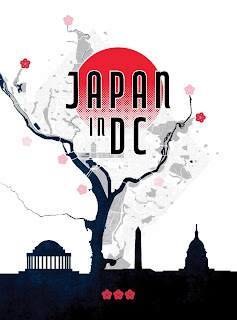
Japan in DC


JAPAN IN DC is a 128-page full color, high-quality paperback, based on the writing, photography, and creative expressions of Washington, DC students who spent their summer 2017 investigating the presence of Japan in their own hometown. The adventure was coordinated by Globilize DC. It is a quirky, curious albeit heart-felt addition to Washington's travel literature. The students encounter not just the obvious, but discover Japan's complex involvement in the nation's capital.

They visit memorials, museums, theaters, gardens, nonprofits, exchange programs, Japanese markets, Japanese restaurants, veterans groups, foundations, think tanks, companies, and the Embassy of Japan. 

One stop they make is to the Navy Yard where in 1860 the first Japanese delegation to the U.S. arrived to visit Washington. At the Yard's National Museum of the U.S. Navy the students marvel at the WWII guns. Yet, missed was the 14 foot model of the USS Houston (CA-30). The sinking of this heavy cruiser in the Sunda Strait on March 1, 1942 marked the end of the U.S. Asiatic Fleet. Only 368 of the total complement of 1011 men of the Houston managed survive the sinking and machine gun attacks.The survivors became POWs of Japan and most were sent to the Thai-Burma Death Railway as slave laborers. Of this group, 79 died of maltreatment and starvation.

The book is destined to be a significant artifact of Abe Administration public diplomacy. Tourists and historians are encouraged to purchase a copy. A bargain at only $16, your purchase is also a good deed. All proceeds from the sale of the book support Globalize DC's Japanese language and culture programs offered at no cost to DC public high school students.   

PPP Loans for the Asia interested

Tracking PPP loans via ProPublica Database

Selected Asia interested organizations that received PPP money from the USG:

Wednesday, June 24, 2020

The Real Cause Of The North-South Korea Crisis


Covid-19


By Daniel Sneider, Lecturer, International Policy at Stanford University and APP member

Toyo Keizai, June 23,2020

As tensions rise between North and South Korea, attention has understandably focused on the role of the Dear Sister, Kim Yo Jong. The sibling of North Korea’s Supreme Leader Kim Jong Un has emerged as the face of a nasty and provocative assault on South Korea.

Once the symbol of Pyongyang’s ‘smile diplomacy’ toward South Korea, the stern Kim now issues snarling denunciations of South Korean president Moon Jae-in. In her recent public statements, she claims to be in charge of unleashing the military to threaten the south and literally dismantle the few symbols of more than two years of North-South engagement.

North Korean dictator Kim Jong Un remarks largely out of sight, prompting ongoing speculation on his health and encouraging analysts to see the recent tension as mostly a platform to elevate his sister as his successor. But a deeper look inside North Korea points to a different culprit behind this new crisis – the Covid-19 virus.

Already struggling to overcome the impact of international sanctions, the North Korean economy has suffered a sharp downturn due to the need to seal the country off to prevent the spread of the virus from China. The economic distress seems to have made the regime even more worried about its control over a restless population. And it has added a level of desperation to the need for aid from the outside.

The escalation of rhetoric is intended to convince the South Korean government and ruling party to “break from the U.S.-driven sanctions regime,” a senior U.S. official in Korea told me. “I think they want the South Korean government to put into place legislation that would open up funding streams,” he explained, which would mean scrapping restrictions on trade and investment with North Korea, bypassing international sanctions.

North Korea’s economic situation was difficult last year but its trade with China and Russia - both official and illicit transfers that evade sanctions -- combined with the growing role of the market, made things manageable. “The overall situation was improving modestly over past years,” reports a Western aid worker who visits the North regularly, most recently late last year. “It reflects the determination of the people to survive and because they had a bit more freedom to make money in the market.”
The Pandemic Hits North Korea

Then the virus hit in January. The North Korean regime had experience with the previous epidemics of SARS and Ebola, says the aid worker, who has extensive knowledge of the medical system. It moved quickly to close the border with China on January 21, mirrored by Chinese efforts to seal the border from its side. According to the U.S. official, additional units of the Korean People’s Army were deployed on the border to crack down on smuggling operations.

“They didn’t have much choice,” the Western aid worker told me. “They know what could happen and that is why they reacted the way they did. They know their health care system is weak.”

The border closure sent a shock wave through the North Korean economy, cutting off the flow of tourists and their hard currency, curbing what little investment came from China, and drastically cutting official and unofficial trade. Almost overnight, Chinese exports to North Korea dropped to nearly zero, along with official North Korean exports to China (see graphic below). Some smuggling seems to have continued but analysts believe the border closing affected that as well. Bottom line - the flow of money and credit from China dried up.

The virus-driven downturn comes at a moment when the state-run sectors of the economy were already facing a systemic collapse. “Their planning system is completely broken down,” says William Brown, a former Central Intelligence Agency analyst who specializes in the North Korean and Chinese economies. According to Brown, there has been no mention of a new 5-year plan to replace the one that ends this year. Important segments of the economy – mainly large state enterprises that produce steel and other key goods – still depend on the planned system to deliver inputs and provide rations and wages to their workers.

Kim tried to get Trump to lift the sanctions last year at the Hanoi summit but failed, triggering a re-examination of North Korean policy in the aftermath. In a major policy turn in 2019, the North Korean leadership re-emphasized the need for “self-reliance,” once a watchword of their ideology. Now, says the former CIA analyst, “self-reliance means that you be self-reliant, not the nation.”
North Korea’s monetary problems

Monetary policy is a key weakness of the regime, argues Brown. The fear of uncontrolled inflation meant the adoption of a tight monetary approach, limiting the printing of the Won. On the plus side, it yielded some 5 years now of a steady exchange rate, creating the appearance of stability, and also encouraging growing use of hard currency in circulation. But on the downside, the state is not capable of pumping credit into its state-run enterprises. “They are telling the big steel mills and others, become self-reliant – don’t ask for money from us,” reports Brown.

Now the virus shut off the flow of hard currency from cross border trade and tourism and investment. In response, the regime announced in mid-April it would issue public bonds for the first time in 17 years. The bonds were to be used instead of cash to pay factories for materials needed to carry out big state projects, such as a massive new hospital in Pyongyang. But they were also aimed at forcing individuals and firms to turn in cash they had hoarded cash, including dollars, in exchange for the bonds.

This is hardly a popular decision, and the regime is cracking down on resistance. According to a report in Daily NK, which relies on defector networks, the director of a mining operation was arrested by state security and executed for criticizing the bond issuance at a meeting.

In April, the North Korean authorities also reportedly told private traders that they could restart their activities only if they gave significant foreign currency payments to the regime and imported from an approved list of goods, half of which would be required to give to the government. Smugglers were ordered to shift away from profitable electrical appliances and focus on basic food goods. According to a May 11 report by Radio Free Asia, the state banned the use of foreign currency for most transactions.

A meeting of the senior leadership of the Workers’ Party of Korea on June 6 and 7, chaired by Kim Jong Un, focused on the economic situation. At the top of the agenda was the need to urgently reconstruct the chemical industry, mainly to produce fertilizers, on a “self-reliant” basis – a clear signal that there are shortages of the plastics and fertilizers needed for agriculture. Due to sanctions and the border closing, “farmers don’t have the inputs they need – fertilizers, plastic sheeting, spare parts, fuel, not to mention tractors,” reports the Western aid worker, who has traveled extensively outside of Pyongyang over the past year. “We are heading for difficult times.”

Food supply always is in shorter supply at this time of year as the stocks from the previous harvest are depleted and there is not yet enough fresh food available. “It is not easy for people and especially those living in remote areas where farming is not easy to do,” the aid worker told me. “Spring and summer have always been difficult. Trading is now at near halt and there is a quarantine impact on cargo. There is not much gasoline available for internal transport. All this is putting more and more pressure on the regime.”

The second item at the June Political Bureau meeting was equally telling – “immediate issues of ensuring living conditions in the capital city.” This is a sign that the regime is having difficulties keeping up the flow of goods to the core elite living in Pyongyang, which has been essential for buying their loyalty.

Beginning last year, after the Hanoi failure, Pyongyang criticized the South for its failures to act independently of the U.S. But the current assault is a clear step up in attempts to coerce the Moon administration and the ruling progressive party. “The reason that the north-south agreements…did not see any light of even a single step of implementation was due to the noose of the pro-U.S. flunkeyism into which [Moon] put his neck,” Kim Yo Jong wrote in her June 17 statement.

Whether the Moon government is ready to open its coffers to the north remains to be seen. So far, the North Korean moves have been carefully calibrated not to provoke an uncontrolled ladder of escalation. The initial step of blowing up the joint liaison office took place on North Korean territory. Even the threatened moves to dismantle the progress in demilitarizing the border areas does not directly touch on U.S. or United Nations Command forces.

“They’re going to take their time with this,” predicted the U.S. official. “I don’t see the impetus to escalate quickly. They may overshoot the mark but if they are thinking rationally, they will take an action, take some time to see how Blue House responds to it, and then ratchet it up again.”

Meanwhile the pressures within will continue to mount on a regime that has no real answers for a population long tired of belt-tightening in the name of an unresolved civil war.

Tuesday, June 23, 2020

America’s Big China Mistake

Globalization has failed to make the country more democratic. It’s time for a different approach.


By Clyde Prestowitz

Washington Monthly, June 7, 2020

Since President Nixon’s historic “opening to China” in 1972 and President Carter’s formal recognition of the communist regime in Beijing, U.S. policy has been to promote trade and investment with China. I myself was a leader of the first U.S. trade mission to Beijing in 1982. Our strategy then and thereafter was founded on the notion that free global trade and investment would stimulate not only economic growth but also the spread of democracy and peace.

At the time, it seemed like a smart bet. The collapse of the Soviet Union in 1991 and Chinese leader Deng Xiaoping’s 1992 statement that “to get rich is glorious” seemed to confirm our ideas. Both unleashed euphoria in the West. Francis Fukuyama’s book, The End of History and the Last Man, was widely acclaimed. Despite having shot at least several hundred and perhaps thousands of its own students in Tiananmen Square on June 4, 1989, the Beijing regime was welcomed as a trading partner by the free world. Clinton campaigned for President under the slogan “no coddling of dictators from Baghdad to Beijing,” but as President adopted a policy of “positive engagement,” eventually negotiating to bring China into the World Trade Organization. Of China’s attempts to censor the internet, he joked: “I’d like to see them try to control the internet. It will be like trying to nail jello to the wall.”

But from early on, it should have been clear that this policy was misguided. The Clinton administration’s argument for bringing China into the WTO, widely supported by the economics and foreign policy establishment, was that doing so would liberalize China while dramatically reducing the U.S. trade deficit with Beijing. None of this took place. China became more authoritarian. The deficit mushroomed from about $80 billion annually to $500 billion. Many U.S. companies moved their factories to China to take advantage of cheap labor, the absence of unions, and the lack of safety and environmental regulations. Chinese State-Owned Enterprises (SOEs), meanwhile, began to raise billions of dollars of new capital by listing their shares on the New York Stock Exchange without meeting the same accounting standards as U.S. corporations.

George W. Bush and Barack Obama adopted similar policies, with similarly dangerous consequences. In 2005, as they continued to move production to China, free-world companies began suffering theft of their innermost secrets by hackers with ties to Beijing. Few people raised alarm. Similarly, no one seemed to be concerned when in 2012, General Electric Chairman Jeffrey Immelt, then also Chairman of President Obama’s Commission on Jobs and Competitiveness, transferred GE’s U.S.-based avionics division to China as part of a joint venture with China’s state-owned Avic. Because avionics is not labor intensive, cost reduction could not have been the reason for the move. Clearly, China had let GE know that if it wanted to sell avionics in China, it would be best to make them there.

It was all evidence that, rather than disappearing, SOEs were consolidating and becoming ever more powerful—as was the Communist Party. China began subsidizing economic sectors such as the semiconductor industry in pursuit of international leadership. Its SOEs began investing heavily and strategically abroad in everything from ports in Europe to telecommunications infrastructure in Australia. The country began dredging reefs and militarizing artificial islands in the South China Sea, along with sinking the fishing boats of other nations—all as part of its plan to seize control of the Sea. It began mass arresting its Uyghur minority.

This was not at all in keeping with the long held free world expectations, and eventually, even the biggest cheerleaders of free trade began to admit that, far from becoming a “responsible stakeholder in the liberal, global order,” China was bent on becoming the hegemon of its own authoritarian order. On March 1, 2018, The Economist announced in its cover story that the West had made the wrong bet on China. It simply wasn’t becoming more market oriented or liberal.

By now there has already been talk of companies targeted by China’s industrial policies “de-coupling” from the country: leaving completely. They began to move production to places like Vietnam and even back to the United States. There has also been economic analysis by MIT Professor David Autor and others showing that the offshoring of U.S. jobs has contributed to overall unemployment, and that it has been a drag on working—and middle-class incomes.

Still, there’s resistance to departing China by many companies. Billions of their dollars have gone into putting factories and supply chains in China and training their workers. The cost of tearing it all down and moving elsewhere, even if elsewhere has cheaper labor, seems daunting.

Now, however, the COVID-19 virus, China’s continued militarization of the South China Sea, its drive for high-tech autarky, and its muscling of Hong Kong have put the cost question in a different light. Previously, few asked about the potential cost of over-dependence on fragile supply chains anchored to a single production site in a somewhat hostile country. What would be the costs to the company or to a country if that supply chain went down? What was the cost of not being able to obtain key drugs, masks, ventilators or anything else that you had once made but had long ago outsourced? The virus has revealed the answer to be “very high indeed.”

Simply questioning the Communist Party invites retaliation, as Australia discovered when it called for an international inquiry into the origins of the virus pandemic. The world is slowly realizing that the risks from dependency on China are much greater and more dangerous than ever imagined. The United Kingdom, once ready to embrace Huawei technology, has said it will not. Countries like Japan have already budgeted billions of dollars to assist their companies in bringing their factories back home. Germany and others have imposed strict limits on investment in their countries by Chinese companies. The United States must learn from this experience and these examples. Indeed, there is already a bill in the U.S. Congress to add $100 billion to the budget of the National Science Foundation specifically for the purpose of maintaining U.S. technology leadership over China. The Trump administration is also now limiting exports of some advanced U.S. semiconductor technology to China.

This is not to say that globalization can or should be halted. But it is to say that globalization must be guided by better understanding of its true costs and benefits—and by consideration of the welfare of all citizens, not just that of big corporations. No democracy with a rule of law can afford to be tightly coupled economically with an authoritarian China.

Clyde Prestowitz

Clyde Prestowitz is the founder and president of the Economic Strategy Institute. He formerly served as counselor to the secretary of commerce in the Reagan administration, as vice chairman of President Bill Clinton’s Commission on Trade and Investment in the Asia-Pacific Region, and on the advisory board of the ExIm Bank. His most recent book is The Betrayal of American Prosperity. He is a Senior Fellow at Asia Policy Point.
.